

The PB Interview - Tim Ryan: Local hero
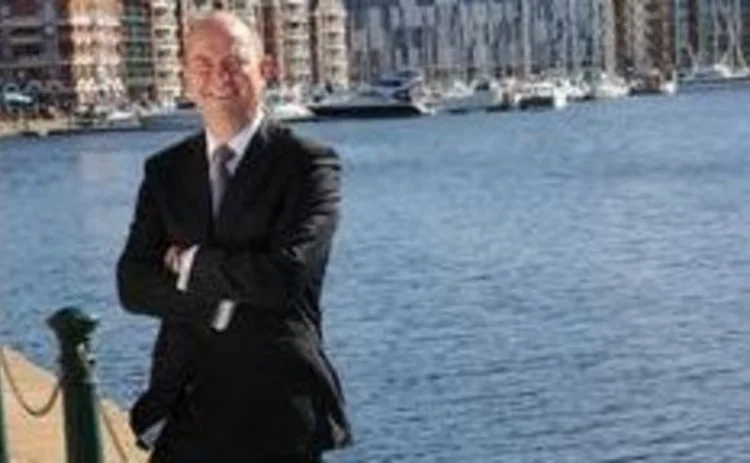

Andrew Tjaardstra meets Tim Ryan in Ipswich, where he is fighting hard against the recession and the force of the consolidators.
Intriguingly, Ipswich once had its own underground system that was part-funded by Joseph Stalin. The town was also home to many insurers and independent brokers but, as in many parts of the country, over the years the insurance landscape has changed dramatically there: Suffolk's county town used to boast high street names such as Commercial Union, Phoenix, General Accident, Guardian and Legal and General. Tim Ryan, who started in broking by joining his father's business, reflects: "Everything was done in the regions; insurance was done face to face. Inspectors used to come out of the blue with no formal appointment. It was cumbersome and expensive."
Over the years, the scene that Ryan describes has changed as high-profile insurers have left or been merged while brokers such as Towergate, Oval and Giles have set their sights on expansion in the area. Axa and Willis, the latter of which has a landmark glass building in the town designed by architect Norman Foster, are the two largest names left there.
The Waterfront development in Ipswich is an example of the boom and bust times that the UK has gone through. The new front, complete with glamorous cafés, consists of University Campus Suffolk, shining office blocks and flats and looks magnificent, though a large, half-finished building at one end shows how the economic slump has hit hard with its owners firmly in administration and without a buyer in sight. The ambitious days of the mid-noughties are becoming a distant memory.
Ryan speaks for many when he shows frustration against the banks for "not facilitating lending and keeping the economy moving". Towergate's executive chairman Peter Cullum also vented his frustration with the banks to an audience of small business owners at Cass Business School in early September: "The behaviour of the banks over the last 18 months has, with some notable exceptions, been quite outrageous. Very good businesses built up over many years have fallen over by virtue of the banks behaving badly towards their customers. Cash is the oxygen for most businesses and in many instances it has been turned off."
Unfortunately for Ryan, some of his clients have become the victims of the great recession as well. As a result, his brokerage has been forced to make 20 redundancies from a staff of 60 for the greater good of the company. Only weeks before this interview, one of the broker's biggest clients went into administration. He is also fighting hard against the consolidators, which are competing fiercely in the area to secure as much business as possible.
Consolidator inroads
Towergate, Oval and Giles set their sights on expansion in the locale: in January 2008 Oval snapped up Cook, Shephard and Pinhey, while Cullum Capital Ventures' took a stake in Morgan Law.
One of the most dramatic changes in Ipswich over the years has been the increase in jobs transferred to London, making this East Anglian enclave more a commuter town than an economic centre itself. As I boarded the train from London Liverpool Street to Ipswich for this interview, a herd of commuters stampeded towards me, making it a real struggle to board.
Originally big in personal lines in 1975, when high-street business was a new way of selling, in the 1980s and 1990s Ryan says the company grew "phenomenally". After taking over from his father, Ryan saw that insurer direct selling and increasingly sophisticated technology were going to make the personal lines market much harder to compete in.
Taking a critical view, he looked at areas where they could enhance their client offerings. The business mix moved, becoming more heavily weighted in favour of commercial lines and aiming specifically at clients "sophisticated enough to make an informed choice without price as a driver." He says: "If we win business on price, they will leave on price. Our business shrank one-third but our profit increased."
Celebrating the company's 35th anniversary recently with a 1970s day at the office, associate director and longest-serving employee John Girling reminisces: "I can remember that we used to offer a third-party, fire and theft policy to a 17-year-old driving a group one vehicle [Mini, Ford Fiesta] for £100. Today, we would be lucky to achieve a premium for the same risk of under £1,000."
Recalling a moment from a bygone era, Ryan's fellow director Robin Belsom, with whom Ryan shares one end of a large expansive office, reflects: "One day, the great Sir Bobby Robson called [Ipswich Town FC is opposite the broker's head office], because he wanted to bring in two new signings so we could arrange their motor insurance. Bobby turned up with Frans Thijssen and Arnold Muhren. We had paper folders at the time and I am proud to say that we had colour pictures of both on their files."
Ryan is keen to keep in tune with the local business community. He has formed strong links with peers in Ipswich through being the local chair of the Institute of Directors for the past two years, something that he is fully enthused about and recommends. He says: "This provided numerous opportunities for networking; I was invited to functions twice a week and I always made an effort to attend. I also formed a strong working relationship with the local media, helping me raise the company's profile."
The last few years have proved extremely difficult, with smaller premiums and the average size of companies' turnovers dropping, not to mention the local advances of the consolidators. Ryan believes that the consolidators' propositions often "take advantage of price strategies" and questions their long-term strategies, especially those for which the banks are their masters. He is optimistic about the traditional independent broking model, though: "I still believe in high-quality intermediaries working in partnership with insurers to make profits. We want a fair level of income from insurers but we are moving to a fee environment, with all our corporate-based business now on fees."
Cross selling
Ryan has been innovating and derives business advantages in cross selling. With seven strands to the business, he comments: "We have been good at cross sales and upselling. If we insure a small or medium-sized business, we can then offer it home, travel and life and pensions, making them a VIP within the business. We have seven brands within the business to help achieve this." As a result of Ipswich's close proximity to the sea, many of the broker's clients work in shipping and logistics. Handily, Ryan is chairman of Shipping and Logistics Support Alliance.
The firm has also invested substantially in e-trading, helping to develop bespoke products through Acturis and partner insurers, although some insurers have been more receptive than others, showing that unique online offerings are hard to achieve. He says: "New methods of trading have brought more structure and professionalism. Our investment in e-trading, for example, has made us more efficient and accurate and also introduced better pricing. We have driven costs out of the process." Along with SME through Acturis and partners such as Allianz, Ryan is also looking at developing bespoke software for niche lines such as beach hut insurance, a market that Ryan Insurance is leading in.
Strategy
In November 2008, management put forward a plan for the recession and foresaw a big impact for 2009. The company did not want to borrow money or have the influence of a third party such as a bank, preferring to plough a path of organic growth. Ryan explains: "Why would anybody want somebody looking over your shoulder?" The company has invested in marketing, central services, technology and management. Running a "very tight ship", it concentrates on making money and maintaining cash flow.
The company targeted smaller brokers struggling to service their markets as they cut back, also taking business from consolidators where they identified some taking out tiers of management, including relationship managers. Ryan admits: "Organic growth is hard and others, no matter what they tell you, aren't doing well at it."
After taking a pessimistic view of the outlook, the November 2008 plan helped them finish above budget for 2009, though the recession and its aftermath is still hitting hard late into this year. Ryan believes, though, that sticking to his plan will mean "short-term pain for long-term gain", the pain coming as job cuts and lower profits. He adds: "We are not about creating a business to look pretty for sale and we will buy if there is an opportunity." Ryan is making use of a big marketing war chest for 2010 that is bringing results: in the second quarter, the company had its best-ever level of new business quotes.
From 2011, Ryan will take over chairmanship of broking group Unitas, which includes brokers such as Thomas, Carroll and The Insurance Partnership. He says: "Our objectives are clear: to do better business within the alliance than we would outside it. This is developed through sales strategies, improving trading efficiency, working closely with our partner insurers to develop an edge, learning and sharing information. We will also look for more brokers to join the group."
Despite the recession, Ryan is not standing still. He is prepared to sacrifice short-term profit by making investments in the future and has enough local knowledge to make sure his business is in healthy shape. Ryan has already made some extremely tough decisions and now, like everybody, would like to see the economy moving again: over to the banks and coalition government to ensure they bring in the right policy measures for the long term. Unlike the ill-fated, Stalin-backed underground that was bombed to oblivion in World War II, Ryan's business has seen many changes but is on the right track to embrace the future.
Only users who have a paid subscription or are part of a corporate subscription are able to print or copy content.
To access these options, along with all other subscription benefits, please contact info@insuranceage.co.uk or view our subscription options here: https://subscriptions.insuranceage.co.uk/subscribe
You are currently unable to print this content. Please contact info@insuranceage.co.uk to find out more.
You are currently unable to copy this content. Please contact info@insuranceage.co.uk to find out more.
Copyright Infopro Digital Limited. All rights reserved.
As outlined in our terms and conditions, https://www.infopro-digital.com/terms-and-conditions/subscriptions/ (point 2.4), printing is limited to a single copy.
If you would like to purchase additional rights please email info@insuranceage.co.uk
Copyright Infopro Digital Limited. All rights reserved.
You may share this content using our article tools. As outlined in our terms and conditions, https://www.infopro-digital.com/terms-and-conditions/subscriptions/ (clause 2.4), an Authorised User may only make one copy of the materials for their own personal use. You must also comply with the restrictions in clause 2.5.
If you would like to purchase additional rights please email info@insuranceage.co.uk
More on Broker

Broker Expo 2026: Early and open conversations needed for brokers and underwriters to win
As the industry starts to lose its face-to-face culture, being open to early and open appetite conversations through different channels will be key to establishing good relationships between brokers and underwriters.

Howden names Richardson to new CCO role
Howden has appointed Elliot Richardson as chief commercial officer for the group, a newly created role at the broker.

Seventeen doubles down in Gibraltar with latest buy
Seventeen Group has bought Sovereign Insurance Services, striking its second deal in Gibraltar in recent months.
Broker Expo 2026: Days of Frankenstein’s Monster consolidation over
Broker consolidation is evolving from the ‘Frankenstein’s Monster’ approach of the past to one which is more focused on culture, integration and organic growth.

Ex-Ravenhall boss launches new broker Decello
Neil Grimshaw has opened commercial broker Decello in Huddersfield, labelling it a boutique ‘advice-led’ firm for businesses and private clients.

Broker Expo 2026: AI will kill off lazy brokers
Charlie Hicks, managing director of EIC Insurance Services Limited, has highlighted old-fashioned broking still has a “massive place” in today’s insurance market and can make a firm stand out compared to competitors. And added AI might benefit those brokers who do this.

Attis CEO insists it has not reached ‘end goal’ as it sets 2027 target
Top 100 insurance broker Attis has outlined plans to hit more than £20m in revenue in 2027, having revealed it is on track to exceed £16m by year-end.
Seventeen Group recruits ex-Gallagher MD and Howden COO
Seventeen Group has appointed Stephen Smith as chief broking officer, overseeing broking and placement strategy across the group, including James Hallam and Touchstone Underwriting.