

News Analysis - Cornwall: After the flood
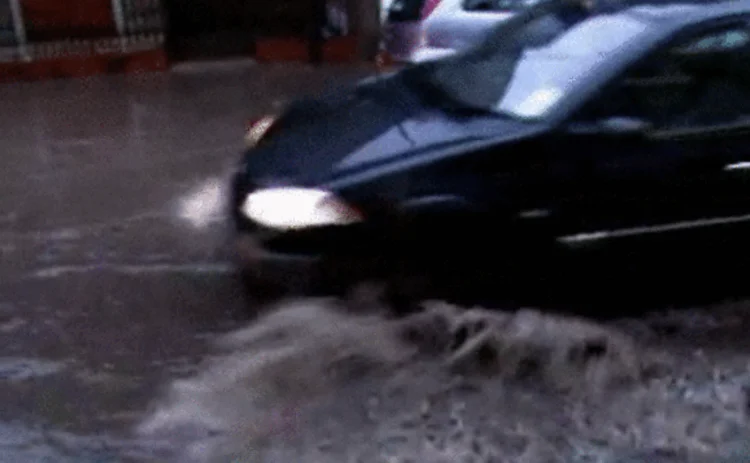

Emmanuel Kenning asks how the insurance profession has responded to the floods in Cornwall.
A reported 50mm of rain fell over Cornwall in a matter of hours overnight on 16 November, causing flash flooding. While fortunately there were no fatalities, the water reached a height of 1.8m in places causing people to be trapped in their homes and cars. Figures from Cornwall Council show that 230 homes and 400 businesses were affected.
The destruction comes a year after the Cumbrian floods for which the damage bill has now breached £275m (£174m was picked up by insurers). Prime Minister David Cameron visited Cornwall, followed shortly afterwards by the Prince of Wales. The insurance community also responded swiftly, although initial fears of a repeat of the events in Cockermouth soon subsided.
Ross Macpherson, property director at QuestGates, said: "Initially, we geared up for it to be as big as Cockermouth but we found a lot of the claims have come in the first two days and the subsequent throughput has not been on the same scale."
One reason for this has been the different types of landscapes affected. George Bentley, UK client services director at GAB Robins, said: "Cockermouth had lots of businesses in the town centre and properties around it. Cornwall is less built up and less densely populated. Some areas had a huge amount of flooding but no buildings."
Worst hit
The Eden Project in St Austell was the highest-profile casualty, but in the main the floodwaters receded relatively quickly. Dominic Clayden, director of claims at Aviva, was in Cornwall and noted the differences from Cockermouth. He said: "There was something like a month's rain in an hour [here] but the big difference is that the river did not burst its banks." Clayden, while keen to stress that for individuals the situation is hard, highlighted a further difference: "The depth of water in properties is different. In Cockermouth the tidemark was around my shoulder, in Cornwall it was sub-knee level."
Even allowing for the fact that roads became passable more quickly in Cornwall than Cockermouth, it does appear the insurance industry has learned the lessons of previous floods and shown itself in a strong light. Clayden was proud of Aviva having people on the ground within hours: "Rather than wait for customers to call us, we knocked on doors to help. We have experience of helping with flood claims whereas, in the vast majority of cases, it was their first experience."
With the region renowned for its holiday homes, there could be more claims to come. Both loss adjusters also reported checking on properties before a claim had even been made. Macpherson added: "For some of the postcodes we've visited, there has been evidence of buildings that have been damaged but locked up."
Vehicle loss
At Aviva, another issue was the high level of motor claims. Clayden explained: "As a percentage of claims, the number of flooded cars was high. The topography of the area meant lots of on-street parking: the roads literally became like rivers."
Bentley believed that the final figure for the Cornwall floods will not come close to the £275m bill in Cockermouth: "The cost will be in the millions but it remains to be seen how many it will be." Attention has now turned to the clean-up operation: debris is being removed and buildings are being cleaned and sanitised. The drying process is beginning, although in older properties this will prove particularly challenging. Bentley reports some clients as investigating installing extra flood resilience through additional electrical wiring insulation; raising socket levels on walls where appropriate or replacing timber with suitable plastic products are further suggestions the insurance sector has provided.
With the Association of British Insurers releasing figures showing flood insurance bills have soared to £4.5bn since 2000 - up from £1.5bn over the previous decade - attention is once again falling on cuts in flood defence spending. Brokers will be hoping that the insurance profession's positive approach to the Cornwall crisis will hold it in good stead as it continues to lobby on this crucial issue.
|
Cockermouth: one year on |
||||||
| The total estimated cost of the floods is thought to be over £275m according to newly released figures. This includes: | ||||||
| • An estimated £124m of damage to commercial property and business infrastructure. | ||||||
| • £91m worth of damage to residential and other properties. | ||||||
| • £34m costs in restoring the country's transport network, including damaged and destroyed bridges, roads and the Port of Workington. | ||||||
| • An estimated £7m to the health service as twp GP sergeries in Cockermouth were flooded and forced to relocate to the town's community hospital: temporary clinics were established in communities cut off by the floods. | ||||||
Only users who have a paid subscription or are part of a corporate subscription are able to print or copy content.
To access these options, along with all other subscription benefits, please contact info@insuranceage.co.uk or view our subscription options here: https://subscriptions.insuranceage.co.uk/subscribe
You are currently unable to print this content. Please contact info@insuranceage.co.uk to find out more.
You are currently unable to copy this content. Please contact info@insuranceage.co.uk to find out more.
Copyright Infopro Digital Limited. All rights reserved.
As outlined in our terms and conditions, https://www.infopro-digital.com/terms-and-conditions/subscriptions/ (point 2.4), printing is limited to a single copy.
If you would like to purchase additional rights please email info@insuranceage.co.uk
Copyright Infopro Digital Limited. All rights reserved.
You may share this content using our article tools. As outlined in our terms and conditions, https://www.infopro-digital.com/terms-and-conditions/subscriptions/ (clause 2.4), an Authorised User may only make one copy of the materials for their own personal use. You must also comply with the restrictions in clause 2.5.
If you would like to purchase additional rights please email info@insuranceage.co.uk
More on Broker

Broker Expo 2026: Don’t shy away from cyber
Experts at the Broker Expo urged delegates to keep plugging away on cyber amid the ongoing low level of uptake by SMEs.
Brown & Brown UK launches retail graduate programme
Brown & Brown UK has launched a retail graduate programme starting with 16 participants.

From manual bordereaux to trading agility
Pricing can now change daily, but trading infrastructure hasn’t kept pace. Matt Wellman of Applied Systems explains why manual bordereaux must go.

Broker Expo 2026: Early and open conversations needed for brokers and underwriters to win
As the industry starts to lose its face-to-face culture, being open to early and open appetite conversations through different channels will be key to establishing good relationships between brokers and underwriters.

Howden names Richardson to new CCO role
Howden has appointed Elliot Richardson as chief commercial officer for the group, a newly created role at the broker.
Seventeen doubles down in Gibraltar with latest buy
Seventeen Group has bought Sovereign Insurance Services, striking its second deal in Gibraltar in recent months.

Broker Expo 2026: Days of Frankenstein’s Monster consolidation over
Broker consolidation is evolving from the ‘Frankenstein’s Monster’ approach of the past to one which is more focused on culture, integration and organic growth.

Ex-Ravenhall boss launches new broker Decello
Neil Grimshaw has opened commercial broker Decello in Huddersfield, labelling it a boutique ‘advice-led’ firm for businesses and private clients.