

The PB interview - Bill Cooper: Bright light in the gloom
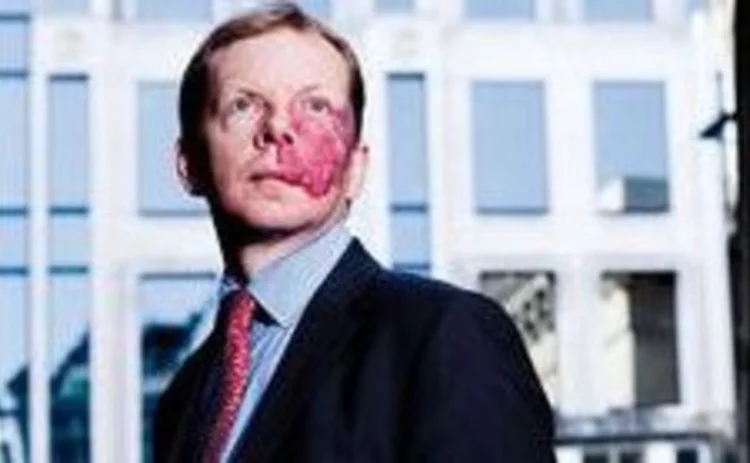

Andrew Tjaardstra meets Bill Cooper, managing director for insurance in the financial institutions division at Lloyds TSB Corporate Markets. Despite being cautious about prospects for brokers as the UK's economic malaise continues, the firm is very much open for business.
Banks and bankers aren't exactly popular at the moment: many will be feeling the heat as they continue to try to untangle themselves from billions of pounds of debt signed off in the good times that needs to be refinanced in the next few years.
Lloyds TSB was seen as one of the prudent banks in the boom years; its chief executive officer Eric Daniels was often criticised as too conservative. This all changed when he decided to help rival HBOS out of a tight spot, with encouragement from the government, by merging the two banks. Conversely, banks are now being criticised for not lending enough.
Many Lloyds shareholders have not forgiven Daniels for this move, with some activist shareholders launching a £14bn lawsuit against the bank, alleging that they were not told the full extent of HBOS's problems at the time of the merger. Billions of pounds of write-offs and losses followed but finally the bank has returned to profit, although it still needs to appease European competition concerns by disposing of one-fifth of its branch network, including Cheltenham & Gloucester - which could be listed - within four years: this represents 4.6% of the UK's current account market and 19% of the bank's mortgage assets. On 5 July, it sold 70% of its private equity business, which includes TM Lewin and Vue Cinemas.The government also owns 41% of Lloyds Banking Group through UK Financial Investments and there have been more than 10,000 job losses at the group since the merger.
Bill Cooper's insurance division is a rare bright spot in a troubled banking sector and has managed to double its profits over the last five years, confirming once again that insurance isn't such a bad place in a recession if you keep your wits about you. Cooper has been involved in transactions in the insurance sector (including for companies such as Amlin, Catlin and Hiscox) for over a decade, joining the bank as a graduate management trainee in 1986 after finishing a master's degree in history at Cambridge University.
Over the last decade, Cooper has established himself as one of the first people senior brokers turn to when needing to finance or grow a business; he has worked with Swinton, Giles, Towergate and BGL. His role became especially important after the implosion at HBOS. Cooper had already dealt with the team at HBOS because it - and his own firm - were significant lenders to Towergate at the time of its large refinancing in 2007. Cooper also inherited Giles' deal with private equity house Charterhouse. Cooper denies asking Giles to slow its spending spree, despite warning consolidators in PB's sister title Post that they would have to find new ways to grow with acquisition funds drying up and the economy and squeeze on commissions putting pressure on the model.
He told Post on 15 April 2009: "The days of these businesses doing big acquisitions at two-and-a-half times brokerage or 15 times earnings are gone for now because virtually none of them have the capacity to do that. Consolidators will have to look at growing in a different way."
Exit strategy
The combination of a commission squeeze, the lack of a hard market and the economic crisis has contributed to a difficult time for the consolidators. Thankfully, there have been no high-profile casualties. In fact, Cooper appears extremely relaxed about clients such as Towergate, which he says has a particularly healthy cashflow, although he is worried by the pressure from aggregators on local independent brokers and other personal lines brokers. More recently, Cooper has been spearheading Towergate's efforts to raise money on the corporate debt markets. The initial fundraising was postponed as a result of turbulent markets.
Cooper also claims that the original funds negotiated by Giles and Charterhouse are in place but says the larger deals that were in Giles' plans have become harder to make. He says there is an expectation of a large acquisition by Giles but the broker has been concentrating on smaller ones and integrating and organising the firm's purchases.
He feels there is going to be change for the consolidators over the next three years because external investors have finite timescales. Though the much-anticipated consolidation of the consolidators is still on the cards, Cooper recognises that timelines have been deferred by the state of the economy. Flotations are still tough options for brokers in his opinion, although the strong cash flow elements could produce reliable dividends for long-term investors. He argues that it is hard to find new business growth, as "only 20% of business changes hand at best".
Cooper is adamant that, despite being privy to large amounts of information on rival brokers and insurers, conflicts are managed well by dividing his teams into silos where necessary.
Lloyds has a regional network and brokers are divided between those starting, with up to £15m turnover, and those in the corporate segment with between £15m and £500m. One of the latest bits of funding has been financing Henderson's acquisition of Leeds-based Denney O'Hara, which was supported from Lloyds' Hull office. Altogether, Henderson has been provided with £4.5m of support, of which £2m was used to purchase Watford-based UK Credit Insurance Specialists in September 2009.
Another deal has been providing Hastings Direct with a £20m cash injection following its managment buyout in December 2008. The bank, which makes money from interest and fees on lines, operational banking support and offering financial products and support, is open for more business. He says: "Interest rates are relatively low and the money is there if you have a good business plan." Cooper is looking for businesses to fulfill certain criteria: "The sustainability of cash flow, evidence of stress testing and a sensitivity analysis. You could use your auditors or accountants to help you." He admits, though, that there isn't a great deal of appetite for debt at the moment because caution is the watchword. It also appears that the Chancellor's overnight increase of the capital gains tax threshold will not have anywhere near as much impact as the last rise - introduced over a much longer period - on the amount of acquisition activity in the market.
Troubled environment
Cooper thinks that the economy is in an unfortunate position, which has hurt the sector. He says: "The operating environment has been difficult and won't improve in the short term. There will be more cuts and unemployment and there has already been 12 months of client downsizing and failure.
"Haulage companies are buying less insurance, for example, and premium volumes are not growing. Life is difficult and profit margins are falling. The Emergency Budget confirmed that tough times are ahead, although the insurance sector has emerged relatively unscathed after insurance premium tax hardly moved. Nobody is planning on the economy improving."
There are some signs of life in the acquisitions market. Brit is one of Lloyds' clients and has been subject of a £785m bid from private equity firm Apollo after announcing a 30% increase in profits in February for 2009, although it was hit for £48m by the Chile earthquake, which struck in the same month. Cooper thinks that the timing could be good because valuations have fallen below book value and insurance is currently unloved while premium rates and profit margins have been falling.
He says: "At some point, somebody will say this is good value and perhaps that is what has happened with the Apollo bid. Berkshire Hathaway upped its stakes in Swiss Re and Munich Re recently and is expecting a good return." Cooper believes that, in 2009, strong profits masked falling premium rates and that insurers have a slow information feed in terms of existing results because it takes time for them to work through given the nature of liability periods.
Yet valuations are low and insurance has a more resilient core than many sectors, with the potential for strong dividends and medium-term rate increases. The struggle for private equity might be in raising satisfactory war chests for sellers, with management keen to achieve more than book value. Cooper doesn't expect big changes because there is not a great deal of capital available.
He is particularly impressed by specialist insurers with low-cost models and cites Hiscox, Amlin and QBE as businesses that have shaken up the market.
Cooper thinks that the much-criticised merger of Lloyds and HBOS is now "over the worst" and that the bank "has a bright future". In insurance, he is determined to be "client focused" and a "long-term partner". Having doubled his division's profitability in five years and despite the hard market, Cooper's bosses will be pleased to have a segment that is secure and stable. Expect Lloyds to give it plenty of support in the years to come.
• Along with a host of insurance big-hitters, Bill Cooper will appear at this year's The British Insurance Summit 2010 on 22-23 September at the Grange City Hotel, London. To attend and for more information, go to www.britishinsurancesummit.com.
Bill Cooper on the Emergency Budget
The Lloyd's Banking Group verdict on the Emergency Budget was that it strikes a 'resonable balance' between fiscal austerity and economic recovery but it raises concerns over whether or not Chancellor George Osborne can hit his growth forecasts given the amount of fiscal tightening and the rise in VAT to 20% in 2011. The group warns that inflation could average around 1% higher in 2011, which could lead to interest rates rising faster than expected. As for the bank itself, an annual banking levy of £2bn was seen as lenient and the markets welcomed similar moreves from France and Germany.
Lloyd's TSB in the insurer market
• Swinton's £175m refinancing deal in December 2008, which helped to fund its takeover of Equity Insurance Brokers for £50m.
• Towergate benefitted from refinancing of £580m in 2007 - with the help of HBOS - leading to the purchases of software house Open GI and Broker Network. Towergate's debts were refinanced last year. Cooper has since been heavily involved in the group's attempts to raise money in the corporate debt markets.
• Hastings Direct was given a £20m cash injection in summer 2010 after a management buyout in December 2008, which was backed by IAG UK head Neil Utley.
• In summer 2009, software house Xchanging received a £110m syndicated loan.
• In late 2001, Lloyds TSB's Hull office arranged a loan and working capital funding of £4.5m to Leeds-based Henderson Insurance.
Only users who have a paid subscription or are part of a corporate subscription are able to print or copy content.
To access these options, along with all other subscription benefits, please contact info@insuranceage.co.uk or view our subscription options here: https://subscriptions.insuranceage.co.uk/subscribe
You are currently unable to print this content. Please contact info@insuranceage.co.uk to find out more.
You are currently unable to copy this content. Please contact info@insuranceage.co.uk to find out more.
Copyright Infopro Digital Limited. All rights reserved.
As outlined in our terms and conditions, https://www.infopro-digital.com/terms-and-conditions/subscriptions/ (point 2.4), printing is limited to a single copy.
If you would like to purchase additional rights please email info@insuranceage.co.uk
Copyright Infopro Digital Limited. All rights reserved.
You may share this content using our article tools. As outlined in our terms and conditions, https://www.infopro-digital.com/terms-and-conditions/subscriptions/ (clause 2.4), an Authorised User may only make one copy of the materials for their own personal use. You must also comply with the restrictions in clause 2.5.
If you would like to purchase additional rights please email info@insuranceage.co.uk
More on Broker

Which? demands ban on brokers charging high motor APRs
Which? has named and shamed motor insurance brokers charging high interest rates on monthly policies and called for a ban on the practice.

Soft market hits Kelliher in 2025, with turnover and profits down
Profits dropped at Kelliher Insurance Group in 2025 more than wiping out the surge seen in 2024.
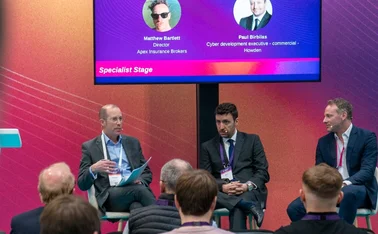
Broker Expo 2026: Don’t shy away from cyber
Experts at the Broker Expo urged delegates to keep plugging away on cyber amid the ongoing low level of uptake by SMEs.
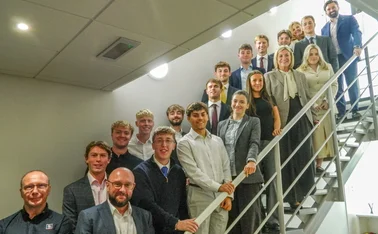
Brown & Brown UK launches retail graduate programme
Brown & Brown UK has launched a retail graduate programme starting with 16 participants.

From manual bordereaux to trading agility
Pricing can now change daily, but trading infrastructure hasn’t kept pace. Matt Wellman of Applied Systems explains why manual bordereaux must go.

Broker Expo 2026: Early and open conversations needed for brokers and underwriters to win
As the industry starts to lose its face-to-face culture, being open to early and open appetite conversations through different channels will be key to establishing good relationships between brokers and underwriters.

Howden names Richardson to new CCO role
Howden has appointed Elliot Richardson as chief commercial officer for the group, a newly created role at the broker.
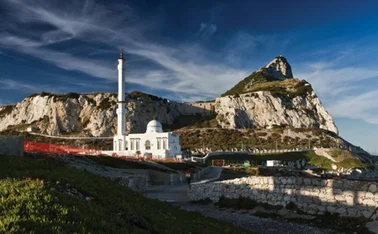
Seventeen doubles down in Gibraltar with latest buy
Seventeen Group has bought Sovereign Insurance Services, striking its second deal in Gibraltar in recent months.