

The PB Interview: New model broker
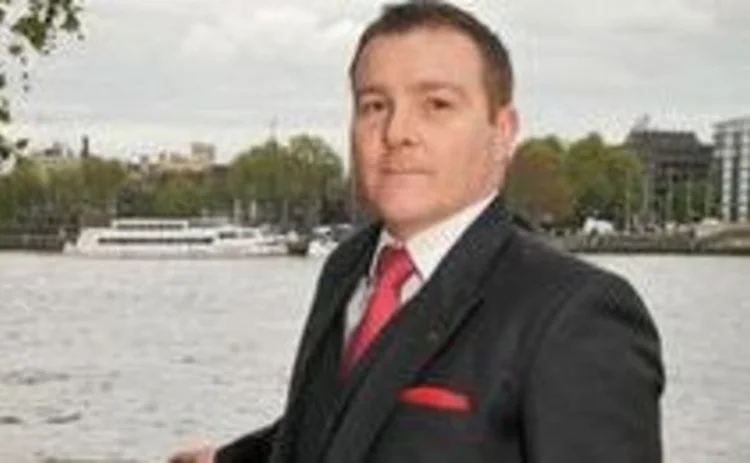

Andrew Tjaardstra meets Stuart Williams, a director at Nottinghamshire-based broker Cowens Survival Capability, who is passionate about brokers promoting their professionalism to clients and wants to charge his clients fees for his services.
As the Chartered Insurance Institute attempts to further its professionalism drive with the release of the Aldermanbury Declaration, the directors at Cowens Survival Capability have been sold on the ideas behind it for years and are determined to have fellow broker managers follow their lead.
Stuart Williams' colleague, associate director Grant Scott, is president at the Insurance Institute of Leicester and has been seen in print over the last month attacking fellow brokers for only paying lip service to promoting chartered status; he even argues that further complacency in this respect could contribute to the future of the CII being in the balance. Cowens was one of the first to take up the CII's Chartered Status offering and now has the gold-standard label proudly displayed on its website homepage.
Only 60 brokers so far have the badge. Scott is upset with those that have chartered status but do not push it and those that haven't yet engaged with obtaining it. He says: "There are a number of businesses that pay lip service to the standard and are happy to have the CII chartered status badge but do not get involved in ensuring the continuity of quality.
"Obtaining the standard shows that organisations are committed to the highest professional standards and with it comes a responsibility to maintain those standards. While many smaller firms get involved in membership activities, there are those who do very little. I'd like to see the larger outfits getting involved because, without their contributions, the future of the CII could well be under threat."
It seems that many brokers feel that they themselves are not doing enough. In PB's May 2010 Sentiment Survey, 32% of respondents said that they were not investing enough in talent and learning and development. Only three weeks after its publication, 39% had read the Aldmermanbury Declaration: many brokers had an opinion on the issue, with 66% believing that the initiative would have a positive effect.
Right moment
The CII has a challenge on its hands to engage more with brokers facing an uncertain economic environment. Although much of the uncertainty results from catastrophic failures within the wider financial services community - predominantly banking - those in insurance think that now is the time to promote and ingrain its professionalism.
The task is large. As Ed Murray wrote in April's PB, according to YouGov research, public trust in insurance brokers is lower than in banks, which must be galling. Another survey by QBE published in January revealed that only 11% of small and medium-sized enterprises would look to brokers for advice on the financial crisis in 2010; one-third of SMEs also said that they would be happy to reduce the cost of insurance by going direct to an insurer. These results are likely to do nothing to quell tension between brokers and insurers over new business and renewal pricing, which many brokers feel demonstrates a lack of professionalism in itself.
Stuart Williams, deputy president at the Peterborough Insurance Institute, has experience of training that has made him a passionate believer in investing in staff to ensure that they are equipped with the relevant exams from the CII. Cowens Survival Capability was one of the first brokers to take up chartered status: over half the board and all customer-facing staff are members of the CII and there is a professional development programme in place. Staff members are given a half-day each week to work on studies and there is also a mentoring process underway.
Training benefits
Williams comments: "If you have a training programme and the right culture, you will attract the right people, especially in Mansfield, which is not exactly a hotbed of insurance talent." Cowens is also ensuring that its managers gain National Vocational Qualifications in management.
Some of the broker's best recruitment success came by taking on five youngsters at school for training. Three of them are still at the broker, one achieving their ACII last year and one becoming a manager at the company's small business unit. Attitude is all-important in recruiting at Cowens: it uses profile analysis, including psychometric and psychological tests from Thomas International, to try to understand the motivators of their recruits.
Williams is coy about how much its training regime costs the business but is adamant that it generates return on investment, describing the advantages it brings to the business as "immeasurable".
He says that the investment in professionalism makes a difference when talking to customers - helping to divert the conversation from price - and that the term 'chartered' is better understood than abbreviations such as ACII. Though only 60 brokers have chartered status, Williams is adamant that the marque is worth having. He comments: "If you want to leverage your offering, do something different. Brokers need to get involved and start banging the drum to give something back. The Aldermanbury Declaration will be brought into forward-thinking brokers but many are slow on the uptake."
Williams has strong aims for his staff: "We put everybody through exams if at all possible. All relevant people are members of the CII. If you look at the levels of qualifications that the life side needs to adopt, we decided that we wanted our customer-facing staff to be ACIIs at minimum."
Change
Williams joined Cowens from school in 1985, admitting to "stumbling into insurance" on his way to becoming an account handler for fellow senior director Paul Chaplin. Today, the two share the same office in Mansfield. Under the guidance of original partners and founders Bob Cowen and Slavimir Kachta, Williams was able to complete a diploma in business studies with one day a week of leave, then going on to complete his ACII exams by the age of 21.
In 2002, Paul Chaplin and Williams became joint managing directors as Kachta stepped back from the business; they share the same office and are proud of their team unity. In 2004, they opened an office 70 miles away in Peterborough, described by Williams as a "cold site" and "virgin territory".
Williams explains the changes that they have made to business: "It was predominantly an insurance broking business, covering lifestyle. It was growing but not to a structured plan. We tool control, wanting to make our mark. Paul and I took the business apart, put it back together and placed our stamp on it. Several years later, we set about increasing turnover and were successful at it, though we lost our focus somewhat so employed business coaching firm Shirlaws in the middle of 2007 to allow an outsider to take a look. We had been successful but had become very embroiled in the day-to-day operations."
The business coaches challenged Chaplin's and Williams' viewpoints to make sure that they found a clearer understanding of their market proposition and how they engaged with customers. The results saw the pair focus on professional standards, concentrating the sales force and introducing a more robust company structure.
The mix of business at Cowens includes haulage, motor trade, manufacturing, food and high-risk liability. The broker also has a Lloyd's facility with RL Davison. Altogether, there is £15m of gross written premium.
Cowens' SME business unit, headed in Mansfield by Juliet Marke, has an exclusive deal with Allianz to use software platform Acturis for premiums of up to about £10,000. Allianz has embarked on a number of similar long-term deals with brokers across the UK and Chris Hanks, head of commercial at Allianz, argued to PB in August 2007 that without such deals he would struggle to achieve the right margin for SME business.
Williams is eager to double Cowens' client base over the next five years through emphasis on good working culture and service. He is also working on a project to make the firm's entire business model fee based and is using the Alphatec time box to help with understanding more about how this works. Williams argues that fees give greater control over income and can potentially provide more pricing stability.
Cowens has also been working with business continuity firm Crisis Survivor to help clients plan for disaster recovery, selling its risk management and business continuity planning services. Cowens is spreading the message across multiple media that 67% of companies go out of business within two years if they suffer a major loss, while 80% are gone within five years. They want to address this by ensuring the right protection and disaster planning is in place for their clients and have a created a 126-point checklist to provide cover.
Slowly but surely
It remains to be seen how many brokers take up chartered status - it has been painfully slow even among broker members of the Insurance Broking Faculty - but the campaign for greater focus on professionalism by brokers is stepping up a gear. Many will say that Scott's assertion that the future of the CII is at stake is mere hyperbole, while some will disagree with the CII's own offerings and attitudes. However, as insurance broking becomes more competitive, those brokers serious about promoting the benefits of professional advice may want to consider where they fit.
As Lynn Richards-Cole, associate director at Perkins Slade, takes up the role at the CII's Insurance Broking Faculty as its first female chairman, she knows that the likes of Grant Scott and Stuart Williams are on her side. Whether or not they can persuade even one-quarter of all brokers that the best route to professionalism is through chartered status remains to be seen.
Meanwhile, Williams will continue his drive towards fees, growing his book and banging the drum for chartered status. Local rivals, you have been warned.  Investing in the Profession
PB and sister title Post arerunning a campaign this year to encourage greater investment professionalism. all the campaign content - including videos, featrues and blogs - can be found by typing 'Investing in the profession' into the search box at the top of the page at both www.broking.co.uk and www.postonline.co.uk. We welcome any feedback on the campaign and your efforts to increase professionalism, as well as any concerns that you might have about the professional bodies promoting your business. Send your emails to pbeditorial@incisivemedia.com.
Only users who have a paid subscription or are part of a corporate subscription are able to print or copy content.
To access these options, along with all other subscription benefits, please contact info@insuranceage.co.uk or view our subscription options here: https://subscriptions.insuranceage.co.uk/subscribe
You are currently unable to print this content. Please contact info@insuranceage.co.uk to find out more.
You are currently unable to copy this content. Please contact info@insuranceage.co.uk to find out more.
Copyright Infopro Digital Limited. All rights reserved.
As outlined in our terms and conditions, https://www.infopro-digital.com/terms-and-conditions/subscriptions/ (point 2.4), printing is limited to a single copy.
If you would like to purchase additional rights please email info@insuranceage.co.uk
Copyright Infopro Digital Limited. All rights reserved.
You may share this content using our article tools. As outlined in our terms and conditions, https://www.infopro-digital.com/terms-and-conditions/subscriptions/ (clause 2.4), an Authorised User may only make one copy of the materials for their own personal use. You must also comply with the restrictions in clause 2.5.
If you would like to purchase additional rights please email info@insuranceage.co.uk
More on Management

AUB completes Prestige deal
AUB Group has completed its acquisition of 95.9% of Prestige Insurance Holdings.

NFP buys Bspoke to expand its UK specialist insurance services
NFP, an Aon company, has purchased Bspoke Insurance Group to strengthen its existing suite of insurance solutions while expanding technical underwriting expertise and specialist product knowledge.
Yutree outlines plans after MBO
Laura Hancock, managing director of Yutree Insurance has outlined plans for the future following a management buyout, including opening an office in Norwich.

Should you sell your broking business to an Employee Ownership Trust?
Tax-efficient exit strategies and staff incentivisation have become hot topics among broker leaders since the recent increases in Capital Gains Tax and Employer National Insurance. In the second part of a series focused on the fallout from the 2024 Labour Budget, Catherine Heyes examines how broker owners can use Employee Ownership Trusts to respond to these developments.
Chaucer CUO named new CII president
Nicola Stacey, chief underwriting officer at Chaucer, has been elected the new president of the Chartered Insurance Institute.

Montagu agrees to sell Open GI to minority shareholder Ares
Ares Management is set to acquire Open GI, with the deal signed on 9 August 2024, Insurance Age can exclusively reveal.

“Nobody came close to AUB” – CEO Cheesbrough on Movo’s new investor
The Movo Group is looking to create larger broking hubs and kickstart its directly authorised network Fusion after AUB took an 80% equity stake, according to Lea Cheesbrough, Movo Partnership CEO.
Ex-Ardonagh MD Barclay takes over as CEO of top 100 broker
Lycetts has appointed Ian Barclay to CEO, succeeding Charles Foster who is retiring after seven years in the role.