

Market Watch - Low carbon economy: High hopes for low carbon
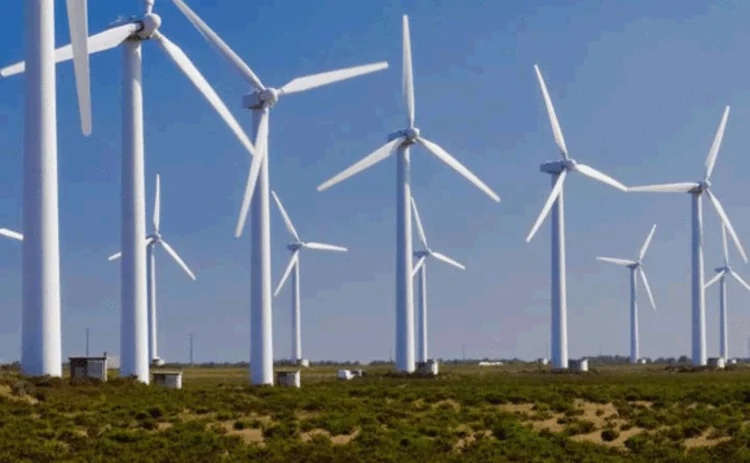

Andrew Williams investigates the promises and pitfalls of offering cover across the many and varied risks in the growing green energy sector.
Interest in writing renewable energy business is increasing; many in the industry anticipate that promoting a low-carbon economy will lead to a further upturn in business and employment opportunities in renewable energy insurance.
In meeting its commitment to an 80% reduction in carbon emissions from 1990 levels by 2050, the UK government needs to ensure that radical changes in infrastructure and power generation are set in train. A first step was made earlier this year with the announcement of the creation of a £1bn green infrastructure fund to promote low-carbon cars, renewable energy, green waste projects and a new generation of nuclear power stations; the government expects the fund to create up to 400,000 low-carbon jobs by 2015.
Given that the renewables industry is already the fastest-growing form of new capacity generation in insurance, such unprecedented growth represents a significant opportunity - as well as a new source of risk - for the renewable energy insurance market.
"Any transition will create both opportunities and risks and moving to a carbon-aware environment will be the same," says Thomas Howe, chief underwriter at HSB Engineering Insurance.
The challenges posed by working in the marine environment are considerable and there are numerous key risks for brokers to consider when looking at the offshore market, including start-up delays, design defects, transport and installation damage, in-service damage and breakdown, loss of profits, employee risks and third-party liability. In addition to the threat posed by natural phenomena - such as the risk of a major storm damaging wind turbines - wind farms might also become targets of terrorist attacks. Moreover, brokers should also make efforts to understand current and emerging technologies and check compliance and safety procedures.
Howe says: "There is enormous activity in the wind and solar power segments. Many brokers and insurers are active in this area but the teething pain of new technology has been a challenge for many; insurers must be alert to avoid paying for design and development costs."
A bright future for solar?
The UK's gloomy weather leaves it on the periphery in terms of large-scale solar energy generation, though several massive solar projects are currently underway throughout southern Europe. Despite this, it is likely that green technologies such as solar will be increasingly adopted at the residential level, with rooftop solar panels becoming a much more frequent sight. This will represent a large potential pool in terms of numbers of installations but individually might only result in small values and premiums. Distributed micro-generation of this type could also create new risk exposures.
Howe comments: "Some agreements might have homeowners selling small amounts of surplus power back to utilities. Are the policy wordings going to respond to this circumstance? Will there be a broad understanding that this will be a normal residential exposure?"
Within the industry, many view increasing reliance on nuclear power generation as supportive of a low-carbon economy while, at the same time, offering a means of meeting increasing consumer demand for electricity.
Nuclear energy supplies around 18% of the UK's electricity and there is a global trend toward significant investment in new nuclear power stations. Worldwide, 35 nuclear reactors are under construction and the UK is expected to commence a programme to replace its fleet of 10.
A carbon dioxide emitting insured company might also increase its investment in carbon emission reduction projects overseas; this strategy is recognised under the Kyoto protocol to fulfil carbon emission reduction obligations in the country where the insured is situated.
Jillian Raw, lawyer and energy specialist at law firm Kennedys, says: "Risks with such projects include the failure of new carbon-emitting technology, delays in project start ups, the geographical location of the project, political risks and the failure of the project to satisfy carbon-emitting criteria."
As the demands of the low-carbon economy gather pace, global industry will also need to look for ways to reduce its energy use. In many cases, this will require significant capital investment in new plant and machinery, which could bring about new insurance opportunities. Among the inherent hazards of a burgeoning low-carbon economy is its relatively immature nature and, particularly, the instability of emerging technologies.
Howe comments: "The rapid pace at which technology develops means that equipment might have a shorter support lifetime and lower-than-expected useful life ranges, affecting reliability and the cost of insurance covering that equipment."
In a related area, although it might be a difficult concept for many businesses to embrace, existing buildings or structures that have been in place for several years could become outdated because they are no longer environmentally friendly. In this light, the reinstatement value of a property will need to reflect the cost of carrying out energy improvements in any structure that might be granted planning permission and built as a replacement to meet existing and future local authority environmental requirements.
Howe adds: "The broker's challenge is to acquire the skill to advise his client on replacement values and ensure that the policy wording adequately provides this cover."
Size of the market
According to some estimates, the annual insurance premium volume for the entire renewable energy sector globally is currently around £250m and is set to grow faster than other industry segments. This is likely to result in large opportunities, at least during the transition phase, as the lack of commonality of the technology and installations will create a wide variety of risk profiles. Yet beyond this initial period, brokers might be better served by adopting a more cautious approach.
Howe comments: "In the long term, [the market is] perhaps not as big as many think and many initiatives will not stand the test of time. As the technology and its day-to-day application becomes more established and the experience more reliable, many of these exposures will find their way into standard policy wordings, particularly in personal lines."
Fraser McClachlan, chief executive officer at underwriting agency GCube Insurance, says: "The market opportunities are huge - in the many billions of pounds - and as such the potential premiums are in the many millions. A note of caution, though: this sector is viewed by many as the next dotcom bubble. Insurers and brokers are so keen to get into the sector that there is a very real danger of everyone rushing at once and then the entire market imploding on itself. The insurance market came unstuck with the wind energy industry in the 80s; it is looking like it will do the same this time around."
A key challenge for brokers is to collaborate with insurers in seeking to understand the needs of the designers, developers and manufacturers of low-carbon technology. In doing so, brokers must develop skills in evaluating innovations and new technologies, in much the same way that venture capitalists do currently. McClachan cites warranty products for wind turbines failing to take off but says that tax credits are one option to explore.
Howe says: "Brokers need to look at their distribution channels for clients that will invest in technology and, if their insurers won't or can't provide a solution, expand the conversation quickly with insurers that can because the products are on the way. The timeline if the broker is not ready might damage relationships with customers."
Nuclear move
Given that a substantial proportion of the UK's nuclear reactors will have to be replaced by 2020, if a new fleet of reactors is commissioned to replace the existing 10, it is expected that this would involve a programme of five twin-reactors being built over a period of up to 20 years. There is expected to be growing opportunity for the pool of nuclear risks insurers, not only in the UK but also globally, particularly in China.
Raw remarks: "In addition, the replacement of the UK's reactors will present opportunities as part of a decommissioning programme. The premium for such risk is site-specific but material damage rates are around 4% on total value for quota share placements. Delay in start-up prices average around 1.5% on sums insured for indemnity periods of about 36 months."
In nuclear power, much of the engineering and construction work on a new plant is not directly related to nuclear materials containment; it is more akin to ordinary works carried out on ordinary commercial construction projects. Insuring common construction risks can be handled by capacity in the construction market; it is also estimated that over 70% of the plant and equipment to handle electrical, mechanical, instrumentation and control construction for a new nuclear plant can be supplied by existing UK manufacturers.
Prospects
'Green endorsements' for both household and commercial risks are beginning to find their way onto the market, allowing for buildings and machinery to upgrade to more environmentally friendly technology, albeit with specific conditions and limits attached.
While there are already established markets for renewable power generation, erection and operational coverage for 'portfolios' of smaller installations are also beginning to be developed by both brokers and insurers.
A number of insurers are also developing products that are designed to focus on the carbon-credit delivery risks associated with emission reduction programmes listed under the Kyoto Protocol. Such offerings include carbon credit delivery insurance (which aims to deal with risks such as technological performance), political risks (such as a government taking control of a foreign project in the country where the risk is situated), and project or financier insolvency (which prevents delivery of carbon credits). In the context of nuclear risks, there has also been mention of the need for nuclear fuel insurance, particularly as a result of the significant nuclear expansion in China.
Raw comments: "At present, the UK relies on Australia and certain African countries for uranium but, as global reliance on nuclear power increases, it might be necessary to consider specific insurance products to insure the supply of nuclear fuel."
In the UK, it is likely that the continuing recession will have at least a short-term impact on the renewables sector, particularly in terms of a reduction in demand and prices, which might mean that some companies could be less keen to invest in renewable energy. The general view, though, is that there will be no major long-term impact on the industry.
The prospect for ongoing government support is more uncertain. Although the new Prime Minister has pledged to lead the greenest government ever, severe budgetary constraints will mean that some cuts in finance are unavoidable.
Modest cuts of £250m in environmental spending have already been announced and the government seems at best vague on its commitment to investment in renewables. At this crucial stage, the market needs strong assurances that the new administration is willing to abide by long-term commitments, particularly in the burgeoning offshore wind industry.
Andrew Smith, director of energy consultancy London Analytics, says: "Those assurances will lead to finance being channelled into expanding the supply chain within the UK. Without them, the country will have to continue to buy in services, resulting in delays, unnecessary expense and exported jobs."
Either way, the estimate that the UK needs £200bn of investment by 2020 to provide secure low carbon and renewable energy means that brokers might have to wait some time before fully realising the undeniable opportunities offered by the bold new green era.
The 20-20-20 agreement
The European Union's 20-20-20 climate and energy package (a kind of mini-Kyoto protocol for the EU) includes an obligation for member states to achieve a 20% reduction in carbon dioxide emissions and a 20% improvement in energy efficiency by 2020. In the UK, it is likely that wind energy will provide most of the renewable energy required to meet this target; this country is already the world's biggest producer of offshore wind energy and developers are preparing to deliver an additional 25GW of electricity-generating capacity by 2020 (1GW provides power for 700,000 homes).
At a glance: the UK wind energy industry
Projects: 264
Turbines: 2906
Megawatts: 4,577.04
Homes equivalent: 2,559,247
CO2 reductions each year: 5,172,238 tonnes
SO2 reductions each year: 120,285 tonnes
NO2 reductions each year: 36,085 tonnes
Source: UK Wind Energy Database, www.bwea.com
Only users who have a paid subscription or are part of a corporate subscription are able to print or copy content.
To access these options, along with all other subscription benefits, please contact info@insuranceage.co.uk or view our subscription options here: https://subscriptions.insuranceage.co.uk/subscribe
You are currently unable to print this content. Please contact info@insuranceage.co.uk to find out more.
You are currently unable to copy this content. Please contact info@insuranceage.co.uk to find out more.
Copyright Infopro Digital Limited. All rights reserved.
As outlined in our terms and conditions, https://www.infopro-digital.com/terms-and-conditions/subscriptions/ (point 2.4), printing is limited to a single copy.
If you would like to purchase additional rights please email info@insuranceage.co.uk
Copyright Infopro Digital Limited. All rights reserved.
You may share this content using our article tools. As outlined in our terms and conditions, https://www.infopro-digital.com/terms-and-conditions/subscriptions/ (clause 2.4), an Authorised User may only make one copy of the materials for their own personal use. You must also comply with the restrictions in clause 2.5.
If you would like to purchase additional rights please email info@insuranceage.co.uk
More on Broker

Broker Expo 2026: AI will kill off lazy brokers
Charlie Hicks, managing director of EIC Insurance Services Limited, has highlighted old-fashioned broking still has a “massive place” in today’s insurance market and can make a firm stand out compared to competitors. And added AI might benefit those brokers who do this.

Attis CEO insists it has not reached ‘end goal’ as it sets 2027 target
Top 100 insurance broker Attis has outlined plans to hit more than £20m in revenue in 2027, having revealed it is on track to exceed £16m by year-end.

Seventeen Group recruits ex-Gallagher MD and Howden COO
Seventeen Group has appointed Stephen Smith as chief broking officer, overseeing broking and placement strategy across the group, including James Hallam and Touchstone Underwriting.
UK Broker Awards 2026: Full list of winners
Partners& was a triple winner and Everywhen’s outgoing CEO Rob Worrell was named Achievement Award winner at the UK Broker Awards last night.

Laura Walker promoted to group chief operating officer at Markerstudy
Laura Walker has been appointed group chief operating officer at Markerstudy, a newly created role at the business.

Broker Expo 2026: Cyber uptake held back by lack of SME attack examples
Customers are using artificial intelligence to ask more challenging questions to brokers, as cyber attack education and examples are needed to tackle the lack of cyber insurance uptake.

Wholesaler launches with property and casualty binders
Wholesale broker Link2Market has launched, focusing on property and casualty, promising brokers direct and immediate access to capacity for non-standard risks that do not fit the traditional composite market.

Turnover up in Seventeen stake sale year but losses continued
Seventeen Group boosted its turnover by nearly 10% and trimmed losses in the year European mid-market private equity firm IK Partners bought a minority stake.