

The PB Interview - Nigel Barton: Boutique beat
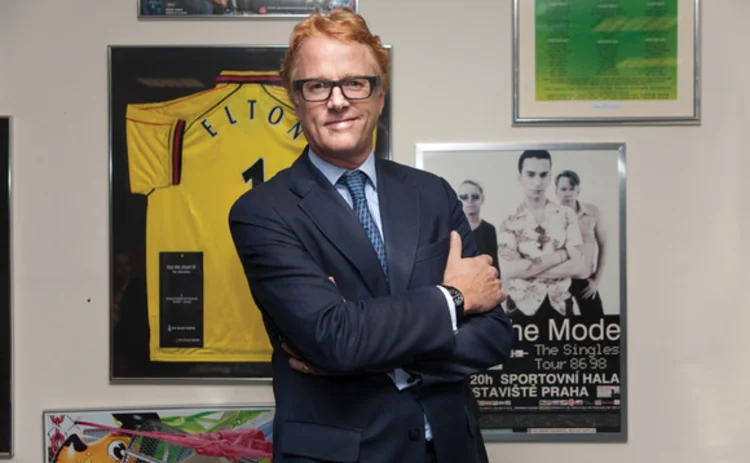

Emmanuel Kenning speaks with a DJ'ing broker who mixes passion with honesty in his search for talent.
When chairman Nigel Barton started planning for the launch of Oxygen Insurance Brokers, he rented a desk in London. Six years later parent company Oxygen Holdings has become a worldwide organisation with over a hundred staff in the UK alone. In 2009, the broker's boutique specialisms, ranging from music to manufacturing, helped to deliver group turnover approaching £19m.
Oxygen's music and entertainment offering is driven by Robertson Taylor, which was acquired in 2007; Barton states that it is the largest band and music tour broker, having looked after nine of the ten top-grossing concert tours of all time. Robertson Taylor also represented 40% of the company's commission income, with the majority of the business written in the London market. Since the purchase, Barton (who cites DJ'ing as his favourite hobby) has developed the business, opening a Nashville office for country and Christian music to supplement its offices in London, Los Angeles and New York.
It is an acquisition he remembers with fondness: "It was very specialist. I felt the underlying business was going to go through a big change with the music industry moving from a revenue model based on CD sales to tours and therefore insurance for tours. That's been borne out and the number of tours has increased."
Fee structure
Another Oxygen bedrock is its corporate risks division, at the heart of which is Smart & Cook Consulting, which was acquired in 2006 and now accounts for nearly a quarter of the group's commission. The Leeds-based risk management division focuses on fee levels between £2,500-£100,000 for companies in fields ranging from UK manufacturing and industrial business to financial institutions and property managers. Barton comments: "It is distinctive. People who want a risk-managed model choose which services they want to pay for. It is very transparent on a fee basis and all time-costed."
It has not all been plain sailing. Tragedy struck in 2009 when Sean Hicks, the head of the Leeds corporate risks team, committed suicide; subsequently, a number of his ex-colleagues left the business. Focusing exclusively on the business situation, Barton admits: "We have had to spend a bit of time re-engineering that office. I'm happy to say that most of the clients chose to stay with us, particularly the larger ones."
Barton started in the profession in 1976 as a broker on Marsh's management trainee scheme and over the years his career path has led him to reinsurance and underwriting. In 1998, he was chief underwriting officer at Lloyd's syndicate DP Mann - later re-branded as Faraday - when it was sold to General Re, part of Berkshire Hathaway.
Believing in the opportunities of harnessing new technology and a growing momentum for market change was part of the driver for Barton starting afresh after the syndicate, though it was not the only reason he chose this route. He explains: "I could see it was very difficult to set up a new broking house, with barriers to entry such as Tobas, capital and covenants. The hypothesis was to set up a platform on which people could become partners and shareholders without having to set up the infrastructure. A build-it-and-they-shall-come model." The shares promised when people came on board were provided in the middle of this year: 40% of Oxygen is now staff-owned. Barton comments: "In terms of talent, we have aligned interests. It appeals to clients that we are not just a shop with hired guns; we've got people with a deeply ingrained interest in driving the business."
Barton remembers that, at the time of setting up, some commentators accused him of being top heavy by bringing on board names such as Ron Sandler. He stood firm believing in his approach. He says: "We had a very high-powered board of directors because, if you are going to attract people to something brand new, you have to have strong credibility." Barton interviewed more than 100 teams and is proud that no one was ever sued for any breach of their contracts.
Profit
Despite the original business cards stating Oxygen Brokers as the brand, at first it was the now-sold agency side that progressed most quickly. Barton admits: "The broking side was more difficult to get going; which was going to be the first team to cross the line?" The company brought in a team from Marsh in the construction and power area and they in turn helped to bring on other related areas such as international property and international liability. Over time, Oxygen developed to encompass 14 teams.
During six years of operating, Oxygen has completed four rounds of raising capital; the company is debt free at the banks and Barton believes that, having made an absolute profit two years ago when it sold its agency to AJ Gallagher and an Ebitda profit last year, the loss-making days are nearly over. He says: "We are very close to making a profit now. The first half of this year was not looking so great but I think we'll come out the right side of it and from there on it is scaleable."
Candidly, he admits it has taken longer than he first expected: "It is a salutary lesson for anyone looking to build a business with any speed. To be able to outpace your capital costs is very difficult in this industry."
Part of Barton's optimism lies in the more efficient organisational shape he has focused on: "We were structured the way they came into the ark but actually we needed to structure them in terms of birds and mammals and so forth; that takes a little while."
Unity
Another positive has been the change from three technology systems to one robust platform. The company had originally launched with the idea of harnessing the power of technology through its own bespoke PivotPoint system; its failure is an area he addresses with engaging frankness: "We absolutely have not scored on capturing the economic advantages of technology: we went down a bit of a blind alley." While the financial cost was not enormous, it is the loss of management time that he laments: "We should have spent more time focusing on getting the talent on board and using a rock solid system rather than build and adapt a brand new system. I look back and that was a naivety on my part."
In addition to the music and entertainment division and corporate risks, Oxygen has a private client services division and a wholesale division, Oxygen Partners. The company recently sold its reinsurance business to Guy Carpenter.
The private clients offering began as part of Robertson Taylor, with what Barton calls "an incredibly loyal client base of some of the most famous people on the planet". Barton is looking to build the offering: "To be honest, it was slightly buried with Robertson Taylor so we've said 'let's segment it to give it its own strategy and growth momentum'." With private clients' business placed mainly at Lloyd's, Barton is confident that the company's track record will enable it to grow beyond 16% of its total commission income.
Oxygen Partners, a wholesale business, completes the business' structure. It provides a specialist service to regional brokers for covers such as professional indemnity and directors' and officers'. Barton clarifies: "It is a 21st century wholesale model that is growing pretty quickly; we do a very large amount of business with a small number of regional brokers. We are not advertising that we are doing a bit of wholesale for anybody with one or two risks a year."
Barton praises the wholesale model that Oxygen has employed for making brokers look good with their clients and providing access to more business for underwriters, calling it a "no-brainer".
Rough terrain
Servicing clients better than ever is a core theme for Barton, who comments: "We are pedalling harder for every client." This outlook is twinned with little expectation of a hardening market, on which he comments: "For the market to turn, it needs fear. It is going to be a pretty grim war of attrition because the insurers are not showing red ink." Barton is budgeting for further softening: "I think that things will worsen before they improve: you must plan for that."
Dual pricing is another irritating factor. Barton remarks: "In broking, are there many new clients or industries? No. You've got a population of potential clients that is not going to grow. We are in the stage of the cycle of mass self-delusion when you can quote a new piece of business at radically different terms than at renewal."
Barton's ebullience comes through when he returns his focus to Oxygen. His pervading and persuasive belief from the start has been to seek out talent. Looking to the future, he is focused on consolidating past acquisitions, though he does not rule out buying again. He concludes: "The idea is to build around the existing businesses we've got. We signed a huge variety of teams in the first five years with enormous growth potential; all of them have ambitious plans and some of them include acquisitions whether through retained earnings, fund raising or private equity. We are not going to suddenly buy marine and aviation [teams], though: we'll always be a boutique shop."
Incubating & selling
Since its launch, Oxygen has sold two businesses: Oxygen Insurance Managers to Arthur J. Gallagher in September 2008 and Oxygen Re, which went to Guy Carpenter in September this year.
According to Nigel Barton, the timing of the first sale was "a heart-stopping moment", coming just as the phase ‘credit crunch' was entering the popular consciousness. The underwriting teams were quickest to progress at the new start-up, proving highly profitable and leading to "people knocking on our doors to buy it". Barton explains: "We didn't actually take the highest bidder. We went for the partner that would be best for the business. It was going to be worth more to them than it was to us as they had more fields to harvest with an agency than we did."
Barton points out that Sian Fisher, the managing director of OIM, was fully supportive of the move and is still on the board at Oxygen as a non-executive. He adds: "If we ever set up another agency again, which I'm sure at some stage we will, we'll absolutely compete with theirs."
Barton declines to put a figure on the sale of Oxygen Re, saying only: "We have been working to establish a new reinsurer, which had a soft launch at the Monte Carlo conference. Because we have an economic interest in this, it wasn't appropriate that we have a broking team as well. With everybody's agreement, the broking team has gone to Guy Carpenter."
In a statement, the company explained that the venture would invest in cash-collateralised catastrophe reinsurance contracts.
Only users who have a paid subscription or are part of a corporate subscription are able to print or copy content.
To access these options, along with all other subscription benefits, please contact info@insuranceage.co.uk or view our subscription options here: https://subscriptions.insuranceage.co.uk/subscribe
You are currently unable to print this content. Please contact info@insuranceage.co.uk to find out more.
You are currently unable to copy this content. Please contact info@insuranceage.co.uk to find out more.
Copyright Infopro Digital Limited. All rights reserved.
As outlined in our terms and conditions, https://www.infopro-digital.com/terms-and-conditions/subscriptions/ (point 2.4), printing is limited to a single copy.
If you would like to purchase additional rights please email info@insuranceage.co.uk
Copyright Infopro Digital Limited. All rights reserved.
You may share this content using our article tools. As outlined in our terms and conditions, https://www.infopro-digital.com/terms-and-conditions/subscriptions/ (clause 2.4), an Authorised User may only make one copy of the materials for their own personal use. You must also comply with the restrictions in clause 2.5.
If you would like to purchase additional rights please email info@insuranceage.co.uk
More on Broker

Which? demands ban on brokers charging high motor APRs
Which? has named and shamed motor insurance brokers charging high interest rates on monthly policies and called for a ban on the practice.

Soft market hits Kelliher in 2025, with turnover and profits down
Profits dropped at Kelliher Insurance Group in 2025 more than wiping out the surge seen in 2024.
Broker Expo 2026: Don’t shy away from cyber
Experts at the Broker Expo urged delegates to keep plugging away on cyber amid the ongoing low level of uptake by SMEs.
Brown & Brown UK launches retail graduate programme
Brown & Brown UK has launched a retail graduate programme starting with 16 participants.

From manual bordereaux to trading agility
Pricing can now change daily, but trading infrastructure hasn’t kept pace. Matt Wellman of Applied Systems explains why manual bordereaux must go.

Broker Expo 2026: Early and open conversations needed for brokers and underwriters to win
As the industry starts to lose its face-to-face culture, being open to early and open appetite conversations through different channels will be key to establishing good relationships between brokers and underwriters.

Howden names Richardson to new CCO role
Howden has appointed Elliot Richardson as chief commercial officer for the group, a newly created role at the broker.

Seventeen doubles down in Gibraltar with latest buy
Seventeen Group has bought Sovereign Insurance Services, striking its second deal in Gibraltar in recent months.