

Interview - Douglas McWilliams, CEBR: Critique of a crisis
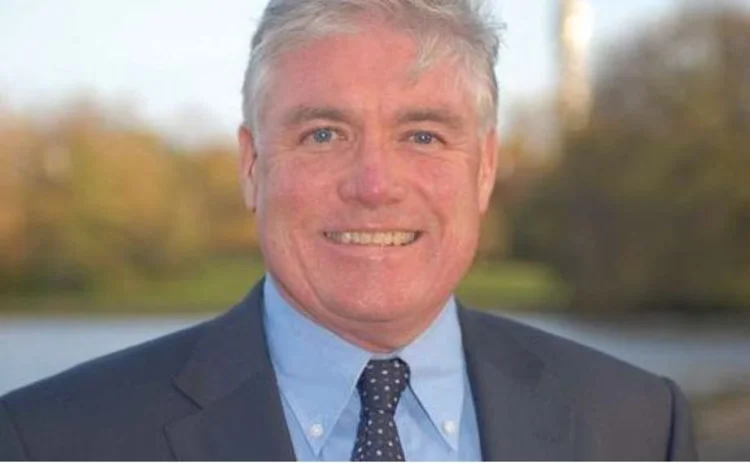

Douglas McWilliams, chief executive officer at the Centre for Economics and Business Research, is paid to make judgements on the economy. Andrew Tjaardstra sought his expert verdict on the current turbulence and asked him some fundamental questions about capitalism.
Armed with Roger Bootle's The Trouble with Markets, Saving Capitalism from Itself, I feel confident taking on the might of McWilliams' first-rate mind. I am versed with knowledge about surpluses in China, monetary policy and Bootle's assertion: "The crude model of the market system has profit as the driver but, in practice, even if profit is the ultimate motivation, it is probably best not to aim for it directly. Rather like happiness, it is most likely to emerge as the by-product of pursuing something else for its own sake."
Enough of Bootle, after all McWilliams once was selected for a job both had applied for at the Confederation of British Industry - and he has not even read his book. Instead, McWilliams, former chief economist at IBM, comes across as bullish about capitalism and even argues that a recession can be a positive for the system. He says: "Recessions generate change and sunk costs get written off."
Following several years of turbulence, McWilliams puts the economic crisis into perspective: "The world is undergoing its greatest ever economic change…bringing an extra two-thirds of the world's population…inside the global economy. It is not just the scale but also the speed: four times the number of people in the industrial revolution and six times as fast. When you have a change of that magnitude, it is very difficult to know where you are. Greenspan had this problem - how much was as a result of change and how much was a speculative bubble."
Alan Greenspan, as chairman of the Federal Reserve from 1987 to 2006, was at the epicenter of the financial crisis. He claimed that central banks had lost control as global long-term securities approached $100tn but admitted that interest rates had remained too low for too long. He also appeared to praise the rise of sub-prime mortgages, having said in April 2005 "where once more-marginal applicants would simply have been denied credit, lenders are now able to quite efficiently judge the risk posed by individual applicants and to price that risk appropriately". Many have since questioned the rationale of lending to sub-prime individuals at all.
McWilliams gives Greenspan a mixed review. He says: "He [Greenspan] was probably right with low interest rates up until 2005 but the rest was a speculative bubble. The problem was exacerbated by the impact of the Chinese and emerging countries. Cheap goods pushed down inflation but it also raised primary product prices such as oil; you were borrowing from the future with cheap goods. Inflation was kept artificially low with cheap products and monetary policy was too expansionary. As a result, when inflation emerged, it was too late to control the primary product prices; they should have burst the bubble sooner."
Philosophical position
I then ask a fundamental question about the economy: is boom and bust a natural by-product of free-market capitalism? McWilliams doesn't think this is necessarily so, claiming that the current crisis is more to do with monetary policy and that, had there been more of a free market then there would have been greater corporate responsibility. However, he concedes: "Human beings are always going to have cycles of exuberance and depression. Whoever is running things will get cycles and I don't think it is do to with capitalism. Capitalism actually counteracts this because, when things are left unregulated, people take more responsibility for their own decisions." Many would disagree.
He believes that the crisis has monetary origins with social legislation (US president Clinton forcing lending for sub-prime mortgages and poor legislation from Labour) in part leading to a lack of competition.
McWilliams adds: "A cosy cartel of people were able to make some amazing mistakes by looking over their shoulders and saying 'so and so down the road is doing it, it must be okay'. Another problem was that retail banks owned investment banks; the cultures are very different but it is amazing how pay becomes an issue. The more traditional banks thought they should earn similar salaries and therefore the risk-taking culture spread."
McWilliams is particularly concerned, as a former trustee of a pension fund, about legislation designed to introduce more employees' rights to pension funds, which could see companies having to bail out non-performing investments. He explains: "If things go well, the fund goes up. If bad, the companies have to cough up. Therefore, they have invested in more risky assets.
"Pension funds have taken on more risk than is optimal, partly because they have been advised by actuaries that have encouraged them to buy bonds with high guarantee returns such as mortgage-backed securities. They haven't analysed them independently and relied on the ratings agencies, the box tickers. Typically, you would have to spend £50,000 on each bond to analyse them properly. The problem was that sub-prime mortgage-backed securities got treated for investment purposes but all the individuals defaulted."
Actuaries have diversified over the years, some setting up fund management departments. McWilliams argues that they are there for the wrong reasons, stating that "they don't understand investment management risks" and also attacks them on their more traditional roles by saying that they have failed to understand the changes in life expectancy - "they keep thinking it is going to stop rising and only in the last four years have they realised that it's not". FTSE 100 pension fund deficits are now at record highs.
He adds: "We had two unprecedented bull markets post-war. Over the period, investment returns have been pretty good. What it meant is that you could hide actuarial errors."
In defence of the actuaries, only a small number advise specifically on which investments to choose and many investment advisers made the same mistakes.
Interest decisions
Much of the debt-fuelled acquisitions in broking and elsewhere were driven by low interest rates, which are set to keep inflation in check. McWilliams argues that, when the Bank of England sets interest rates, it needs to think more about asset bubbles.
He says: "The danger of inflation is more an asset price phenomenon rather than consumer goods or services. However, asset price inflation takes a long time to move into general price inflation. You have to think about inflation today, in three to four years and in 10 years. Perhaps you have to have as many instruments as you have targets - you only have one. You should flex on the shorter-term target to have a wider target and try and focus on the medium to long term as well. It is complicated, though, as you only have one bullet for three targets. Interest rates were held too low but, if they had been higher, we might have had negative inflation."
He prefers the term "negative inflation" to deflation; he believes deflation is a dangerous word because of its connotations and says that inflation often goes negative because of a range of factors such as tax. Retail prices inflation went negative a couple of months ago, for example, partly because mortgage rates went down.
Time for another big question. Is there such a thing as an ideal growth rate for an economy? He replies: "Growth is not the only objective in life. Having said that, organisations need to grow to give them dynamism and efficiencies. There is something intrinsic in us that needs growth, although in a pure economic sense it can provide things at a cost - often it is not met. Life is a lot easier with growth because people have rising expectations. Countries where they have had problems - often lack of growth has come in and there are pressures where too many are buying too small a slice of the cake, leading to inflation."
He also says that, for sustained success, "it is absolutely critical to be independent. If you follow the herd then you get caught and become the subject of exuberance; you build the herd into your calculations".
So is a steady rate of growth the best way forward? He replies: "If you get used to a steady rate of growth you get a bit fat and complacent. You need the odd cold shower and shock. Growth is inhibitive to change; the recession has forced it to happen."
Recessionary positives
On the same day I interview McWilliams, the Financial Times carries a report suggesting that half of companies were likely to introduce a pay freeze in 2010. Surely recessions aren't 'good', though? He comments: "Clearly, recessions cause a lot of pain - some companies that are operating perfectly can't get funding. However, the shake-up does have healthy as well as negative points. Many people in businesses don't re-examine what they do often enough in times of growth."
He continues: "Businesses are always reinventing themselves and one of their greatest resources is management time, so peripheral parts of companies are more likely to be sold off."
McWilliams believes that a "profitable corporate sector" is a must and that a low rate of pay inflation is not necessarily that bad for the economy. Unfortunately, he sees little expansion in the private sector for jobs and a certainty of job losses in the public sector with unemployment rising to three million. He believes that the public sector has failed to adapt to technological changes over the decades and that there is far too much waste.
The rise in debt has arguably been a contributing factor to the crisis, though he thinks that companies have not necessarily been at fault here except by buying at the wrong time in the cycle.
The UK has suffered from a lack of investment in businesses, a trend that McWilliams sees continuing: "The drive for mergers and acquisitions occurred because companies have been remarkably profitable over the last 25 years, partly because there has been a seven-fold expansion of the labour supply in this time."
He continues: "Now, the temptation is to buy assets on the cheap and investment is going to struggle."
McWilliams agrees that pro-cyclic acquisition - when asset prices are on the up - is the wrong way around and that this is when it happens the most. He recommends that companies should be bought in the downturn and investments made in the upturn, though often companies do the opposite.
He concedes: "From a tactical point of view, many companies took on too much debt. Private equity was new and the availability of cheap money came when the profitability of companies was at its highest." However, he argues: "Even today you get over a 10% rate on return on assets employed in industrial and commercial companies (excluding the North Sea). Borrowed money is potentially still good but it is limited not by price but by quantity, especially with the banks not willing to lend to each other."
He also defends loan-to-ebidta (earnings before interest, taxes, depreciation and amortisation) ratios as fine given the low interest rates. He argues: "The appropriate ratios depend on the long-term rate for interest and therefore are very different, with low interest rates. The ratio depends on what you can afford to pay."
Lack of competition
McWilliams believes that there may be a more fundamental problem. He comments: "The problem is lack of competition among banks and the low quality of lenders - box tickers rather than risk takers. They overextended their lending when times were good and pulled it back too much when things went sour. To have a set of circumstances where legitimate companies can't get their debt rolled over by banks that have made foolish speculations is outrageous. I don't blame the corporate executives - these were unforeseeable errors.
"I don't think the debt finance model is bad. If you want to get away from it, one thing you have to do is reform taxation; the fact that debt is tax deductible encourages its use. Ultimately, the people who receive interest on the debt do pay tax but quite a lot of it ends up in a tax haven anyway."
Meanwhile, Cebr is mooting a W-shaped recovery with economic growth at 1% for 2010; faltering in the early part of the year after a recovery in Q4 2009. McWilliams is calling for the current rate of VAT to be held for another six months and, ideally, a reversal of the 50% tax rate.
As recovery arrives, will the politicians, bankers, actuaries, investment advisers and economists of the future be able to help us avoid another similar crisis? History says no, though now is an historic opportunity for us to recognise that change is necessary.
Douglas McWilliams and Cebr
As a widely known and respected commentator on UK and world economic trends, Cebr chief executive officer Douglas McWilliams founded the London-based Centre for Economics and Business Research in 1993. He is known as one of Europe¹s leading economists and is widely quoted in the international media.
He was chief economics adviser to the Confederation of British Industry between 1988 and 1992 and chief economist and head of business environment analysis at IBM UK for two years from 1986. In the 12 years to 1986, he held several posts at the CBI, including deputy director of economic affairs.
McWilliams has given formal evidence to select committees of the Houses of Parliament and has advised senior politicians, including chancellors, shadow chancellors and other senior ministers. He holds an MA in philosophy, politics and economics and an MPhil in economics from the University of Oxford; he was visiting professor at Kingston University Business School (1988-98) and a Member of Council at the Institute of Fiscal Studies (1993-2001).
Only users who have a paid subscription or are part of a corporate subscription are able to print or copy content.
To access these options, along with all other subscription benefits, please contact info@insuranceage.co.uk or view our subscription options here: https://subscriptions.insuranceage.co.uk/subscribe
You are currently unable to print this content. Please contact info@insuranceage.co.uk to find out more.
You are currently unable to copy this content. Please contact info@insuranceage.co.uk to find out more.
Copyright Infopro Digital Limited. All rights reserved.
As outlined in our terms and conditions, https://www.infopro-digital.com/terms-and-conditions/subscriptions/ (point 2.4), printing is limited to a single copy.
If you would like to purchase additional rights please email info@insuranceage.co.uk
Copyright Infopro Digital Limited. All rights reserved.
You may share this content using our article tools. As outlined in our terms and conditions, https://www.infopro-digital.com/terms-and-conditions/subscriptions/ (clause 2.4), an Authorised User may only make one copy of the materials for their own personal use. You must also comply with the restrictions in clause 2.5.
If you would like to purchase additional rights please email info@insuranceage.co.uk
More on Broker

Kidderminster broker buys Momentum AR
Momentum Broker Solutions appointed representative Atticus Insurance has acquired a fellow AR Leading Edge with founder Luke Jones teasing further deals.

Lucida confirms ex-Allianz PL boss George exit
Former Allianz personal lines broker boss Nicola George has left her post as group chief underwriting officer of Lucida Group after less than a year, the business has confirmed.

People Moves: 12 – 16 October 2026
Keep up to date with the latest personnel moves in insurance.

Howden unveils pet insurance product with MGA partnership
Howden has launched into pet insurance in partnership with Uris Group, offering access to a range of cover levels designed to help protect clients’ pets and manage unexpected veterinary costs.

Seventeen expands in Lloyd’s and London market with latest deal
Seventeen Group has bought Dashwood Brewer & Phipps, labelling the deal as “transforming” its Lloyd’s and London market capabilities.
Blog: Consistency could be the next big differentiator for insurers
John Dunn, managing director of Brokerbility, argues insurers willing to focus on relationships that deliver reliable and consistent positive experiences have a significant opportunity to become a partner that brokers actively want to do more business with.
Scottish broker switches to AR model as it hits 50 years
Antony Murray has told Insurance Age why the Scottish broker E G Murray moved to being an appointed representative and what its plans are moving forward.

Which? demands ban on brokers charging high motor APRs
Which? has named and shamed motor insurance brokers charging high interest rates on monthly policies and called for a ban on the practice.