

News Analysis - Spending Review: Coalition cuts deep to stimulate recovery
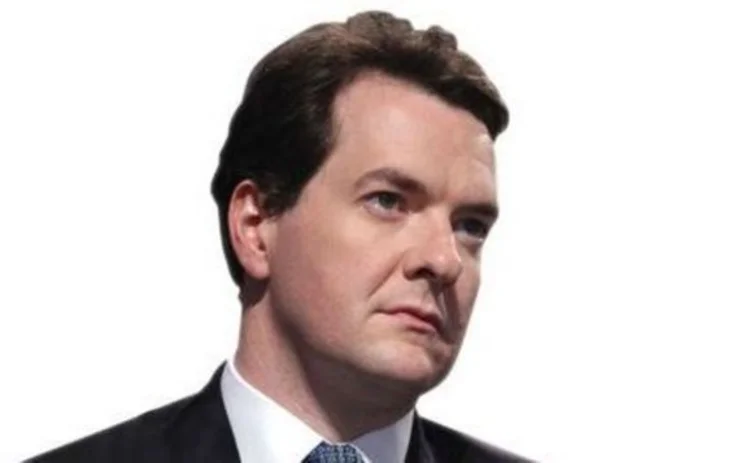

Emmanuel Kenning finds that brokers are determined to be optimistic in the wake of the Chancellor's £81bn of public sector cuts announced in the Spending Review.
In his October Spending Review, Chancellor of the Exchequer, George Osborne, announced cuts in government spending amounting to £81bn by 2014-15. Combined with the tax rises announced in June's Emergency Budget, the Chancellor's steps are designed to eliminate the UK's structural deficit.
Osborne has banked on his measures strengthening the economy by making it better able to create wealth and jobs, though with projections of 492,000 public sector posts being lost over four years, it is unclear how the private sector will make up for this, with many opposition politicians, economists and expert commentators arguing that the cuts could cause a double-dip recession. Prime Minister David Cameron shares Osborne's view that the private sector will pick up public sector job losses, gambling on investment and exports to lead the UK to economic recovery, a stance helped by third-quarter growth of 0.8%.
Spending by local councils is set to decrease 14% by 2014-15 and capital projects are being cut across most government departments (see box below). Although the NHS's overall budget has been protected, on average, each department's spending will reduce by 19%.
Wales is likely to feel a heavy burden due to its large number of public sector employees. Gary Stevens, operations director at Antur Insurance, believes that anything affecting staffing in the region will adversely affect local business.
Welsh optimism
He said: "A lot of our firms don't work exclusively on government business but it is part of their portfolio and so if local authorities cut back then it will affect them. Also, if there are fewer employees then people will take out less personal lines insurance." Despite the potential impact, Stevens remained bullish about the future. He stated: "We still have aspirations to continue growing but it is hard work and no-one will grow by just doing what they've done in the past."
Working smarter was highlighted as key to recovery by Lyndon Wood, chairman at Caerphilly-based Moorhouse. He said: "Everyone is on the edge of knowing how the cuts will impact. Businesses are jittery about the next six months, so we have to work smarter with processes, dissecting business into micro-segments. If you are good at tradesmen, look at every component, such as contracts and how you contact customers." While acknowledging that the cuts will bring significant challenges to Wales, Wood is still positive. He added: "We are 98% in micro-business insurance. If people are made redundant, they will start companies as an human resources contractor or plumber."
In Northern Ireland, Leslie Hughes, founder and chairman at Hughes & Company, is in no doubt that the country will feel the impact just as much as Great Britain. He said: "We have a huge civil service in Northern Ireland and it'll be worried about streamlining." Like Wood, though, Hughes believes that brokers can expand and is investing in an extension to his Newtownards headquarters, with plans to take on another 100 employees next year.
Construction is a sector that has been particularly hard hit in Northern Ireland during the downturn and Hughes believes it is crucial that banks start lending to improve this: "The housing market is very bad here and nothing is moving. Banks are looking for 25% deposits [for mortgages] and the uncertainty around jobs will not help."
Lending crucial
Charles Packett, director at Shipley-based broker Sydney Packett, agreed: "If the government can put into effect sufficiently robust trading conditions that enable banks to start lending again then it will have a positive impact. Lending is the growth catalyst for any industry and we are not seeing banks doing it at the moment."
One cut that brokers will watch keenly is the change in spending on flood defences. The commitment to spend £2.15bn in three years to 2011 has been updated to spending £2bn in the following four years to 2015. Like most respondents, Packett highlighted that it is early days to make a judgement, though he called on the government to think carefully about its actions. He warned: "It is not clear where the flood defences cuts have been targeted, though shelving schemes is not a good idea."
• More spending review news is available on broking.co.uk.
|
Capital spending cuts |
||||||
| Current budget (£bn) | % cumulative growth by 2014 - 2015ned ratio | |||||
| Education | 7.6 | -60 | ||||
| NHS | 5.1 | -17 | ||||
| Transport | 7.7 | -11 | ||||
| Defence | 8.6 | -7.5 | ||||
| Energy & climate change | 1.7 | +41 | ||||
Only users who have a paid subscription or are part of a corporate subscription are able to print or copy content.
To access these options, along with all other subscription benefits, please contact info@insuranceage.co.uk or view our subscription options here: https://subscriptions.insuranceage.co.uk/subscribe
You are currently unable to print this content. Please contact info@insuranceage.co.uk to find out more.
You are currently unable to copy this content. Please contact info@insuranceage.co.uk to find out more.
Copyright Infopro Digital Limited. All rights reserved.
As outlined in our terms and conditions, https://www.infopro-digital.com/terms-and-conditions/subscriptions/ (point 2.4), printing is limited to a single copy.
If you would like to purchase additional rights please email info@insuranceage.co.uk
Copyright Infopro Digital Limited. All rights reserved.
You may share this content using our article tools. As outlined in our terms and conditions, https://www.infopro-digital.com/terms-and-conditions/subscriptions/ (clause 2.4), an Authorised User may only make one copy of the materials for their own personal use. You must also comply with the restrictions in clause 2.5.
If you would like to purchase additional rights please email info@insuranceage.co.uk
More on Broker

Broker Expo 2026: Early and open conversations needed for brokers and underwriters to win
As the industry starts to lose its face-to-face culture, being open to early and open appetite conversations through different channels will be key to establishing good relationships between brokers and underwriters.

Howden names Richardson to new CCO role
Howden has appointed Elliot Richardson as chief commercial officer for the group, a newly created role at the broker.

Seventeen doubles down in Gibraltar with latest buy
Seventeen Group has bought Sovereign Insurance Services, striking its second deal in Gibraltar in recent months.
Broker Expo 2026: Days of Frankenstein’s Monster consolidation over
Broker consolidation is evolving from the ‘Frankenstein’s Monster’ approach of the past to one which is more focused on culture, integration and organic growth.

Ex-Ravenhall boss launches new broker Decello
Neil Grimshaw has opened commercial broker Decello in Huddersfield, labelling it a boutique ‘advice-led’ firm for businesses and private clients.

Broker Expo 2026: AI will kill off lazy brokers
Charlie Hicks, managing director of EIC Insurance Services Limited, has highlighted old-fashioned broking still has a “massive place” in today’s insurance market and can make a firm stand out compared to competitors. And added AI might benefit those brokers who do this.

Attis CEO insists it has not reached ‘end goal’ as it sets 2027 target
Top 100 insurance broker Attis has outlined plans to hit more than £20m in revenue in 2027, having revealed it is on track to exceed £16m by year-end.
Seventeen Group recruits ex-Gallagher MD and Howden COO
Seventeen Group has appointed Stephen Smith as chief broking officer, overseeing broking and placement strategy across the group, including James Hallam and Touchstone Underwriting.