

News analysis - Emergency Budget: Chancellor's axe and tax

Emmanuel Kenning reviews economists' reactions to the announcements in the Emergency Budget.
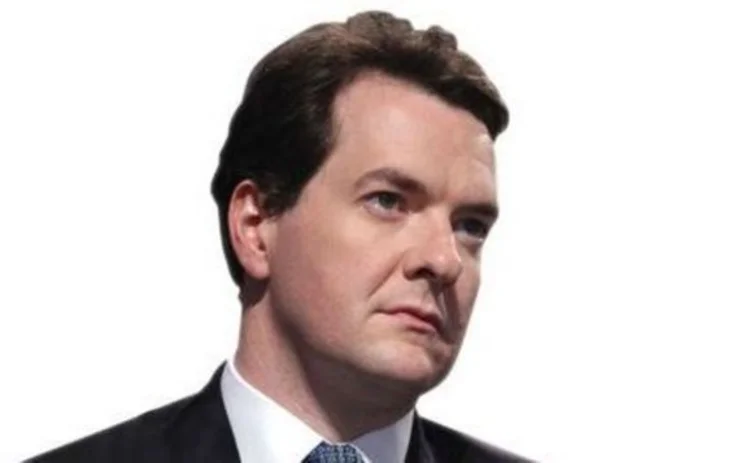
The Chancellor of the Exchequer, George Osborne, called it the "unavoidable Budget". Among many headline-grabbing decisions, he raised value added tax to 20% from 4 January 2011, increased insurance premium tax to 6% and introduced a 28% capital gains tax rate for high-band payers.
Not all the measures were revenue raising. Small profits corporation tax - paid by companies making under £300,000 - was cut to 20% and the main rate was reduced to 27% in 2011-12, decreasing yearly until it reaches 24%.
Chief executive officer at the Forum of Private Business, Phil Orford, praised the balance of the measures. He said: "I think many small business owners will be pleasantly surprised by today's Budget. Not only did the Chancellor make all the right noises about supporting enterprise and smaller businesses, he backed it up with concrete, tangible policies."
Osborne aims to remove the country's 8% gross domestic product structural deficit - the long-term imbalance between expenditure and income - using an 80-20 ratio of cuts to tax rises as a rule of thumb. Accordingly, he added £17bn of cuts by 2014-15 to the £44bn announced by Labour in March. Projections for that year now show a structural surplus, although overall net borrowing remains at the £37bn forecast.
Robert Chote, director at the Institute for Fiscal Studies, described the reforms as radical: "We are looking at the longest, deepest sustained period of cuts to public services spending at least since World War II."
The coalition is targeting an economic recovery with its foundations in the private sector. Osborne claimed that the UK economy would grow 1.2% this year, rising to 2.7% in 2015. He accepted that there would be an impact on unemployment from the measures but argued that the forecast from the Office for Budgetary Responsibility showed it peaking at 8.1% this year then falling to reach 6.1% in 2015.
Relief
Douglas McWilliams, chief executive officer at the Centre for Economics and Business Research, defined the total package as "a little less draconian than had been feared", while the Forum for Small Business called it "a small, business-friendly Budget overall". However, opinion was divided.
Labour's interim leader, Harriet Harman, called the package "reckless", stating that it was bad for jobs and growth, which would make it harder to cut the deficit.
At the other end of the political spectrum, Philip Booth, editorial and programme director at the Institute of Economic Affairs, argued that the cuts did not go far enough. He noted that government spending would be 41% of GDP by 2014-15 and added: "Spending at 30% of GDP should be the government's long-term target."
While some savings such as a two-year freeze on public sector pay were announced in Osborne's June Budget, Richard Lambert, director-general at the Confederation of British Industry, noted that much of the pain is yet to come. He defined the Budget as an important first step and commented: "The autumn spending review [announced 20 October] and the re-engineering of public services will be equally challenging."
Rob Allison, managing director at Zurich Municipal, the biggest provider of insurance to local authorities in the UK, agreed that the cuts would have an impact on insurance in the public sector. He commented: "Local authorities will be required to do more with significantly less."
Allison was upbeat about the situation, pointing out that making savings and efficiencies is not a new concept. With downsizing creating a range of risks that need to be managed and understood, he believes that it is an opportunity for further dialogue. He added: "There's bound to be a revisiting of requirements but local authorities cannot take their eyes off evolving risks; that could prove to be a false economy. These risks cannot be commoditised and we remain alive to the changing landscape."
For UK plc and the insurance industry in both the private and public sectors, times remain volatile.
Emergency Budget - key measures
• From April 2012, the rate of capital allowances on the general pool of plant and machinery will be reduced from 20% to 18%, with the rate of allowance on the special rate pool of plant and machinery to be reduced from 10% to 8% from April 2012 also.
• The Annual Investment Allowance will be reduced from £100,000 to £25,000 from April 2012.
• Maximum limits on housing benefit will be introduced, from £280 a week for a one-bedroom property to £400 a week for four-bedroom homed or larger.
• The standard National Insurance rate for employees will be raised to 12%.
• The employer's threshold for National Insurance will rise in April 2011 by £21 a week more than inflation (the current rate is £110).
• For three years - with an expected September start - new businesses outside London, the south-east and east regions will be exempt from up to £5,000 of employer's National Insurance payments for each of the first 10 employees hired.
Only users who have a paid subscription or are part of a corporate subscription are able to print or copy content.
To access these options, along with all other subscription benefits, please contact info@insuranceage.co.uk or view our subscription options here: https://subscriptions.insuranceage.co.uk/subscribe
You are currently unable to print this content. Please contact info@insuranceage.co.uk to find out more.
You are currently unable to copy this content. Please contact info@insuranceage.co.uk to find out more.
Copyright Infopro Digital Limited. All rights reserved.
As outlined in our terms and conditions, https://www.infopro-digital.com/terms-and-conditions/subscriptions/ (point 2.4), printing is limited to a single copy.
If you would like to purchase additional rights please email info@insuranceage.co.uk
Copyright Infopro Digital Limited. All rights reserved.
You may share this content using our article tools. As outlined in our terms and conditions, https://www.infopro-digital.com/terms-and-conditions/subscriptions/ (clause 2.4), an Authorised User may only make one copy of the materials for their own personal use. You must also comply with the restrictions in clause 2.5.
If you would like to purchase additional rights please email info@insuranceage.co.uk
More on Management

AUB completes Prestige deal
AUB Group has completed its acquisition of 95.9% of Prestige Insurance Holdings.

NFP buys Bspoke to expand its UK specialist insurance services
NFP, an Aon company, has purchased Bspoke Insurance Group to strengthen its existing suite of insurance solutions while expanding technical underwriting expertise and specialist product knowledge.

Yutree outlines plans after MBO
Laura Hancock, managing director of Yutree Insurance has outlined plans for the future following a management buyout, including opening an office in Norwich.

Should you sell your broking business to an Employee Ownership Trust?
Tax-efficient exit strategies and staff incentivisation have become hot topics among broker leaders since the recent increases in Capital Gains Tax and Employer National Insurance. In the second part of a series focused on the fallout from the 2024 Labour Budget, Catherine Heyes examines how broker owners can use Employee Ownership Trusts to respond to these developments.

Chaucer CUO named new CII president
Nicola Stacey, chief underwriting officer at Chaucer, has been elected the new president of the Chartered Insurance Institute.

Montagu agrees to sell Open GI to minority shareholder Ares
Ares Management is set to acquire Open GI, with the deal signed on 9 August 2024, Insurance Age can exclusively reveal.

“Nobody came close to AUB” – CEO Cheesbrough on Movo’s new investor
The Movo Group is looking to create larger broking hubs and kickstart its directly authorised network Fusion after AUB took an 80% equity stake, according to Lea Cheesbrough, Movo Partnership CEO.
Ex-Ardonagh MD Barclay takes over as CEO of top 100 broker
Lycetts has appointed Ian Barclay to CEO, succeeding Charles Foster who is retiring after seven years in the role.