

Ecological concerns


Further national and European environmental legislation can only increase brokers' duty of care, writes Edward Murray.
Waves of environmental legislation are washing over the UK and Europe and, for businesses that have not made appropriate provision for their demands, there will be some awkward, expensive and debilitating questions to answer over the coming years.
The environment has climbed the social, political and commercial agenda over recent years; it is now making its presence felt on the insurance market as the rulebook on what constitutes an environmental misdemeanor becomes ever-more detailed.
This raises issues for the broking community and there is now a gap - between the cover that clients have and the cover clients need - to consider in light of new legislation.
How cognizant firms are of the liabilities they carry and how far they think that their public liability policy will go in reacting to incidents must be considered.
For brokers, the more detailed classification of environmental law immediately gives them something else to discuss with clients; they must decide if activities fall under the jurisdiction of new legislation and whether or not the existing protection in place is appropriate.
It is also important for the broking community to recognise that, if it does not have this conversation with clients, it is potentially failing in its duty of care to them. Should the arranged insurance cover not meet claims resulting from an incident triggered by environmental legislation, brokers could be looking at an errors-and-omissions claim coming their way from a disgruntled client.
Many businesses believe that their public liability cover will protect them against an environmental incident and in some cases it will; there are a number of significant gaps that need to be considered if businesses are to avoid putting themselves at unnecessary risk, though.
Most will perhaps be aware that a PL policy will not provide cover for gradual pollution claims where a landfill site, for example, has been seeping into an underground watercourse over many years. Even when an incident is sudden and accidental, there are other issues to consider and cover cannot be taken for granted, as Simon Harwood-Matthews, environmental underwriter at XL, explains: "The second shortfall would be first-party clean up. If you have any waste, you run the risk of polluting the site or surroundings that you operate on and you would need to ensure that you had adequate cover for onsite clean-up."
He adds: "PL policies are intended, first and foremost, to be third-party policies and there are considerable question marks as to whether a PL policy would respond if an insured had a pollution condition and then the regulator said that they had to sort the problem out. There is a distinction between a third-party trigger and a regulatory trigger."
Apportioning responsibility
Harwood-Matthews cites the Bartoline v RSA [2006] case, which he believes set a precedent and backed up an earlier ruling made in the Yorkshire Water Services v Sun Alliance [1997] case.
In the Bartoline incident, a fire at the manufacturer's premises resulted in the pollution of two rivers. The Environment Agency instructed Bartoline to clean up the pollution and demanded that it reimburse the agency for the money it had spent in doing some of the work itself. Contrary to what Bartoline argued, these costs were not covered by its PL insurance.
Where, therefore, a claim is the result of a regulatory trigger rather than one from a third party, Harwood-Matthews says that firms will possibly find themselves footing the bill - not something that all businesses realise fully.
Environmental liability is no longer a side-issue for a number of niche businesses, it affects a growing number of everyday firms as Mathew Hussey, associate director at Tysers, points out: "If you look at the regulations such as the Landfill Directive, the Groundwater Directive, hazardous waste legislation and the Environmental Liability Directive, it is all moving in one direction and all becoming stricter."
The noose is tightening and commercial operations across the board have to realise that everything from toxic chemicals to emissions, noise, light and everyday materials could, in some way, contravene legislation.
The emphasis has also shifted in terms of who is actually driving claims, according to Hussey. Now, third parties are actively encouraged to understand their own rights under new pieces of legislation and urge regulators to take action against those transgressing them.
Hussey comments: "Third-party claimants can actually go to a regulator to say 'we think you should act on this' and 'this is a whole new ball game'."
Assistance
The Environmental Law Foundation is a national UK charity that helps people use the law to protect and improve their local environment and quality of life; provising guidance and support through its network of lawyers and consultants.
There is nothing wrong with this - it is to be commended. The point for businesses is that, where they fall foul of regulations, there is a growing army ready to hold them to account.
In light of fast-moving legislation, Hussey also highlights some of the 10-year policies available at the moment covering firms for future changes in the rules; he believes they are an excellent and possibly short-lived option.
He comments: "A 10-year policy fixes both the premium cost and the cover in place. If next year, or in five or nine years time, the European Union changes the law then the policyhoilder is still covered. For me, that is absolutely key and at the moment you can buy that coverage. My prediction is that, in the future, this will disappear as legislation starts to evolve faster and more claims start to come out."
Looking at the development of products on the market, Tom Hillier, senior underwriter at Ace European Group, comments: "In the past, this cover might have been difficult or expensive to obtain but I think that, by and large, these issues have now been removed: the process falls in line with other underwritng processes and it is a cover that is readily available."
Environmental liability is therefore not something that brokers or their clients have any excuse to ignore, so doing it in the right way has never been more important.
This is a point that Paul Chainey, chief executive officer at broker Miles Smith, agrees with: "To the professional broker, it is more important to get the cover right because clients are very much more exposed."
For firms that fail to understand their responsibilities under the evolving web of legislation, there are significant penalties to bear from the client's perspective as well as enormous errors and omissions exposure to the broker.
Sliding scale
Commenting specifically on the The Hazardous Waste (England and Wales) Regulations (2005), which were amended in April 2009, Angus Evers, partner at law firm SJ Berwin and Convenor of the UK Environmental Law Association's Waste Working Party, says: "If you breach the legislation then there are fixed penalties of £300 for minor breaches such as minor administrative errors. For more serious breaches, prosecution in the Magistrates' Court can lead to fines of up to £5,000 while prosecutions in the Crown Court can carry unlimited fines and up to two years imprisonment."
For directors and senior managers found to have played a significant role in the breach, the penalties are something to be mindful of, even before the financial cost to the company is considered.
No longer is it just the environment that is a hot topic; the legislation that has come in on the back of growing environmental awareness has implications for brokers and their clients alike. Understanding these in full is now another responsibility that both parties must deal with effectively.
Recent and forthcoming legislation
Damages (Asbestos-related Conditions) (Scotland) Act (2009) Status: received Royal Assent on 17 April 2009.
Planning (Hazardous Substances) (Amendment) (England) Regulations (2009) Status: came into force on 1 October 2009.
Control of Major Accident Hazards (Amendment) Regulations (2009) Status: came into force on 1 July 2009.
Chemicals (Hazard Information and Packaging for Supply) Regulations (2009) Status: came into force on 6 April 2009.
EU Directive on clean and energy-efficient road transport vehicles Status: came into force on 4 June 2009. Member states have until 4 December 2010 to implement the Directive into national law.
Environmental Damage (Prevention and Remediation) (Wales) Regulations 2009 Status: came into force on 6 May 2009.
Conservation (Natural Habitats, &c.) (Amendment) (England and Wales) Regulations (2009) Status: came into force on 30 January 2009.
Draft EU Soil Framework Directive Status: draft Directive being debated by the European Council of Ministers and European parliament.
Environmental Damage (Prevention and Remediation) Regulations (2009) Status: came into force on 1 March 2009.
Environmental Damage (Prevention and Remediation) (Wales) Regulations (2009) Status: came into force on 6 May 2009.
Environmental Noise (England) (Amendment) Regulations (2009) Status: came into force on 25 July 2009.
Control of Major Accident Hazards (Amendment) Regulations (2009) Status: came into force on 1 July 2009.
EU Directive on Environmental Crime Status: came into force on 26 December 2008. Member states have until 26 December 2010 to implement the Directive into national law.
Draft Groundwater (England and Wales) Regulations (2009) Status: Draft Regulations published on 19 June 2009.
Source: Practical Law Company
Only users who have a paid subscription or are part of a corporate subscription are able to print or copy content.
To access these options, along with all other subscription benefits, please contact info@insuranceage.co.uk or view our subscription options here: https://subscriptions.insuranceage.co.uk/subscribe
You are currently unable to print this content. Please contact info@insuranceage.co.uk to find out more.
You are currently unable to copy this content. Please contact info@insuranceage.co.uk to find out more.
Copyright Infopro Digital Limited. All rights reserved.
As outlined in our terms and conditions, https://www.infopro-digital.com/terms-and-conditions/subscriptions/ (point 2.4), printing is limited to a single copy.
If you would like to purchase additional rights please email info@insuranceage.co.uk
Copyright Infopro Digital Limited. All rights reserved.
You may share this content using our article tools. As outlined in our terms and conditions, https://www.infopro-digital.com/terms-and-conditions/subscriptions/ (clause 2.4), an Authorised User may only make one copy of the materials for their own personal use. You must also comply with the restrictions in clause 2.5.
If you would like to purchase additional rights please email info@insuranceage.co.uk
More on Broker

Broker Expo 2026: Early and open conversations needed for brokers and underwriters to win
As the industry starts to lose its face-to-face culture, being open to early and open appetite conversations through different channels will be key to establishing good relationships between brokers and underwriters.

Howden names Richardson to new CCO role
Howden has appointed Elliot Richardson as chief commercial officer for the group, a newly created role at the broker.

Seventeen doubles down in Gibraltar with latest buy
Seventeen Group has bought Sovereign Insurance Services, striking its second deal in Gibraltar in recent months.
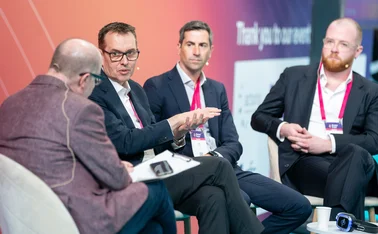
Broker Expo 2026: Days of Frankenstein’s Monster consolidation over
Broker consolidation is evolving from the ‘Frankenstein’s Monster’ approach of the past to one which is more focused on culture, integration and organic growth.

Ex-Ravenhall boss launches new broker Decello
Neil Grimshaw has opened commercial broker Decello in Huddersfield, labelling it a boutique ‘advice-led’ firm for businesses and private clients.

Broker Expo 2026: AI will kill off lazy brokers
Charlie Hicks, managing director of EIC Insurance Services Limited, has highlighted old-fashioned broking still has a “massive place” in today’s insurance market and can make a firm stand out compared to competitors. And added AI might benefit those brokers who do this.

Attis CEO insists it has not reached ‘end goal’ as it sets 2027 target
Top 100 insurance broker Attis has outlined plans to hit more than £20m in revenue in 2027, having revealed it is on track to exceed £16m by year-end.
Seventeen Group recruits ex-Gallagher MD and Howden COO
Seventeen Group has appointed Stephen Smith as chief broking officer, overseeing broking and placement strategy across the group, including James Hallam and Touchstone Underwriting.