

Happy hour?

While restaurants and pubs remain as popular as ever, increases in the frequency and types of claims are biting hard into the hospitality sector. Dave Lamb looks at the changing insurance needs of a burgeoning market
With around 60,000 public houses and bars, the pub retains pole position at the heart of British society.
The proliferation of themed pubs continues unabated, with the likes of Irish and Australian-styled pubs increasing revenues by 15% between 1998 and 2002 and 'family friendly' pubs and restaurants also growing in popularity.
With new venues opening regularly in most city centres, the restaurant sector has also enjoyed a period of unprecedented growth over recent years - more than one in five adults now eats out at least once a week. Licensees are increasingly tapping into the profit potential from food, with pub catering now representing around 40% of the total dining market.
Despite continued growth, many insurers find pubs and restaurants business problematic. With so many different types of establishment grouped under one banner and such a wide variety of risks, it is not difficult to see why.
Rural pubs, for example, may be located in flood-prone areas overlooking rivers or canals, or they may be of non-standard construction, which could include thatched roofs, exposed beams or old timbers. If the building is listed, specialist tradesmen - with specialist price tags - may be needed. Country pubs and restaurants may also be located in remote areas, leading to delays in the detection of fire or theft and attendance by the relevant authorities.
At the other end of the scale, urban pubs come with their own set of risks. Many seek to attract customers with various forms of entertainment ranging from television sets tuned to sports channels to live entertainment or even nightclubs where alcohol-fuelled crowd trouble can be an obvious problem. City-centre bars are vulnerable to spurious claims from customers who are clearly the worse for alcohol, claiming, for example, to have slipped on spilt drinks.
Similarly, restaurants can vary from fish-and-chip shops to Michelin star-rated fine dining.
Always a very price-conscious market, a lot of pub and restaurant cover tends to be placed under schemes offering a wide package of insurance - although the nature of claims from this market means that even a single loss can have a major impact on scheme profitability.
Individual pubs and restaurant businesses can also have a relatively short shelf-life. With so many new bars and eateries opening up, an establishment can go from being flavour of the month to being shunned overnight in favour of the next venue by a fickle clientele. Wild swings in popularity and income can result in a higher volume of smaller claims being made and less investment in risk management.
Figures from the Health and Safety Executive show that accidents in pubs, restaurants and hotels cost almost 10% of turnover each year. They also reveal that accidents - and subsequent claims for compensation - have been steadily increasing. Major injuries have increased by half and minor injuries have more than doubled in the last 20 years.
As insurers have become more aware of the risks involved, premiums are now much more realistic and reflect levels of risk more accurately than they did 10 years ago. While the steady increase in the volume and cost of claims - and its knock-on effect on premiums - has inevitably triggered some criticism of insurers over affordability, availability of cover has, to date, not been a problem.
Despite the challenges posed for underwriters, the HSE estimates that 70% of workplace accidents in the hospitality market could be avoided through better health and safety management. Risk management techniques can be used to control premiums or to put a high-risk property back onto the insurable list.
Of course, an effective risk management plan is often difficult for an insurer to implement or maintain, particularly when dealing with a portfolio of pubs, which may change frequently as individual establishments are bought and sold. However, brokers and insurers still have a critical role to play in advising customers how to control the most common causes of accidents - and highlighting the new risks to be vigilant for.
For property, these include risks that are largely self-evident although particular care is needed for thatch or other non-standard construction.
Theft is also a key issue with attractive stock, cash on premises and gaming machines often featuring in such risks.
Basic slips and trips, however, are the cause of most accidents in pubs, hotels and restaurants. Uneven floors in old buildings, trailing cables and areas that are sometimes slippery due to drinks spillage are not aided by the fact that large volumes of alcohol are being consumed. Stairs and cellars in pubs are particularly dangerous, with half of all injuries involving falls and public liability claims coming from customers falling through open trapdoors.
Other risks to be aware of include the handling of heavy loads such as casks, kegs and crates. Customers should try to order supplies in smaller quantities and encourage staff to check the weight of the load before attempting to lift it. Stores should be rearranged so that heavier items are easy to access, at waist level for example, and items that are not in frequent use are put on higher or lower shelves. Staff should be trained in handling techniques and suitable trolleys and barrows should be supplied.
If possible, heavier items should be delivered directly to the cellar or storage area.
Also, the kitchen accounts for almost one-quarter of all injuries to employees in pubs, restaurants and hotels. Suitable precautions governing the use of ovens and knives are hugely important to ensure accidents are avoided. Deep-fat fryers account for a large percentage of fire and personal injury claims. The risk can be reduced by using automatic thermostats and regularly cleaning grease traps and flues in the extraction ducting.
With many takeaway restaurants offering home-delivery services, particular care is needed when underwriting fast-food restaurants such as pizza houses.
Young people may be employed to deliver food, perhaps using mopeds in bad weather and working against the clock, where customers are promised either delivery in 15 minutes or a free pizza. This not only raises potential liability issues from the motoring element, but the risk of assault for cash can also be high.
New risks
Brokers and insurers also need to warn clients about new risks such as passive smoking. Following considerable research, it has been concluded that passive smoking can cause lung cancer in non-smokers and nine out of ten individuals agree that there should be no-smoking areas in restaurants.
An increasing number of pubs are already providing no-smoking facilities for their customers.
The HSE has been consulting on an approved code of practice, which is expected to require all employers to take 'reasonable and practical' steps to reducing or eliminating exposure to passive smoking, although what is reasonably practical in restaurants and pubs will be open to interpretation.
The hospitality industry has already agreed a Public Places Charter on Smoking, in partnership with the government, to progressively improve smoke-free provision and air quality in the sector. However, a total ban on smoking in pubs, as implemented in Dublin, could prove to be a double-edged sword for the insurance industry. While this may reduce potential liability claims for passive smoking and, more imminently, fire risks inside pubs, the fact that fires may be started by cigarettes discarded in rubbish outside buildings means, ironically, that it may lead to an increase in fire-related property claims if suitable precautions are not taken in outdoor smoking areas.
Other new risks include noise. If policyholders provide entertainment, such as a disco or a live band, steps should be taken to prevent staff suffering damage to their hearing. As a general rule, if people have to shout at one another to be understood when two metres or less apart, or if they complain of ringing in their ears after leaving work, this may present an issue under the Noise at Work Regulations.
Violence is also increasing. Between 1994 and 1999, almost one in ten major injuries involving pub employees was attributed to violence. Employers need to check to ensure that furniture, fixtures and fittings are not capable of being used as weapons or missiles. Access and escape routes should be tested as should the suitability of alarms/panic button positioning.
It should be easy for staff to raise the alarm via visual or audible contact with colleagues.
Most police forces now operate 'watch' schemes, where files on persistent offenders are confidentially shared with local pubs and other businesses.
Local crime-prevention officers can advise on schemes in individual areas.
Children's play areas with swings and slides, climbing frames and tree houses are now a popular attraction at many family-friendly pubs and restaurants.
As well as providing hours of fun for children and some respite for parents, however, they can also lead to accidents - with extreme claims potential.
Fire escape routes, the quality of drainage, protection from adverse environmental conditions, such as strong winds, and local hazards such as traffic in car parks and adjacent roads should all be considered when siting the play area.
While some risk management measures are pure common sense - children should not have to cross in front of swings to get to other items of equipment, for example, while others are less obvious. Swing frames should not be positioned facing east-to-west to avoid users being momentarily blinded by the sun while slides should not face the sun to avoid heat retention.
With equipment such as inflatable bouncy castles, access should be limited to times when adequate supervision is provided to prevent rough play and overcrowding.
Parents should be reminded of their responsibilities to supervise their children via the use of well-placed signs and clearly advertised age restrictions.
If children's birthday parties are hosted at pubs or restaurants, food-related liability claims (such as nut or gluten allergies) can result in a restaurant unwittingly opening itself to a potential liability claim.
Future potential
Just as the leisure industry is the first to benefit from economic prosperity, it can also be the first to feel the pinch if, for example, rising interest rates impact on people's pockets and disposable income falls.
The leisure sector has traditionally been particularly susceptible to any knocks to consumer spending confidence - a trip to the cinema followed by a restaurant meal can quite easily become a takeaway and a video.
The pubs and restaurant sector undoubtedly presents a distinct set of underwriting challenges. While, as an industry, we should be taking advantage of this burgeoning marketplace and the current consumer spending boom, we should also continue to exercise caution, recognising that careful risk selection and adequate pricing are key to profiting in this volatile sector.
Only users who have a paid subscription or are part of a corporate subscription are able to print or copy content.
To access these options, along with all other subscription benefits, please contact info@insuranceage.co.uk or view our subscription options here: https://subscriptions.insuranceage.co.uk/subscribe
You are currently unable to print this content. Please contact info@insuranceage.co.uk to find out more.
You are currently unable to copy this content. Please contact info@insuranceage.co.uk to find out more.
Copyright Infopro Digital Limited. All rights reserved.
As outlined in our terms and conditions, https://www.infopro-digital.com/terms-and-conditions/subscriptions/ (point 2.4), printing is limited to a single copy.
If you would like to purchase additional rights please email info@insuranceage.co.uk
Copyright Infopro Digital Limited. All rights reserved.
You may share this content using our article tools. As outlined in our terms and conditions, https://www.infopro-digital.com/terms-and-conditions/subscriptions/ (clause 2.4), an Authorised User may only make one copy of the materials for their own personal use. You must also comply with the restrictions in clause 2.5.
If you would like to purchase additional rights please email info@insuranceage.co.uk
More on Personal

Ageas UK GWP jumps as Esure deal flows in
Ageas has posted a 72% hike in gross written premiums in the UK to €1.42bn (£1.21bn) for the first half of the year as the takeovers of Esure and Saga’s underwriter Acromas Insurance Company continued to kick in.

Pen builds out in thatch with £50m Hadron deal
Pen Underwriting has teamed up with Hadron UK Insurance for the first time in a capacity deal for the thatched and personal leisure property risks market, Insurance Age can reveal.

TH March ties the knot with ShieldMy expanding into wedding insurance
Top 100 UK broker TH March has launched wedding insurance in partnership with ShieldMy Insurance Services.
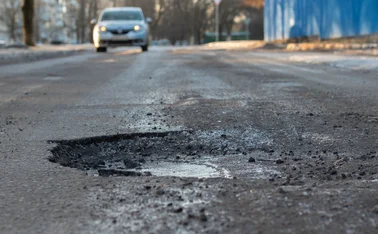
ALA expands range with pothole insurance
Yorkshire-based GAP insurance provider ALA Insurance has expanded its product offering with the launch of a specialist pothole insurance policy, in a move it claimed targets one of the “more persistent and costly problems facing UK motorists”.

Atlanta increases Markerstudy revenue but group losses continue in 2025
Markerstudy Group Holdings grew revenue in 2025, its first full year of owning Atlanta, but losses stayed north of £100m, a filing at Companies House has revealed.

Jason Storah on Aviva walking away on pricing, but not from brokers
Aviva’s commercial book shrank year-on-year, but only “marginally” in the heartlands of brokers’ traditional business, UK and Ireland general insurance CEO Storah told Insurance Age.

Aviva boosts UK operating profit and trims COR in H1
Aviva has posted a more than 40% increase in UK operating profit for the first half of 2026, coming in at £603m, pointing to “maintaining disciplined trading” across its portfolio “despite areas of market softening”.
Allianz joins Sky Protect home insurance panel ‘completing an expert line-up’
Allianz UK has joined the panel for broker Sky Protect’s home insurance offering, sitting alongside Axa and Ageas.