

Market Watch - Construction: Building a brighter future
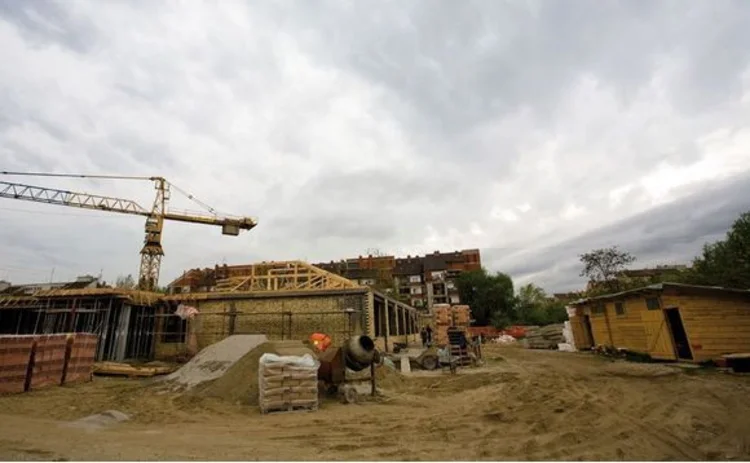

Emmanuel Kenning investigates the impact of the recession on the construction industry and asks sector experts if they are upbeat or downcast in their expectations for 2011.
Many headline figures in the construction industry are shocking. According to the Construction Skills Network, there has been a fall of 375,000 in sector employment between 2008 and 2010. The organisation also predicted that, by 2014, only 100,000 of these will have been recouped.
Government figures also reveal that, whereas over 220,000 new houses were started in the financial year 2006-7, two years later, only half that number was achieved. House building is a key driver of the construction sector, recent falls in prices and fears of a stagnant mortgage market have added to concerns.
As Jonathan Marsh, leader of Marsh's UKconstruction practice, points out: "The global finance crisis affected the construction community immediately but now people are hurting more than ever."
Claims fears unfounded
The insurance sector has not been immune from the decline. At Allianz Engineering, the insurer saw an 8% fall in gross written premium for both its construction all risk and erection all risk accounts in 2009. However, one area that has not ballooned as much as predicted is the level of claims.
Brian Fearnhead, underwriting manager for construction risks at Allianz Engineering, says: "Initially we anticipated an increase in claims on moth-balled sites from theft of plant and materials, in reality it didn't happen in any major way."
It is a view backed up by Bill Adamson, managing director at Paladin Underwriting Agency: "There is an underlying feeling there is a higher risk of arson or fraud claims [in a recession] but I've been markedly surprised that the incidence has not come through."
One of the reasons behind previous doomsayers being proved wrong is thought to be that plant has been returned to warehouses once work is cancelled. Another, according to Stephen Morris, HSB Engineering Insurance underwriting manager, is the success of the Construction & Agricultural Equipment Security and Registration scheme supported by a home office advisory group, insurers and other industry bodies. By using a range of tools such as electronic chips, specialist dyes and engine immobilisers, plant can be both protected and successfully recovered in the event of a theft. Morris points out that equipment has even been recovered from abroad, for instance Poland.
Though the recession is statistically over, the construction sector continues to feel the pain. Connaught's social housing division went into administration at the start of September and two months later building services company Rok followed.
However, with cities across the country seeing some moth-balled sites reopening and office building recommencing, Morris believes there may be light at the end of the tunnel. He highlights: "For our machinery inherent defect product aimed at office blocks, such as for lifts or boilers, at the start of the recession, the vast majority of new placements were cancelled but we are now seeing them re-instated."
As the recovery looks to develop one area that is concerning the insurance industry is timber framed buildings. Fearnhead explains: "Timber frame buildings are cheaper and quicker to build.
However, in the last two years there has been approximately £50m in claims in the timber frame sector from large claims of £2m and above. The level of loss is not sustainable and needs to be addressed by the industry as a whole." Morris agrees: "We've got deep concerns about the fact that timber frame buildings are getting bigger and higher, [the topic] is already in discussion with trade bodies about rating and fire precautions."
At Paladin, an area they believe that will show good growth is the recycling industry and by extension the plant associated with it. Figures from Eurostat have revealed that the UK recycled or composted 35% of its municipal waste in 2008. In Austria, Germany and the Netherlands it was over 60%. Adamson remarks: "Recycling is very exciting. The UK is still lagging behind continental Europe. There are quite a few large companies but also at the other end feeder and entrepreneurial well run businesses. It is a growth industry."
After the cuts to capital spending announced by the Chancellor of the Exchequer there remain questions about what the future holds with regional variations being of particular concern. It is accepted that over the past few years the areas around London, while affected, have been spared the worst effects of the recession. The Olympic site in east London has proved a particular boon although contracts will be running down in 2011 ahead of the games. The consensus is that post-event, along with major cities such as Glasgow, Manchester and Birmingham, the region will be insulated from the cuts with the impact felt more severely elsewhere like the North East and South West.
Overall Adamson is upbeat: "There's money coming into the economy now and, provided everyone keeps a level head, the UK appears to have ridden out the worst of the recession."
Morris similarly feels the future could well be brighter: "Our view is that of the total construction GDP, 30% is provided by the public sector. There's still going to be scope for the private sector to take up the slack and we are reasonably optimistic that will happen."
Since 2009, broker Heath Lambert's project risks team has been working on London's sewage project, London Tideway Tunnels - Lee Tunnel, the largest utility tunnel in the northern hemisphere. In addition, since May 2008 it has been involved with Crossrail and is ideally placed to react to changes in Government spending.
Long-term benefits
Mike Hawks, head of project risk division at Heath Lambert, comments: "Transport seems to have come out quite well so we'll watch that closely, but they are long term projects. Growth in construction has tended to be in project areas rather than the private sector and our book has reflected that."
While there are still issues to be resolved, such as precise departmental business plans and developments in PFI - both of which are expected to be revealed before Christmas - he is confident in the broker's offering: "Our model, the whole aspect of advisory from cradle to grave, has proved very successful over the last few years with an integrated one stop shop service. We try to introduce the client to underwriters face to face. We have always seen it as a tripartite agreement by communicating with underwriters and working together."
Of particular interest to insurers in the communication flow is for brokers to continue to show their clients are proactive with onsite safety. Fearnhead says: "There is a need for robust safety measures such as fencing, CCTV, burning of materials on site and the storage of equipment in buildings."
At HSB Morris stresses that the recovery, be it led by renewable energy, or rail projects, will need to be twinned with sensible insurance pricing and feels it is more likely to be maintained at current rates than fall or harden. "We'd resist any further softening even if that is at the expense of [market] share. With a contracting market we have seen aggressive pricing but we would walk away if we couldn't make an underwriting profit," he adds.
Adamson agrees with the sentiment although qualifies it with a belief that prices could harden before the end of 2011. He says: "Much of the market has used up its reserves and is not making an underwriting profit which shareholders will not tolerate for longer."
For their part, brokers point to claims as being key. Jonathan Marsh, while keen to note that some insurers do provide an excellent service, feels the industry could still do more to be responsive and creative in understanding the issues and needs of contractors and owner communities.
"The number one problem is around the payment of claims. The industry could be more helpful as things get stuck too easily when they shouldn't. In large claims, a major project up against a deadline, one problem causes another. It is mission critical for a contractor to be able to keep going and not be slowed down by a major incident," he says.
With the CSN predicting 1.7% growth in the construction sector year on year up to 2014 there are sure to be many more opportunities and challenges for brokers and insurers arising in this fragile sector.
• For an insight into the professional indemnity insurance market in construction, look out for a Brit sponsored video in early December at www.broking.co.uk
Only users who have a paid subscription or are part of a corporate subscription are able to print or copy content.
To access these options, along with all other subscription benefits, please contact info@insuranceage.co.uk or view our subscription options here: https://subscriptions.insuranceage.co.uk/subscribe
You are currently unable to print this content. Please contact info@insuranceage.co.uk to find out more.
You are currently unable to copy this content. Please contact info@insuranceage.co.uk to find out more.
Copyright Infopro Digital Limited. All rights reserved.
As outlined in our terms and conditions, https://www.infopro-digital.com/terms-and-conditions/subscriptions/ (point 2.4), printing is limited to a single copy.
If you would like to purchase additional rights please email info@insuranceage.co.uk
Copyright Infopro Digital Limited. All rights reserved.
You may share this content using our article tools. As outlined in our terms and conditions, https://www.infopro-digital.com/terms-and-conditions/subscriptions/ (clause 2.4), an Authorised User may only make one copy of the materials for their own personal use. You must also comply with the restrictions in clause 2.5.
If you would like to purchase additional rights please email info@insuranceage.co.uk
More on Broker

Ex-Broadway HNW boss launches new broker
Ex-Broadway director of private clients Eleanor Moore has launched Elm Risk Solutions as an appointed representative of Momentum Broker Solutions.

Pen added to Top 100 broker’s household panel
Source Insurance has added Pen Underwriting onto its home insurer panel to expand cover options across a wider range of household risks.

At least one ghost broking network uncovered every day
The Insurance Fraud Bureau has launched a national campaign after 596 suspected ghost broking networks were identified between October 2025 and September 2026.

Allianz teams up with Superscript on SME commercial insurance
Allianz UK is set to provide capacity for digital insurance broker Superscript’s landlord and tradespeople propositions.

Acrisure recruits ex-Cobra boss Tedstone as UK Retail CEO
Acrisure has appointed former Cobra Network leader Andy Tedstone as CEO of UK Retail, to take up the role after the departure of Mark Mcilquham this summer.

FSCS opens for claims from customers of failed broker Anthony Jones
The Financial Services Compensation Scheme has opened to claims from customers who paid for insurance through collapsed broker Anthony Jones (U.K.) but find themselves without the relevant cover and unable to recover the premiums by other means.

UK commercial softening approaching three year mark – Marsh
UK commercial market rates softened by 8% in the third quarter, maintaining the rate seen throughout the year and the eleventh quarterly drop in a row, according to Marsh.

Top 100 UK Broker Source names Thomas as MD
Cardiff-headquartered Source Insurance has appointed Simon Thomas as managing director to “shape the next phase of growth”.