

Catastrophe plans to the fore
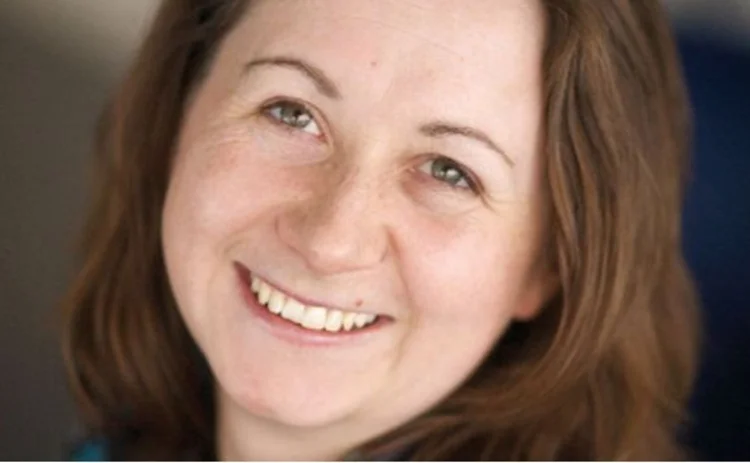

Sara Greenland reflects on how the insurance industry has learnt to respond to flood disasters
It remains to be seen how the insurance industry's response to the floods in Cumbria will compare with its efforts almost exactly one year ago. While journalists may berate politicians for describing these events as unprecedented, in this instance its use is not about political blame-avoidance: you have to go back to 1844 to find events that parallel those unfolding in Cumbria. The relentless rainstorm was caused by a prolonged flow of humid air that originated over the sub-tropical waters of the Atlantic.
The tide inevitably washes up at the industry's door but, while parallels will be drawn, this is not the same as last year. Despite the unprecedented experiences in Cumbria, the events in Yorkshire and the Midlands in 2008 and the catastrophic flooding in June and July 2007 have etched on insurers' and loss adjusters' minds the need to anticipate such events far faster.
In 2007, while residents and business owners ejected sludge from their properties and towns, the industry set about improving surge and catastrophe plans designed to mobilise response to future situations. Even as the first headlines appeared about Cumbria, there was a sense within the industry that it was responding - and from a better position. Indeed, until 2007 there had not really been catastrophe plans to deal with events of this magnitude in the UK.
The industry has been on a sharp learning curve. A week before the Cumbrian deluge, loss adjusters in several firms were ordered not to drink at the weekend and many insurers and brokers implemented co-ordinated, outbound calling strategies to check on commercial and personal policyholders.
The media hype on such disasters makes the moment of truth for those affected with their insurers very public. Hopefully, the pre-emptive measures of the industry to assist Cumbrian victims will vindicate the effort poured into the plans designed to deal with these freak phenomena and leave a high watermark in the public's estimation
Sara Greenland, associate director (personal insurances), Sterling
Only users who have a paid subscription or are part of a corporate subscription are able to print or copy content.
To access these options, along with all other subscription benefits, please contact info@insuranceage.co.uk or view our subscription options here: https://subscriptions.insuranceage.co.uk/subscribe
You are currently unable to print this content. Please contact info@insuranceage.co.uk to find out more.
You are currently unable to copy this content. Please contact info@insuranceage.co.uk to find out more.
Copyright Infopro Digital Limited. All rights reserved.
As outlined in our terms and conditions, https://www.infopro-digital.com/terms-and-conditions/subscriptions/ (point 2.4), printing is limited to a single copy.
If you would like to purchase additional rights please email info@insuranceage.co.uk
Copyright Infopro Digital Limited. All rights reserved.
You may share this content using our article tools. As outlined in our terms and conditions, https://www.infopro-digital.com/terms-and-conditions/subscriptions/ (clause 2.4), an Authorised User may only make one copy of the materials for their own personal use. You must also comply with the restrictions in clause 2.5.
If you would like to purchase additional rights please email info@insuranceage.co.uk
More on Insurer

Subscribe adds £5m Fortegra capacity
Subscribe MGA has secured a long-term capacity agreement with Fortegra Insurance UK.
Arch recruits Donald from Axa for Glasgow branch manager role
Arch Insurance’s UK regional division has appointed Karen Donald as branch manager of its Glasgow operations, effective immediately.

Allianz refreshes mid-market manufacturing offering
Allianz UK has continued to refresh its Commercial Select sector propositions by enhancing cover for manufacturing businesses with turnover between £10m and £1.5 bn.
Blog: Consistency could be the next big differentiator for insurers
John Dunn, managing director of Brokerbility, argues insurers willing to focus on relationships that deliver reliable and consistent positive experiences have a significant opportunity to become a partner that brokers actively want to do more business with.

Shape MD Hunt to set landmark in 2028 as she is named deputy CII president
Mandy Hunt, managing director of Shape Underwriting, was confirmed as deputy president of Chartered Insurance Institute this afternoon at the CII’s AGM in London.

Arkel makes first CDL IHP move
Arkel is launching its non-standard home and landlord schemes on Proteus, CDL’s cloud-based Insurer Hosted Platform, to kick off a wider rollout.

Broker Expo 2026: Early and open conversations needed for brokers and underwriters to win
As the industry starts to lose its face-to-face culture, being open to early and open appetite conversations through different channels will be key to establishing good relationships between brokers and underwriters.

Aviva appoints Slabbert as new Lloyd’s/GCS boss
Aviva has appointed Johan Slabbert as managing director of its Global Corporate & Specialty business and CEO of Aviva Syndicates.