

Compensation chaos looms
The government is about to plunge the law on compensation into chaos as it has caved into the emotional demands for more efficient compensation of mesothelioma sufferers, regardless of the wider implications
The government's decision to add a new clause to the Compensation Bill is a knee-jerk reaction to a House of Lords decision (Barker v Corus) that will do far more long-term harm than it will short-term good. While obviously unfair this rests on the foolish notion that insurance companies have bottomless pockets.
Singling out one occupational disease lacks any sense of natural justice. There are many industrial diseases that leave people in pain and blight but the law should not make one of them a special case.
To compound the injustices still further, it transfers a responsibility that should fall on the public purse to the private sector. The amendment that has been put forward, as the new clause three of the Bill, looks as if it will make insurers pay for compensating people who may have started working with asbestos pre-1972 for an employer who did not take out employers' liability cover when not legally required to do so.
The insurance industry has not covered itself with glory when tracing old policies. This is where the compensation gap starts to yawn wide but the answer is not to load the responsibility for paying the compensation onto those that can be traced, however.
What is needed is a concerted response to this common sense House of Lords decision and only two issues need to resolved.
Firstly, an acceptance that a pooled payment scheme is urgently needed where the government pays for uninsured pre-1972 claims (a diminsihing sum over time), the insurance industry collectively pays for the untraceable post-1972 claims, and insurers individually pay for the proportion claims where they are identifiable. The downside - that the good insurers will pick up some of the tab for the bad - was going to happen anyway but a well managed, pooled arrangement would be a fairer arrangement.
Secondly, the scope of industrial diseases that are eligible needs to be established so that we are not back in Parliament in a few years time looking at other ailments.
Acknowledging that the destination is full and prompt compensation of the victims, the government and industry should cover the compensation gap on a 50/50 basis until a permanent scheme is put in place.
Only users who have a paid subscription or are part of a corporate subscription are able to print or copy content.
To access these options, along with all other subscription benefits, please contact info@insuranceage.co.uk or view our subscription options here: https://subscriptions.insuranceage.co.uk/subscribe
You are currently unable to print this content. Please contact info@insuranceage.co.uk to find out more.
You are currently unable to copy this content. Please contact info@insuranceage.co.uk to find out more.
Copyright Infopro Digital Limited. All rights reserved.
As outlined in our terms and conditions, https://www.infopro-digital.com/terms-and-conditions/subscriptions/ (point 2.4), printing is limited to a single copy.
If you would like to purchase additional rights please email info@insuranceage.co.uk
Copyright Infopro Digital Limited. All rights reserved.
You may share this content using our article tools. As outlined in our terms and conditions, https://www.infopro-digital.com/terms-and-conditions/subscriptions/ (clause 2.4), an Authorised User may only make one copy of the materials for their own personal use. You must also comply with the restrictions in clause 2.5.
If you would like to purchase additional rights please email info@insuranceage.co.uk
More on Management

AUB completes Prestige deal
AUB Group has completed its acquisition of 95.9% of Prestige Insurance Holdings.

NFP buys Bspoke to expand its UK specialist insurance services
NFP, an Aon company, has purchased Bspoke Insurance Group to strengthen its existing suite of insurance solutions while expanding technical underwriting expertise and specialist product knowledge.
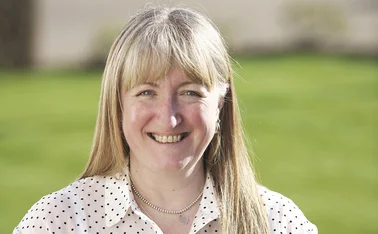
Yutree outlines plans after MBO
Laura Hancock, managing director of Yutree Insurance has outlined plans for the future following a management buyout, including opening an office in Norwich.

Should you sell your broking business to an Employee Ownership Trust?
Tax-efficient exit strategies and staff incentivisation have become hot topics among broker leaders since the recent increases in Capital Gains Tax and Employer National Insurance. In the second part of a series focused on the fallout from the 2024 Labour Budget, Catherine Heyes examines how broker owners can use Employee Ownership Trusts to respond to these developments.
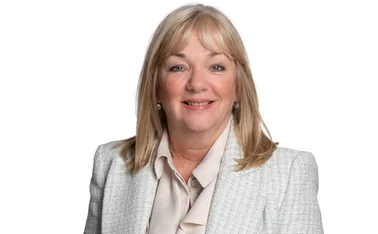
Chaucer CUO named new CII president
Nicola Stacey, chief underwriting officer at Chaucer, has been elected the new president of the Chartered Insurance Institute.

Montagu agrees to sell Open GI to minority shareholder Ares
Ares Management is set to acquire Open GI, with the deal signed on 9 August 2024, Insurance Age can exclusively reveal.

“Nobody came close to AUB” – CEO Cheesbrough on Movo’s new investor
The Movo Group is looking to create larger broking hubs and kickstart its directly authorised network Fusion after AUB took an 80% equity stake, according to Lea Cheesbrough, Movo Partnership CEO.
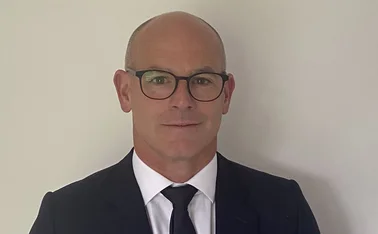
Ex-Ardonagh MD Barclay takes over as CEO of top 100 broker
Lycetts has appointed Ian Barclay to CEO, succeeding Charles Foster who is retiring after seven years in the role.