

The PB Interview - Rob Worrell: Yorkshire pride
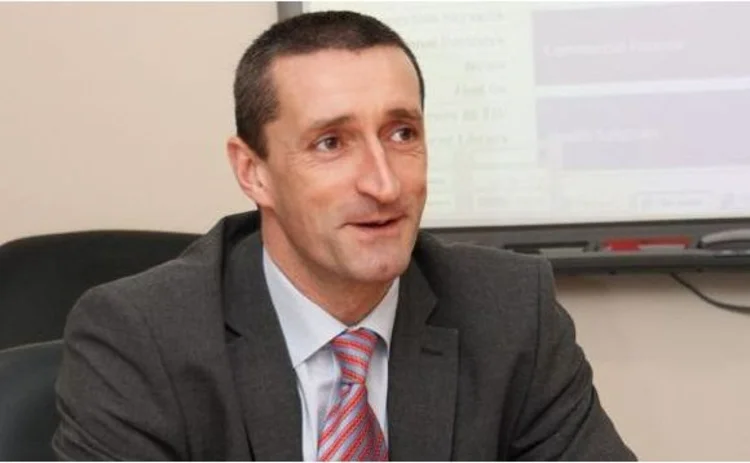

Hull's leading independent broker has had floods and a recession to contend with, yet it is a vibrant business that is growing strongly. Andrew Tjaardstra meets managing director and majority shareholder Rob Worrell
After spending only a little time in Hull, it is clear that sport is very much ingrained in the culture: the KC Stadium dominates the skyline and, despite Hull City AFC's current form, its Premier League status is secure at the time of writing. Hull's ascendancy into the Premier League has coincided with a large city-centre investment, comprising a refitted train station, new shopping centres and several housing developments either built or underway. It has a well-served, growing port and some super-sized international companies also have a presence in this Yorkshire city. Richard Tuplin, The Insurance Partnership's marketing director, is a member of the Institute of Directors and proud of what the city is achieving, keenly aware of its past reputation.
In broking, there has been recent acquisition movement: Towergate bought Rixons Matthews Appleyard, which controls around £10m of gross written premium, in October 2009 from the ProAktive Risk Group. Coincidentally, or not, RMA is based in the same out-of-town business park as The Insurance Partnership, near the Humber Bridge. Despite the brokers' proximity, there are not too many other rivals in town, though the county of Yorkshire has a thriving independent broking community.
Rob Worrell, 41, is a big sports fan, frequently torn between watching football, playing rugby union and supporting the local rugby league team. Fitness is high on his personal agenda; outside work, if he isn't boxing then he is either playing tennis, at the gym, running or playing rugby. He reflects that "a healthy body is a healthy mind".
His mind has been working overtime since helping to set up and becoming a partner in The Insurance Partnership in 1993 at the age of 24. Three of the original partners are still shareholders and the business has evolved from a traditional partnership model to become a limited company. Since then, the business has been growing: it doubled in size over the last seven years and expects to transact £40m of gross written premium this year.
When The Insurance Partnership moved to purpose-built offices in 2007, the business was looking forward to a new beginning but, within months, it was instead being hit by a barrage of flood claims, over 1,000 of which came within a 48-hour period: a stark reminder of why brokers are in business.
Growth in the recession
The last three years has seen a significant change at the company. Worrell says: "Becoming more competent and maturity of practice has seen us take a leap in the last three to five years; without doubt, the best years are ahead of us." The broker has embraced Chartered status and upholds the principle that it is important to develop both professionally and personally.
Despite the worst recession in several generations, The Insurance Partnership continued to grow. Worrell is bullish: "It was tough last year but your successes and failures are in your own hands. Last year was great evidence of the fragile nature of commerce and it came from external forces. Our clients were impacted in many ways and so was our own access to capital and revenue." Despite this, the firm managed to develop business and increase gross written premium, commissions and fee revenues.
Worrell explains how this was possible: "It was a combination of enthusiasm, activity and addressing fundamental issues: the areas we could control. We had a greater focus on cost management, won new clients in affinity and scheme markets and made our clients aware of our full range of offerings, such as commercial finance, risk management and financial services." His motivation is clear: "We wanted to look our colleagues in the eye and say 'the jobs are safe'. In fact, we recruited and continue to do so." The broker now employs 140 staff.
It has been an horrendous time for the economy but that does not by definition mean that a business has to suffer. Attitude is key. Worrell reflects: "You have to stay enthusiastic and positive. We said that we are here now and we are going to be in the future. We are not cutting back. We are in a cycle and you can't dumb down resources. Treating customers fairly is allowing them access to empowered decision makers and I think we managed to do that when many were cutting back."
There were also some difficult decisions to make. Worrell comments: "We had to manage pay expectations and introduce working-time efficiencies. I personalise decision-making: whenever I have delivered tough messages, I know it is tough love. We may not be able to advance you but you are not going backwards and we aren't going to have to lose any friends and colleagues. You can make the decisions because you believe them.
"Our directors are hands-on and I've not known them put their personal interests before the collective: it wouldn't happen. The business may get bigger and become more corporate but the company ethos won't change." The board was strengthened last year by three internal appointments: Richard Tuplin and Kevin Cody became directors, with Richard Smaje becoming group finance director.
Worrell is diplomatic about the help that his company has received from insurers: "Sometimes they can be very inefficient allies; they are the least efficient part of what we do but they have been very supportive. Relationships continue to grow; you can't love everybody but I can't be critical of the enthusiasm or commitment from them to our business, especially on an intellectual, marketing support and relationship level. We tend to be very long term."
Though he recognises the danger of having price differentials between new and renewal business, Worrell is not perplexed ethically by the concept. He readily cites other businesses as behaving in a similar fashion, including an airport that has two shops next door to each other with one charging double for the same product. He comments: "We have to be open with clients, commercially aware and forthright in dialogue with insurers. I think insurers are as frustrated as everyone else."
Worrell is keen to develop relationships with insurers and believes that it is important to know the top people and spend time with them at various events throughout the year. He says: "I like accountability and you should be able to get hold of these people. I'm proud of going to hospitality but only with the right attitude. If you go there with a mindset to get to know people - after all we are placing a lot of business with them, and it is our clients' money - so you would want to make sure you have all the bases covered." The Insurance Partnership doesn't just receive hospitality (it also entertains by having boxes at both the city's rugby league team, Hull FC, and the football club), it also sponsors several local rugby union clubs and has a full collection of shirts in its boardroom.
The broker has been helped by being the appointed representative of Hire Association Europe, a body that represents 1,000 businesses, including catering, inflatable, marquee and even portable sanitation hire firms. Other niches that The Insurance Partnership serves include the National Association of Choirs and battle reenactments. More traditional business includes logistics, construction, agriculture, professions, high net worth and property owners.
Renewable power generation, such as wind and wave energy, is one opportunity that Worrell is especially keen to tap, seeing it as an area for strong growth. The UK government wants one-third of the UK's power to be sourced from wind by 2020; Hull, sat on the windy River Humber, is a location that could benefit significantly. In addition, the broker has established an office in Scotland and has over £100m under management with its financial services arm.
Worrell, determined to grow his business to corporate size, comments: "We are always researching geographic and niche areas to develop the strategy to take the business forward." The broker has embarked on Project Evolution, perhaps inspired by some free consultancy courtesy of a large insurer, to ensure that it keeps ahead of the competition. Worrell insists that the idea came from him and that he is not a fan of corporate consultancy jargon: "It was more me banging my fist on the table saying we must evolve. It is key to improve personal and professional development. It is more than revenue and clients, it has to evolve into something better.
"We are very proud of Chartered status; we advertise that and also our Unitas membership. Clients are difficult to educate but we shouldn't stop trying and we must be proud of being part of the elite. I think that is what Chartered status gives us."
Fashionable independence
After a flurry of consolidation, many insurers have changed tack and are now more likely to support independents rather than feed the debt-laden acquisition model. Worrell comments: "The independent broker has come into vogue recently, which has helped with revenue from insurers. We need to analyse the cost of transactions and a useful management exercise is to make sure you have a strong handle on the efficiencies of your trading partners. Much of our work is with fees and we are trying to strip down costs to be even more accurate with our calculations."
Instead of selling in the boom years to eager consolidators, the company decided to seek support from broking group Unitas, which allows it to access Lloyd's markets through Windsor and Tysers. The alliance - call it a network at your peril - has eleven members that place over £900m of premium. Worrell describes the setup as comprising "like-minded independent brokers" that have helped his business from a "compliance, prospecting and processing" perspective and that has a major internal market with a wide range of schemes and facilities. Kevin MacEvoy of Twickenham-based Sutton Winson is the current chairman, each head having a two-year incumbency.
With the hope, if not universal expectation, of a sustained economc recovery, Worrell is determined to keep The Insurance Partnership independent, strong and progressive. There is a buzz around the office, which supports Worrell's assertion that his broker's best years lie ahead and that it will be fighting fit for when the economy hits its stride again.
Only users who have a paid subscription or are part of a corporate subscription are able to print or copy content.
To access these options, along with all other subscription benefits, please contact info@insuranceage.co.uk or view our subscription options here: https://subscriptions.insuranceage.co.uk/subscribe
You are currently unable to print this content. Please contact info@insuranceage.co.uk to find out more.
You are currently unable to copy this content. Please contact info@insuranceage.co.uk to find out more.
Copyright Infopro Digital Limited. All rights reserved.
As outlined in our terms and conditions, https://www.infopro-digital.com/terms-and-conditions/subscriptions/ (point 2.4), printing is limited to a single copy.
If you would like to purchase additional rights please email info@insuranceage.co.uk
Copyright Infopro Digital Limited. All rights reserved.
You may share this content using our article tools. As outlined in our terms and conditions, https://www.infopro-digital.com/terms-and-conditions/subscriptions/ (clause 2.4), an Authorised User may only make one copy of the materials for their own personal use. You must also comply with the restrictions in clause 2.5.
If you would like to purchase additional rights please email info@insuranceage.co.uk
More on Insurer

People Moves: 19 – 23 October 2026
Stay in the loop with the latest insurance personnel moves.

Allianz teams up with Superscript on SME commercial insurance
Allianz UK is set to provide capacity for digital insurance broker Superscript’s landlord and tradespeople propositions.

UK commercial softening approaching three year mark – Marsh
UK commercial market rates softened by 8% in the third quarter, maintaining the rate seen throughout the year and the eleventh quarterly drop in a row, according to Marsh.

Home insurance premiums fall again as Defaqto warns of claims pressures
Home insurance prices fell by 2.4% in the third quarter, with drops every month, according to the latest research by Defaqto.

Subscribe adds £5m Fortegra capacity
Subscribe MGA has secured a long-term capacity agreement with Fortegra Insurance UK.
Arch recruits Donald from Axa for Glasgow branch manager role
Arch Insurance’s UK regional division has appointed Karen Donald as branch manager of its Glasgow operations, effective immediately.

Allianz refreshes mid-market manufacturing offering
Allianz UK has continued to refresh its Commercial Select sector propositions by enhancing cover for manufacturing businesses with turnover between £10m and £1.5 bn.
Blog: Consistency could be the next big differentiator for insurers
John Dunn, managing director of Brokerbility, argues insurers willing to focus on relationships that deliver reliable and consistent positive experiences have a significant opportunity to become a partner that brokers actively want to do more business with.