

Phoenix from the flames
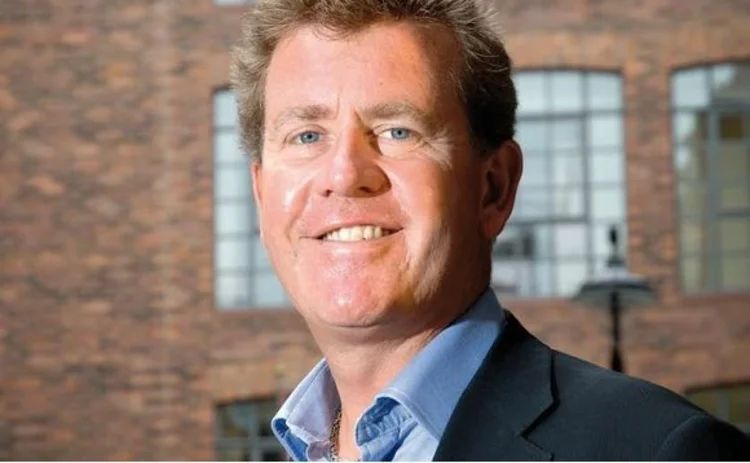

Andrew Tjaardstra meets Martin Oliver, managing director at Barbon Insurance, to discuss doomed property services company Erinaceous and some strong views on management.
Do you remember Erinaceous? It was the all-in-one property services group that ran into big trouble after taking on too much debt under the leadership of then-chief executive officer Nick Bellis and his sister-in-law, chief operating officer Lucy Cummings. In an interview with PB in February 2006, Andy Halstead, now at Towergate but then head of the insurance operation at Hanover Park Commercial, said that Erinaceous had ambitions to join the FTSE 100. Months later the shares had reached 400p and everything looked rosy but then a fraud investigation at subsidiary Dunlop Hayward led to an out-of-court settlement. From there, bad news followed bad news.
The Erinaceous story was big news in the broadsheets, highlighting everything wrong about the boom and its unprecedented borrowing binge. The story took a twist when it emerged that one of Bellis' previous companies had gone under in the early 1990s and had been unable to pay back debt. After a collapse in profits in 2007, the company was on the verge of bankruptcy with debts soaring to £250m and the share price collapsing.
The banks took control of the business, deciding to split off the healthier insurance division and renaming it Barbon Insurance Group after Nicholas Barbon, the property developer who opened England's first fire insurance company - the Fire Office - following the Great Fire of London in 1666. After initially appointing Leslie Goodman as interim executive chairman, who did a great job fire-fighting, Barbon needed a permanent leader and headhunted Kwik Fit's boss Martin Oliver to become chief executive; Oliver had mentioned a seven-year itch in an article in sister title Post and said that perhaps he was not given the free reign that he wanted. After all, he was working at a subsidiary of a huge tyre and exhaust empire.
Commenting on the attraction of joining Barbon, Oliver - whose arrival allowed Goodman to relinquish his role - says: "It had a healthy EBITDA and long-term potential." Profits for 2008 were £4.3m compared to a loss of £0.2m in 2007 and Oliver is confident of beating last year's performance this year. Barbon is wholly owned by Caley through HSBC and Lloyds, with Tim Redburn as chairman.
Oliver is candid that Erinaceous often overpaid during its acquisition spree and that it failed to negotiate beneficial lock-ins for senior managers. Keelan Westall was bought in September 2006 for £19.7m and Lumley Letsure, one of the oldest insurance brands, was bought for £12m. He reflects: "Lots of people made lots of money. The company was in a hurry going nowhere."
In moments of crisis, relationships are tested: the moribund broker was fortunate that its broker's partner insurers were supportive despite its woes. Zurich was even in negotiations to buy the broking division, showing the value of the broker's book. As a result client retention was surprisingly high, perhaps helped by the individual brands and businesses (see box, p.35) that kept the Erinaceous name at a relative distance.
Calming influence
Despite losing 70 staff to competitors including Cullum Capital Ventures and Endsleigh, Oliver comments that the "customer loyalty was unbelievable", however, the business was not performing and premium was declining at the rate of 10% a year when he joined. His first job was to stabilise the ship; in the last quarter it has registered growth, something that should be applauded in one of the harshest business environments for decades. Oliver highlights: "We are seeing higher retention rates and new business wins. We are also up-selling, as with Homelet's tenant's contents insurance."
Oliver is far from oblivious to the recession and sees several themes occurring. He says: "Finance directors are shopping harder so there is more churn. If you don't lose business it is still under attack and some businesses are going under."
He has not wasted any time making his mark on the company, moving to appoint finance director Andrew Jenkinson, compliance director Kate Coulson from HSBC Insurance Brokers, information technology director Rachael Bishop and a managing director for Letsure, Ian Fraser.
Acquisitions have given Barbon's letting business access to more than 3,000 lettings agents and it sells referencing services in addition to rent guarantee products under the brands Homelet and Letsure. Totalling around half of Barbon's business, the policies are placed with its own insurer, Malta-based Propgen. Oliver believes that Malta was chosen because of the speed at which a company can be set up there.
In the rental market, Barbon checks 500,000 references a year and this is growing. Oliver thinks that the UK may have peaked when it comes to property ownership and that we will become more like our European neighbours. He says: "We have two strong brands and there are more properties to rent, although there is strong competition in this sector with 14 insurers."
Barbon also deals with commercial property through Keelan Westall and insures iconic names such as Battersea Power Station, the Empire cinema in Leicester Square and the Park Lane Hilton. Keelan Westall is a wholesaler to 300 brokers for smaller properties and uses "the usual suspects". In addition, the broker specialises in blocks of flats through Bournemouth-based subsidiary Deacon. Oliver comments: "The business is growing and we have a good marketing team. Managing agents still make a remarkably good living."
Barbon is also a niche player, with a large book of funeral directors through SAIF, retirement homes through CareAssured and even film camera operators through its subsidiary Performance. The latest venture is start-up charities.
Oliver recognises that organic growth will be slow and has money at his disposal to acquire and encourage small teams to join. The broker is offering lifetime equity on all business generated and retained to senior staff that join. Steve Brindley, sales and marketing director at Barbon's property and commercial division, told sister title Post in July that the proposition is aimed at brokers that control £1m of net retained income who would like a move but do not want to start on their own. The aim of the incentive was to attract up to 20 brokers.
The company has been on the acquisition trail with the purchase of London-based Zennor, a commercial and property managing general agent that was the largest provider of property stock insurance to Barbon's social housing brand Farr. Ironically on Zennor's website, it reads: "The last decade has witnessed dramatic moves in the insurance market, where there continues to be an unprecedented number of mergers, acquisitions and disposals."
Hard task
Despite the difficulties in persuading clients of it, controlled market hardening would be beneficial for everyone although the temptation to place business with the carriers looking for opportunities must sometimes be great.
Oliver felt six months ago that we would be in a hard market by now but has revised this view, saying it is "too difficult to call" but that it is doubly difficult in this environment and that there will be some "blood on the carpet". Insurers are scrambling to stagger rate increases rather than introduce a sudden pricing hike, though this must seem too good an opportunity to waste for some hungry market players with capacity to spare. It is likely to be a long hard slog for the industry, although RSA says that it has raised rates once again across the board in the first half of the year. Zurich, Axa and Aviva have all lost market share over the same period, in part because smaller players undercut them though Allianz once again put in a consistent performance.
As well as attempting to raise rates, insurers are re-examining commission structures and trying to reign in some of the boom-time deals agreed when investment income was strong enough to help insurers make profits despite rising claims costs. Oliver recognises that some of the larger players are "trying to change the goalposts on deals" but is not overly concerned and wants to "look after them by giving them a good book".
Oliver is passionate that management is all about people rather than systems: "There are not many articles about finding the right people. Without them, there is no chance. People management is not a science it is an art." Oliver helped develop a culture at Kwik Fit that managed to transform the staid world of call centres, an initiative that saw it finish regularly in the Sunday Times Top 100 Companies to work for. At Kwik Fit, staff that stay for a decade are treated to a celebratory meal at an exclusive hotel.
In January, Barbon launched a 15-month management training course in association with the Chartered Management Institute (see Focus, pp.22-28, January-February 2009). In order to gain a place, each employee had to apply to a line manager for endorsement, after which they were then sent for external assessment at the Centre for People Development.
Oliver advocates training though is pragmatic about its usefulness: "There is a huge amount you can do to stretch staff but there should be less routine and more fun along the way. You have to make people feel proud and if you are given a job description you are on a shaky nail: you can't follow a script. The attitude should be of going where you haven't gone before. There is not enough challenging of people in this industry."
Oliver, who commutes from Glasgow to London each week, writes a weekly blog to his staff, which gives a mix of personal and business insights. In person, he has the air of a brilliant networker: he has invitations galore from insurers and is in touch with the importance of award ceremonies and events. He knows the founder of Kwik Fit, Sir Tom Farmer - who set-up the firm after becoming bored with early retirement - and has a charity fund called the Farmer Foundation.
Despite turbulent times, Barbon is now well set for the future thanks to bank backing and, like many, the broker will no doubt be hoping that the commercial and residential property markets stabilise to further return certainty to the business. Although PB once wrote something similar about Erinaceous, it is reassuring that the insurance side is focused and being driven by such an experienced and knowledgeable leader. As Oliver continues his commute from Glasgow each week, he can reflect on the plane that he is firmly in charge.
Only users who have a paid subscription or are part of a corporate subscription are able to print or copy content.
To access these options, along with all other subscription benefits, please contact info@insuranceage.co.uk or view our subscription options here: https://subscriptions.insuranceage.co.uk/subscribe
You are currently unable to print this content. Please contact info@insuranceage.co.uk to find out more.
You are currently unable to copy this content. Please contact info@insuranceage.co.uk to find out more.
Copyright Infopro Digital Limited. All rights reserved.
As outlined in our terms and conditions, https://www.infopro-digital.com/terms-and-conditions/subscriptions/ (point 2.4), printing is limited to a single copy.
If you would like to purchase additional rights please email info@insuranceage.co.uk
Copyright Infopro Digital Limited. All rights reserved.
You may share this content using our article tools. As outlined in our terms and conditions, https://www.infopro-digital.com/terms-and-conditions/subscriptions/ (clause 2.4), an Authorised User may only make one copy of the materials for their own personal use. You must also comply with the restrictions in clause 2.5.
If you would like to purchase additional rights please email info@insuranceage.co.uk
More on Broker
Opinion: Why a slower insurance M&A market still creates opportunity
Despite clear signs of a slowdown of investments, the qualities that made insurance broking attractive to investors are still intact – and a more selective market may actually favour better deals, says Andrea Bertolini, partner and head of financial services at Inflexion.

JMG-owned Grosvenor recruits new MD from Gallagher
JMG has recruited Ian Muldowney as managing director of Chester-based broker Grosvenor Insurance, aiming to become the “broker of choice” in Cheshire.
MOFS MD Gibbons on why it chose Adler Fairways over PE or the big consolidators
Mason Owen Financial Services managing director Andrew Gibbons speaks for the first time about its takeover by Adler Fairways. And tells Jonathan Swift culture and future proofing trumped cash when it came to choosing a new partner, and that the type of tea available to staff post-merger was also a consideration.
Ex-Willis Networks boss Read joins Ascend
Former managing director of Willis Networks, John Read, has joined Ascend Insurance Holdings as group development director.

Cobra Network promotes for CEO as Tedstone exits
Cobra Network has appointed Jo Russell as CEO, targeting “untapped potential”, as she succeeds Andy Tedstone who is leaving PIB.

Simply Business names ex-Go Compare MD Sanga as UK CCO
Simply Business has added a new UK chief commercial officer, and a managing director of its MGA, to its senior leadership team.

FSCS opens for claims from Verus Financial Services customers
On 15 October the Financial Services Compensation Scheme opened for claims from Verus Financial Services customers.

Johannesburg headquartered Lloyd’s broker expands into corporate
African international insurance and reinsurance broking group Maksure Risk Solutions has expanded its UK operations into direct corporate and public sector insurance broking.