

Countryside alliance
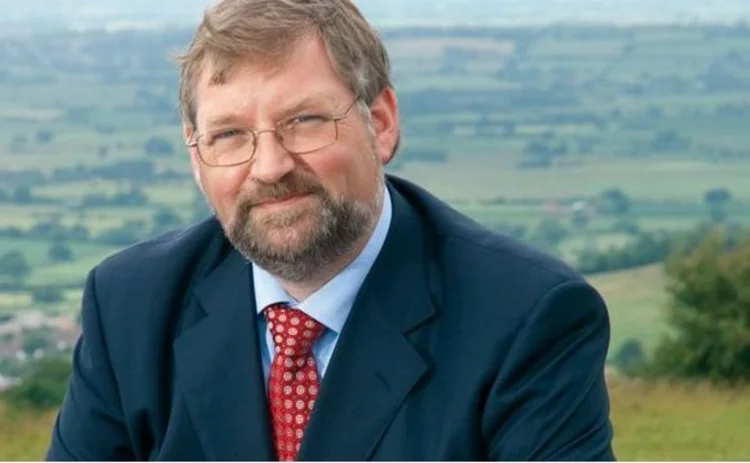

Ian Gosden, managing director of Higos Insurance, is working closely with clients to prevent the importance of insurance being diluted by lowbrow advertising.
Ian Gosden's broker is surrounded by the kind of glorious countryside that you can find only in England. Far away from the hustle and bustle of London, where every important financial decision appears to be made, Higos' trade is a mix between local and customers across the country through its independent financial adviser affiliations.
Higos has a high street presence in five counties: Devon, Dorset, Somerset, South Gloucestershire and Wiltshire, with 14 branches - mainly in market towns - and two large offices. Its headquarters is now in Wells - the UK's smallest city - though the business was founded in Glastonbury in 1990. Gosden, managing director of Higos, aims to open 35 high street branches by 2013, including one in Exeter next year, though even with this large-scale local exposure he remarks: "We could open 70 branches in our target areas and still not be known by everyone."
Higos has just opened a high street branch in Worle following an acquisition and Gosden is pleased with the results, mentioning that the business has drawn £17,000 of premium from walk-in trade. He adds: "If you are in a busy part of the high street and have a professional office, customers will come in." His latest plan to encourage custom is a mail shot: those who bring in a leaflet are given a choice of either a complimentary box of Thorntons chocolates (the more popular choice) or bottle of champagne. Following the acquisition of Mike Deverell Insurance Services in 2007, the branch in Langport has been completely refurbished, with Mike Deverell promoted to business development manager within the Somerton-based corporate business team.
Acquisitions have been an integral part of the company's growth. Gosden is prepared to buy small books of business as well as high street brokers; there have been 23 acquisitions in the last 18 months - 37 in total. An investment by Zurich through ZPC Capital was secured last year for 28% of the shares and all the money will be spent on growing the business. Employees own another 28%, Gosden the rest.
Growth over the rest of the year will be measured because Gosden thinks that brokers will become cheaper and that several distressed sales could be on the cards. When buying, he is determined to grow the purchased book and put more staff and business into the offices; owners can stay or leave.
Service first
On its website, Higos lists a vast array of insurers and managing general agencies. "Clients should not ring up Higos and be told 'we can't do it'. It's not abot money - it's about sevice. The latest policy is travel for the over sixties, where we can get them cover up until 100 years old," says Higos. Despite the large number of agencies, Gosden realises that the depth of their relationships is important; the broker has two household binders - including one with Aviva - and has two more coming. Only Legal & General has cancelled an agency. "You have to ask what the insurer is getting, so it has to be win-win." The broker also works closely with Zurich, Allianz, Fortis, Arista and MMA. He notes also that RSA is trying hard to win business.
One area in which Higos is doing particularly well given the recession is small business insurance, the majority of which is placed with Allianz. In one day, the broker had 30 enquiries made to its small and medium-sized enterprise unit, with many start-ups making enquiries as a result of redundancies. Although the business provides mainly small premiums, Gosden is pleased with the way that this section is going: "We handle small stuff very well - pubs, takeaways, shops offices, restaurants - and the big boys aren't interested. We work with them and hopefully their business grows while we look after them. Many of our clients started as one-man bands and they now employ up to twenty people, with their premiums moving from the hundreds [of pounds] to the thousands."
Gosden is concerned that the industry's advertising communicates an incoherent message to customers, often trying to make jokes and emphasise price reductions rather than expressing value and service. Already this year, tens of millions of pounds have been spent on advertising by the likes of ComparetheMarket, Swiftcover and Direct Line - much of it trying to capture the imagination rather than promoting any policy intricacies or its importance. Insurance marketing has been dominated by the price message for years, although Zurich and Hiscox have arguably pushed against this trend.
Gosden complains: "All our marketing [at Higos] mentions professional advice, not price. Direct writers want people to think insurance is a tin of beans but it isn't; for many, acquiring customers is a numbers game. Clients don't stay with us because we are the cheapest, rather it's the service and advice we provide that counts. Who is telling clients what we [the insurance professionals] do? People don't understand until something goes wrong." He believes that the Financial Services Authority is partly responsible for this culture because it hasn't implemented the right checks and balances for when customers buy online. Gosden adds: "All the time we are silent, people are going to keep using aggregators because they don't know any better."
So how does his broker make a difference? He starts off by attacking the competition: "How many times does an insurer say 'it is not covered', or a client makes a mistake? How many clients would push the button to go live if they knew they were exposed to £1m of liability. What if they had a nice little flag that says that? One false statement and the clients aren't covered: do the clients really understand that? Our retention rate is 84%, even in a recession, so we must be doing something right."
Brokers are often reticent to give praise to their competitors but Gosden is prepared to give credit where it is due: "A-Plan provides a high-quality service and Livingstones Warman in Yeovil and Woodbury's in Cheddar are good local brokers."
National reach
Higos' remit goes beyond that of a local broker: it is a key-appointed representative of IFAs across the country with 12,000 advisers as introducers that includes networks such as Whitechurch, Pink and Positive Solutions - 60% of its business is sourced like this. Gosden says: "We decided to be different when the FSA came in. Our main competitors - Halifax, CETA and Paymentshield - all provide quote engines for household to the IFAs but we decided not to and offer the full range of products. We are now targeting accountants and travel agents." Leads are put on the internet by the IFA and each is allocated within Higos. Selling household insurance to those taking out mortgages, for example, has been lucrative for the broker, though since the credit crunch business has dropped dramatically: there has been up to a 50% drop in leads, a large blow to Higos because it has a 50% conversion rate. Gosden, a former financial adviser, reflects: "Nobody is taking out mortgages." Despite this pressure, Gosden says that the overall business is ahead compared to last year, although it is at around 10% off budget.
Named after his car's number plate 'HI GOS', Ian Gosden has stamped his mark across the business, even managing to link his passion for horse racing to the business with a sponsorship of Wincanton in January on Channel 4. He is very much a hands-on manager. The morning I met him, he had been for breakfast with ten of his staff to seek feedback on how the business could be improved; he plans to meet all 200 of his staff in this way by the end of the year. He says: "One of them said how the lights in one of our offices are all connected to one switch. We are getting an electrician to change that to provide more control." Also, he wants to make sure that it is more apparent on contracts that, should clients cancel their premium credit arrangements, a fee is chargeable. Meanwhile, four staff are starting on a trial 12pm to 8pm shift which, if successful, he will roll out to all departments.
Higos has become one of the largest employers in the region. Gosden is a keen advocate of training, flexible working and giving youngsters a chance. He says: "If they pass their exams, after four years they can be earning £23,000, which is a lot around here - especially if we have recruited them when they are 16." He spreads the word by visiting local schools.
Higos has not cut its training budget despite the recession and, in addition to expanding its customer service and sales training, the firm has recruited 70 trainees in the last 24 months, including many school leavers. Gosden comments, "Unless you invest in training, you won't grow because you will be constrained by your staff's ability." Qualification was made compulsory in 1999: new recruits spend the first three weeks in the classroom with one of Higos's two full-time trainers, with more training after three months. They use insurance foundation training, commercial training from the British Insurance Brokers' Association and Gola; staff can even take exams in the office.
Fixtures
On staff retention, he seems serious when he says: "I expect them to stay with us forever and it is personal when they leave." Since the appointment of former Lloyds bank employee Julian Unthink as human resources director, the business has focused on professionalism. Gosden comments: "This is the toughest role I've had to recruit for; I needed somebody who cares as much as I do. He became employee of the year within a year."
Gosden also wants to invest in upcoming talent through a management-training course brought in by Unthink; performance management is the next module. He is keen to expose his managers to top business gurus through organisations such as Benchmark for Business, which says it offers "the world's finest management thinkers". Benchmark is not cheap, though Gosden highlights: "It is good for networking and I have to keep developing my skills set just as much as my staff's. If we want to be one of the best brokers in the country, we have to run the business as well as we can as well as looking after our clients."
He is also a longstanding member of the Institute of Directors and wants the rest of his senior staff to enrole in its courses (see PB, p.8, May 2009). However, he concedes that it is still hard to find many other senior business people that understand the intricacies of insurance broking when networking.
Having picked up half-a-dozen experienced people in the last twelve months - including a local branch manager from Equity - and having set up a board comprising him and three co-directors, Gosden is keen to move from managing director to a more strategic role as chairman within the next two years.
As Gosden moves up the corporate ladder to be more of an overseer and promoter of the business, he can reflect that he has invested enough in the future to see his business persuade local customers that service and advice matter. He concludes: "We are the Marks & Spencer of insurance broking: it may sell less but people still pay more for its sandwiches. In rural communities, people value dealing with people they know and our challenge is to be as good as we can be when it comes to customer service."
Only users who have a paid subscription or are part of a corporate subscription are able to print or copy content.
To access these options, along with all other subscription benefits, please contact info@insuranceage.co.uk or view our subscription options here: https://subscriptions.insuranceage.co.uk/subscribe
You are currently unable to print this content. Please contact info@insuranceage.co.uk to find out more.
You are currently unable to copy this content. Please contact info@insuranceage.co.uk to find out more.
Copyright Infopro Digital Limited. All rights reserved.
As outlined in our terms and conditions, https://www.infopro-digital.com/terms-and-conditions/subscriptions/ (point 2.4), printing is limited to a single copy.
If you would like to purchase additional rights please email info@insuranceage.co.uk
Copyright Infopro Digital Limited. All rights reserved.
You may share this content using our article tools. As outlined in our terms and conditions, https://www.infopro-digital.com/terms-and-conditions/subscriptions/ (clause 2.4), an Authorised User may only make one copy of the materials for their own personal use. You must also comply with the restrictions in clause 2.5.
If you would like to purchase additional rights please email info@insuranceage.co.uk
More on Management

AUB completes Prestige deal
AUB Group has completed its acquisition of 95.9% of Prestige Insurance Holdings.

NFP buys Bspoke to expand its UK specialist insurance services
NFP, an Aon company, has purchased Bspoke Insurance Group to strengthen its existing suite of insurance solutions while expanding technical underwriting expertise and specialist product knowledge.
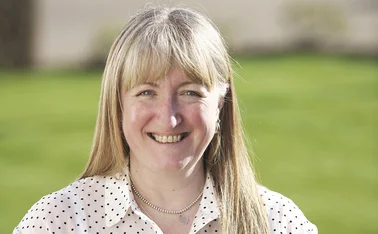
Yutree outlines plans after MBO
Laura Hancock, managing director of Yutree Insurance has outlined plans for the future following a management buyout, including opening an office in Norwich.

Should you sell your broking business to an Employee Ownership Trust?
Tax-efficient exit strategies and staff incentivisation have become hot topics among broker leaders since the recent increases in Capital Gains Tax and Employer National Insurance. In the second part of a series focused on the fallout from the 2024 Labour Budget, Catherine Heyes examines how broker owners can use Employee Ownership Trusts to respond to these developments.
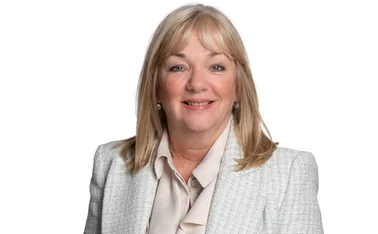
Chaucer CUO named new CII president
Nicola Stacey, chief underwriting officer at Chaucer, has been elected the new president of the Chartered Insurance Institute.

Montagu agrees to sell Open GI to minority shareholder Ares
Ares Management is set to acquire Open GI, with the deal signed on 9 August 2024, Insurance Age can exclusively reveal.

“Nobody came close to AUB” – CEO Cheesbrough on Movo’s new investor
The Movo Group is looking to create larger broking hubs and kickstart its directly authorised network Fusion after AUB took an 80% equity stake, according to Lea Cheesbrough, Movo Partnership CEO.
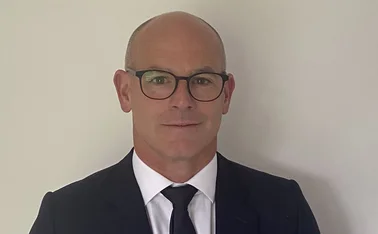
Ex-Ardonagh MD Barclay takes over as CEO of top 100 broker
Lycetts has appointed Ian Barclay to CEO, succeeding Charles Foster who is retiring after seven years in the role.