

The new Lime minister

Brendan McManus joined Willis last year from Royal and SunAlliance. He speaks to Andrew Tjaardstra about leadership at one of the world's largest brokers
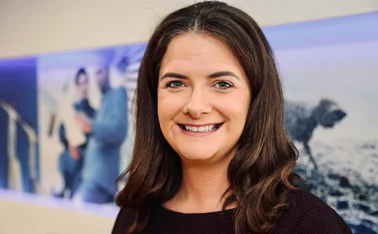
Brendan McManus is wearing a hard hat when we meet him. For the photo shoot we are on site at Willis' new home, situated directly opposite Lloyd's of London. As he steps onto the one of the terraces on a freezing winter day in just his suit, it is easy to discern that the prospect of his company's nascent surroundings excites him greatly.
McManus made the switch from insurance to broking at the beginning of August 2007. His former boss, Royal and SunAlliance's chief executive, Bridget McIntyre, probably had mixed feelings in losing a key industry player, but he was leaving to join one of the largest brokers in the world.
McManus, formerly managing director of RSA's broker division, claims he was looking for a new challenge after four years and that his friendships with Willis employees such as Allan Gribben - the boss that McManus replaced when he was promoted to chief executive officer of Willis International - played a big part in his decision to take up the role as chief executive for Willis in the UK and Ireland. During the interview he appears happy and relaxed; he is keen to show off his future office on the tenth floor.
In between resigning from his position at RSA in May and joining Willis, McManus took time off, spending time with his children and helping his son move to Los Angeles. Part of the problem was that he was not allowed to sit in on certain business: "There are a lot of executive decisions that you can't be involved in when you resign especially when you are joining such a large player."
There is little difference between management at an insurer and at a broker in McManus' eyes. He reflects: "There are the same opportunities and problems. You need to grow revenues and control costs, and there is a battle for talent.
"There is a difference in style between an underwriting organisation and one dealing in distribution. In underwriting it takes at least a year to come through. It is the difference between a speedboat and a cruise liner. In broking the stuff you do today will impact this month's results. I like that immediacy. You can try new things and go from idea generation to implementation really quickly."
Leadership
McManus lives with his partner, an executive coach that he admits to finding "very useful" for the development of his management style. He says: "I still fill my days with too much, but every day I come to work with a plan as to what a good day, a good week and year will look like. I won't promise things I can't do; I've learned that over the years.
"When you are engaged with what you are doing it is hard to stop. I used to tell people to go home at the end of the day at RSA, but when people love it they don't want to leave. The hours disappear and people don't take sick days when they are having a great time. If you love what you are doing you turn up to work, even when you get man flu. If not, you sneak off for half a day."
It also helps to be passionate: "Passion is very important because people notice your moods and will copy them really quickly. It is an important part of leadership. I am very direct which sometimes has caused me a problem, but ignoring poor performance only leads to more pain." He adds that administering praise for positive performance quickly is also important.
Does he think people can be born managers? "No, I don't think you are born to be anything. I believe you are a composite of everything you have ever seen, read and heard. With every leader I have ever worked for that I've admired, I've taken a bit of their style. Duncan (Boyle) was very influential, as was Andy Haste (both RSA), but even those I worked for when I was very young have influenced me. I've never had a single good idea of my own, I've only ever copied other peoples'." Summarising his position, he reflects: "Leadership is a many faceted thing, and if you ever sit back and say 'hey, I'm a good leader' then you're dead. You have to reinvent and push yourself."
Willis comprises four major businesses, North America, international - which the UK is a significant contributor to - emerging markets and reinsurance. Willis controls around £160m of commissions and fees in the UK and Ireland, on which McManus says: "The UK and Ireland has had great growth over the last three to four years. Although it is a little flatter this year we are growing in large corporate clients, middle markets, and our employee benefits is gaining good organic growth.
"We are also hiring aggressively in large client management and employee benefits, hiring into our MGA business which will launch next year."
There are around 30 offices in the UK, although the broker lost offices in Cockermouth and Carlisle which were sold Smart and Cook in August, something that had been agreed before McManus joined. However, it does not appear a strategy he wishes to continue: "I think it is important for insurance brokers to be part of their community - we want to be represented in all metropolitan areas. Our network allows us to be represented in close to 70 communities.
"I think you get judged as a leader on your ability to grow organically. There are quite a few people that haven't proved they can grow this way. Most have grown by acquisition. If there are opportunities to buy then we will take them, however in any deal there is a lot of integration usually, which is tough. There are a lot of synergies that have to be driven out."
Considering the last ten years, McManus reflects on what he sees as the biggest changes in insurance: "We are right in the eye of the storm. There has been a shift in power and control from the underwriters to the distributors. The significant change is in small enterprise business and the move towards a potentially non-advised sales process.
"Insurers have a big decision to make and they might be left with some redundant infrastructure. They have to decide if they want to be in distribution or act as capacity providers. However, I don't think there has been significant change in the mid-market sector. As insurers make their pick we will need to make some strategic decisions: you can't be everybody's friend and partner."
Notoriously, McManus entered RSA into a managing general agent agreement with Primary, but then pulled out. He comments: "I've seen all sides of life in my career. I've seen MGAs that haven't executed perfectly. The difference between the good and the bad in MGAs is in underwriting discipline and control. It could prove disastrous if it is not there for the capacity provider, the customers and the shareholders."
He admits to being "mildly surprised" when Norwich Union took over on the panel from RSA, although he feels that perhaps the withdrawal of capacity had forced Primary to take action.
Network
Willis has a presence in the small- to medium-sized market with its Willis Commercial Network. Despite the recent growth of other networks, WCN has struggled to grow its numbers with some of its members having been acquired. However, McManus backs his network chief, Mark Radburn, as the man to spearhead its growth: "It is here to stay and our members can be sure we aren't going to sell out to anybody. Networking has been so successful in the UK that we bought a company in the US called Insurance Noodle, which has 2,500 agents. We are looking at transferring network opportunities to other countries. The network in the UK is the jewel in our crown and will never be sold.
"We are going to help our members to grow their own community broker networks. Early next year we will assist new brokers that are starting up. This is pretty hard, but we'll be able to provide a broker-out-of-a-box help service."
Willis has introduced a 2.5% fee to insurers on all business that they charge on top of their fees to clients. This is to bring it in line with Aon, which has been charging the fee for several years. McManus remarks: "Willis and its clients were at a disadvantage and we wanted a level playing field. We have explained to our clients what it means and we negotiate on a client-by-client basis. Half of our business is on a fee basis. It is a matter for our clients and us - the fascination in the press on the issue is amusing. People are trying to make a noise out of it."
Fees are becoming more predominant in the broking market, especially for larger clients, however McManus shows no concern over how Willis is paid: "We need to cover our costs and earn a margin. I don't mind as long as the numbers stack up and the client is happy with that form of remuneration. The biggest cost for us is salaries and people."
As part of an industry that continues to turn itself upside down, it can be perhaps of little surprise that McManus is now at the helm of a broker rather than an insurer. McManus' ideas on where his future lies demonstrate his market savvy, making allowance for the clouded, unpredictable nature of the industry: "I have a clear plan for five years' time, but if you are thinking one step ahead then you don't get the right amount of focus on what you are doing now. I'll do that first and then think about the next thing. In five years' time I'll be contemplating my next step on that terrace."
THE WILLIS BUILDING - 51 LIME STREET
Around 2,000 Willis associates from four offices across London will move to Lime Street by the end of April. Designed by architects Foster and Partners, the Willis Building received an "excellent" Building Research Establishment Environmental Assessment Method rating. This was awarded for its sustainable, environmentally friendly construction materials and efficient energy and water usage.
This striking addition to the London skyline has 28 storeys and stands at 120m (410ft) tall, making it the fourth tallest building in the City. Willis' London headquarters is joined to a nine-storey building, meaning that the two buildings together comprise nearly 145,000m2 (475,000 sq ft) of office floor space.
FROM INSURER TO BROKER - BRENDAN MCMANUS
August 2007: Willis UK and Ireland, chief executive
April 2004: Royal and SunAlliance, commercial managing director
August 2002: Royal and SunAlliance, corporate (mid-market) director.
Only users who have a paid subscription or are part of a corporate subscription are able to print or copy content.
To access these options, along with all other subscription benefits, please contact info@insuranceage.co.uk or view our subscription options here: https://subscriptions.insuranceage.co.uk/subscribe
You are currently unable to print this content. Please contact info@insuranceage.co.uk to find out more.
You are currently unable to copy this content. Please contact info@insuranceage.co.uk to find out more.
Copyright Infopro Digital Limited. All rights reserved.
As outlined in our terms and conditions, https://www.infopro-digital.com/terms-and-conditions/subscriptions/ (point 2.4), printing is limited to a single copy.
If you would like to purchase additional rights please email info@insuranceage.co.uk
Copyright Infopro Digital Limited. All rights reserved.
You may share this content using our article tools. As outlined in our terms and conditions, https://www.infopro-digital.com/terms-and-conditions/subscriptions/ (clause 2.4), an Authorised User may only make one copy of the materials for their own personal use. You must also comply with the restrictions in clause 2.5.
If you would like to purchase additional rights please email info@insuranceage.co.uk
More on E-Trading

MGAs can’t afford to not offer digitally traded products – Keating
Launching digitally traded products “has to be the way forward” for managing general agents to meet demand from brokers, according to trade body boss Mike Keating.

Chubb extends PI to Acturis
Chubb has added its professional indemnity insurance product onto Acturis.

People Moves: 27 – 31 July 2026
Stay in the loop with the latest insurance personnel moves.
Allianz begins Northern Ireland digital push with Complete Mini Fleet
Allianz UK has confirmed the launch of Complete Mini Fleet in Northern Ireland.

Aviva cuts e-trade turnaround times as digital appetite grows
More than three quarters of Aviva’s SME new business referrals placed digitally are now turned around within 60 minutes, compared with just over a third at the start of the year.

News analysis: Cost the main barrier to MGAs digitally trading
Cost is the number one barrier to managing general agents offering more digitally traded products, which is a vital route for firms going forward.
Allianz promises brokers more saying ‘yes’ with digital SME refresh
Allianz UK has made a “step change” in how brokers can trade with it, broadening risk appetite, removing unnecessary referral points and strengthening underwriting support to make it faster and easier to place SME business digitally, according to Eibhlin Swan, director of digital trading at the insurer.

Broker boss concerned about MGAs priortising profit commission over claims
Concerns have been raised that some managing general agents might choose to protect profit commission over paying or even discussing ‘grey area’ claims in the present soft market.