

The ego has landed
Following the leveraged buyout of Stuart Alexander's ex-joint managing director Alex Shead, at 40, Stuart Reid is one of the youngest owner-managers of a big brokerage in the UK. He talks to Richard Adams about his love/hate relationship with the new breed of insurer chief executives, keeping it simple - and why he will never run Marsh UK
It may seem something of an oxymoron for a provincial broker to have its head office in the City of London, but, Stuart Reid says, this is largely to ensure that his organisation - Stuart Alexander - is furnished with the correct quality of staff. "And we punch above our weight as a result," he adds.
Straight away, he is keen to move onto the Spitzer inquiry. "Commission is paid (to brokers) for many things; supplying policy documentation, underwriting and paying claims. These things, once carried out fairly exclusively by insurers, have increasingly become the domain of brokers - but, in a disclosed environment, will these things go back to insurers?" he asks rhetorically, adding: "It depends partly on how happy insurers are with the situation as it stands. But, in an era where insurer outsourcing is maturing to the point where infrastructure is going to India, is it for regulators to decide this?"
One scenario Reid poses as a result of Spitzer concerns the flagging share prices of firms being investigated. "One of the things that may happen as a result - to help restore shareholder confidence and value - could be for Marsh to acquire a large broking or super-provincial firm," he suggests.
Culture change
On the subject of terms-of-business agreements, which he describes as 'messy', Reid says: "There is confusion among brokers about this and I think many insurers, underwriting agencies and wholesale brokers won't have their houses in order within the time the regulator would like. I asked one large insurer - which will remain nameless - if they could issue us a new TOBA. They went back and looked into it and it transpired they had never issued one in the first place. And this is one of many examples of how insurance has survived as a 'gentlemen's handshake' culture.
"The Financial Services Authority has tried to translate custom into statutory practice, but 14 January is not the end of it - it's the end of the beginning, as Churchill said. A broker of our size is well placed for it and, for us, regulation is an opportunity, not a threat. But it is another deciding pressure for small brokers and there isn't the level playing field the FSA wants. Small players are finding their credit terms and commission terms (from insurers) aren't what they used to be, and the days when an insurer would give the same terms to a national as to a one-man band have gone."
Reid also cites the fact that there is a lot of cheap capital around at present - but only to fund a certain size of acquisition. "I have not been short on offers from venture capitalists and banks, but smaller brokers do not appeal to these lenders. Across the board it is the smaller brokers, often offering fantastic service, that are the most profitable, but it's a volume world - depressingly so.
"There is a cull occurring at the moment of agency bases, but I am enthused by the resilience of smaller players and am convinced there are many that will stay indefinitely. There are many reasons why smaller players are not looking to sell. For example, if a broker is only offered two-and-a-half times income - which does happen - they often decide they are better off staying because, although the market has softened, it has not been disastrous. There is definitely room for community broking."
This reluctance by brokers to sell up was reflected in the results of the Professional Broking sentiment surveys in October, where only 3% of brokers surveyed said they were in talks or were considering selling in the near future.
Reid is also forthright in his views about the insurer/broker relationship at higher levels. "There is an old adage that brokers run their firms as insurance brokers, not as businesses. But this is becoming less so and - at the same time - this could be levelled at insurance companies.
The claims service is generally poor and the amount of manual administrative functions that could be catered for by IT is also far from ideal. Although at present we are very well looked after by the carriers we deal with, and have a very open business-like relationship with them, we aren't complacent."
Independence movement
Using Reid's previous supposition, in the event that Stuart Alexander was acquired to plug the share deficit at Marsh, he says he has no aspirations to Bruce Carnegie-Brown's job. "Independence is the key whether you are a small or large broker - having the ability to control where you are going and the ability to make decisions is essential to delivering the right quality. I like our current situation, as we have enough weight to get good deals from carriers but we are also nimble enough to serve the client in the correct way."
Although Reid is a great exponent of the idea of an optimum-size brokerage, he continues: "It is crucial for us to maintain profitability and we cannot be complacent. Insurers are restricting agency bases at a low level at the moment, but - and this is my view, not the company's - they may raise the bar in future."
"We are currently pulling around £50m in premium income, which I think is only the minimum acceptable level for insurers for a super-provincial.
We would like to get up to around £100m in the next three to five years, however, we are well aware of the dangers in growing too fast and compromising the service. We could have taken the venture-capitalist route, but this is a ticking time-bomb, as venture capitalists may want a return in a time frame that may not be good for the longer-term health of the business.
"I think this may have been the case with Opus and - while I don't know for sure - it could have been a 'fire sale' due to venture-capitalist pressure."
Reid's recent leveraged buyout, which took his shareholding from 38% to a super-majority 76%, is indicative of his confidence in the market and insurance over the next five years. "The opportunity is there in insurance; it is an annually renewable, cash-generative business. It is basic economics.
But the other point is that clients need professional brokers, not just for buying insurance, but for a range of things such as risk management, claims, delegated authority underwriting and access to secondary networks - which, in my view, makes it a good business to be in."
However, Reid, like many brokers, is as sceptical about whether the majority-market-share-controlling top insurers will prevent rates sliding further in 2005 as he is about the new breed of insurance company chief executives: "There is no doubt that Hubbard and Snowball are bringing much professionalism and character to the market, but they shoot themselves in the foot with dizzying swings between a hard and soft market. Do they really have to respond if their prices are undercut by opportunists? It is incumbent on the larger insurers - not that I'm suggesting price-fixing - to rein in the clamour for market share, as it is bad for clients and long-term profits."
He adds: "Coming back to the point about insurance companies being run as businesses, I think they need to look at some of their support services and, generally, I think brokers would appreciate a more modern and business-savvy approach from insurers."
Technophobia
Reid also returns to his gripe about insurers' reluctance to embrace technology and, regarding imarket, reiterates the sentiments of Amanda Blanc, distribution and customer services director at Groupama, that insurers are not so much waiting to see if it happens as waiting for it not to happen.
"We have eight staff sitting at a desk with a ruler and pencil crossing out accounts that have been paid, which is ridiculous in the 21st century.
We are currently piloting an online settlement facility and the savings it will yield for the insurer and us are dramatic. This is being done on an ad hoc basis and it will not work with other insurers, but I'm doing it just to prove a point - which I'm hoping the insurer concerned will be noisily enthusiastic about once it is delivering great cost and time savings."
However he is enthusiastic about some insurers, singling out Hiscox as a company to be reckoned with. "Policy wordings are in plain English and they keep the transfer of risk simple, which is very much our philosophy - after all, it's only insurance."
One criticism he levels at both insurers and brokers is that the industry is too 'transactional': "There has been too much focus on the transactional component of insurance, but it is not just about the brand or the unit cost - it's about service," he exclaims.
Another scenario Reid posits is that insurers may buy brokers in future: "It should never be ruled out; imagine the cost savings of having provider and distributor on one common IT platform."
Regulation
Concerning the supervisory efforts of the FSA, Reid says: "Recruiting the right quantity and quality of staff has been an issue for the regulator.
Some smaller brokers that may have approached regulation on a tick-box basis may be met by inexperienced people from the FSA who also approach supervision on a tick-box basis."
On the regulatory areas where brokers may have problems, Reid continues: "Small brokers may have difficulty submitting finance reports every six months. Also, training and competence has traditionally been poor (among intermediaries) and, given that much of regulation is about evidencing, I think this will be an area where some will struggle."
When asked if he considers that smaller insurers will have problems meeting regulatory standards, he disagrees: "I actually think it will be the larger players that will have problems. The FSA will obviously take a dim view of any insurers dealing with non-authorised brokers, and insurers are presently facing a discrepancy between the number of brokers in their agency bases and the number of replies they are getting to TOBAs. One insurer told me recently that it has only received a 40% response from its agency base on this."
In 2005, Reid says the main targets and priorities for his business include keeping the bank happy. "That's the first priority - and keeping customer retention levels up to where they have been this year, or higher. Also, new business was up by 60% in 2004, so we want to keep progressing in a similar vein this year and acquiring profitable businesses. We look at a whole range of businesses from jobbing brokers to more sizeable outfits - as long as they are well managed, we will have a look. Half the brokers we have bought were looking to buy, which gives some indication of the type of firm we are interested in."
And the new head of Stuart Alexander's parting shot? "There are a lot of proud businessmen running broking firms in the UK - in fact, many have egos nearly as large as mine."
CV
1993: Established Stuart Alexander with Alex Shead
1989: Account executive at Mansons Insurance Brokers
1986: Account executive, Bishops Skinner
1983: Started as an apprentice at his father's brokerage, Reid Insurance.
Only users who have a paid subscription or are part of a corporate subscription are able to print or copy content.
To access these options, along with all other subscription benefits, please contact info@insuranceage.co.uk or view our subscription options here: https://subscriptions.insuranceage.co.uk/subscribe
You are currently unable to print this content. Please contact info@insuranceage.co.uk to find out more.
You are currently unable to copy this content. Please contact info@insuranceage.co.uk to find out more.
Copyright Infopro Digital Limited. All rights reserved.
As outlined in our terms and conditions, https://www.infopro-digital.com/terms-and-conditions/subscriptions/ (point 2.4), printing is limited to a single copy.
If you would like to purchase additional rights please email info@insuranceage.co.uk
Copyright Infopro Digital Limited. All rights reserved.
You may share this content using our article tools. As outlined in our terms and conditions, https://www.infopro-digital.com/terms-and-conditions/subscriptions/ (clause 2.4), an Authorised User may only make one copy of the materials for their own personal use. You must also comply with the restrictions in clause 2.5.
If you would like to purchase additional rights please email info@insuranceage.co.uk
More on Broker

At least one ghost broking network uncovered every day
The Insurance Fraud Bureau has launched a national campaign after 596 suspected ghost broking networks were identified between October 2025 and September 2026.

Allianz teams up with Superscript on SME commercial insurance
Allianz UK is set to provide capacity for digital insurance broker Superscript’s landlord and tradespeople propositions.

Acrisure recruits ex-Cobra boss Tedstone as UK Retail CEO
Acrisure has appointed former Cobra Network leader Andy Tedstone as CEO of UK Retail, to take up the role after the departure of Mark Mcilquham this summer.

FSCS opens for claims from customers of failed broker Anthony Jones
The Financial Services Compensation Scheme has opened to claims from customers who paid for insurance through collapsed broker Anthony Jones (U.K.) but find themselves without the relevant cover and unable to recover the premiums by other means.

UK commercial softening approaching three year mark – Marsh
UK commercial market rates softened by 8% in the third quarter, maintaining the rate seen throughout the year and the eleventh quarterly drop in a row, according to Marsh.

Top 100 UK Broker Source names Thomas as MD
Cardiff-headquartered Source Insurance has appointed Simon Thomas as managing director to “shape the next phase of growth”.
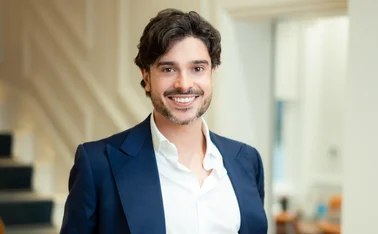
Opinion: Why a slower insurance M&A market still creates opportunity
Despite clear signs of a slowdown of investments, the qualities that made insurance broking attractive to investors are still intact – and a more selective market may actually favour better deals, says Andrea Bertolini, partner and head of financial services at Inflexion.

JMG-owned Grosvenor recruits new MD from Gallagher
JMG has recruited Ian Muldowney as managing director of Chester-based broker Grosvenor Insurance, aiming to become the “broker of choice” in Cheshire.