

News Analysis: First cuts unlikely to be the deepest
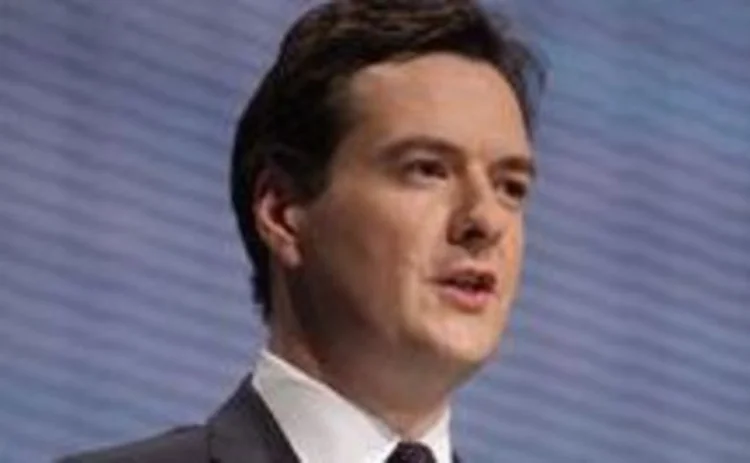

Chancellor George Osborne wasted little time in announcing £6.2bn of public sector cuts, yet in the uncertain global context it is hard to judge what their impact will be on the UK economy, writes Andrew Tjaardstra.
Where the electorate did not give a clear mandate, the respective leaders of the Conservatives and Liberal Democrats managed an impressive quick-fire coalition agreement to provide the country with some stable government, at least for now.
A raft of measures was announced in the Queen's Speech on 25 May, in the same week that £6.2bn of public sector cuts were introduced. The Liberal Democrats had argued that cuts would hurt growth but party leader and Deputy Prime Minister Nick Clegg appeared later to amend this view, stating that the Greek debt crisis meant that work needed to start sooner rather than later on the UK's deficit.
This continuing debt crisis has now raised awareness of deficits in countries such as Portugal and Spain, with governments across the eurozone rushing to implement their own cost-cutting measures.
Almost every UK government department will be required to make savings in information technology, travel costs and property costs, with a freeze on non-frontline civil service recruitment also being implemented and £600m taken away from quangos.
An efficiency and reform group led by treasury minister David Laws will oversee the cuts programme announced by Chancellor George Osborne. The cuts come despite borrowing being revised downwards to £156bn (10.9% of gross domestic product) from an expected £167bn for the year ending 31 March.
The business department was the biggest loser in the cuts, having to slash £836m from its budget. In the firing line as a result are two regional development agencies, the South East Economic Development Agency and the East of England Development Agency.
Departmental breakdown
Local governments will feel the squeeze thanks to a £1.2bn reduction in local authority grants, while £362m will come from the communities department, £311m from education and £309m from transport. The pain for Scotland, Wales and Northern Ireland has been postponed for a year, with £704m currently earmarked from the devolved administrations. The measures imposed could cause pain for brokers that do plenty of business on public sector projects.
Osborne said: "We need to take urgent action to keep our interest rates lower for longer, boost confidence in the economy, protect jobs and show the world we can live within our means and tackle debt repayments."
The move was widely welcomed by economic forums and, unusually, by the governor at the Bank of England, Mervyn King, who is (supposed to be) politically neutral.
Charles Davis, senior economist at the Centre for Economics and Business Research, highlighted that the public sector had been growing in the last two years as the economy declined by 6% and therefore arguably it should have its own recession, despite the inevitable job losses. He added that the cuts would not necessarily stop the private sector from growing.
Union action
Other economists warned that the proposed savings represent only around 10% of what the government needs to deliver over the next five years. So far, trade unions have been muted in their response, though the British Airways cabin crew strike and talks of a walkout at BT over a 2% pay rise could indicate some of the pitfalls ahead for the new government.
The new administration has brought a breath of fresh air with its quick action and sober appraisals of the state of the economy. Now, we must hope that it can both cut the deficit and keep the UK on the path to economic growth, although a recent rise in inflation to over the 3% target has raised fears of an interest rate rise.
Peter Cullum, executive chairman at Towergate, warned at the British Insurance Brokers' Association conference in May that the economy was going to "go through years of unbelievable changes". The emergency Budget on 22 June will bring more detail to the Conservative-led coalition's austerity plans, which could include big tax increases.
With global market uncertainty in recent weeks and signs that growth in China is overheating, other storms on the horizon could yet blow the coalition's plans off track.
The Queen's speech - brief highlights
Financial Reform Bill: The Bank of England will oversee the macro and micro-prudential responsibilities of financial regulation. It is still unclear what role the Financial Services Authority will have.
Equitable Life Bill: Compensation still needs to be calrified for policyholders who lost out in 2000 from Equitable Life's demise.
National Insurance Contributions Bill: Employees - not employers - will pay an increased amount of National Insurance from next April, the aim of which is to help reduce or remove personal income tax on the first £10,000 of people's earnings.
Airport Economic Regulation Bill: No new runways in south-east England, such as the mooted third strip at Heathrow. A new, high-speed rail line is planned.
Source: PB - June 2010
Only users who have a paid subscription or are part of a corporate subscription are able to print or copy content.
To access these options, along with all other subscription benefits, please contact info@insuranceage.co.uk or view our subscription options here: https://subscriptions.insuranceage.co.uk/subscribe
You are currently unable to print this content. Please contact info@insuranceage.co.uk to find out more.
You are currently unable to copy this content. Please contact info@insuranceage.co.uk to find out more.
Copyright Infopro Digital Limited. All rights reserved.
As outlined in our terms and conditions, https://www.infopro-digital.com/terms-and-conditions/subscriptions/ (point 2.4), printing is limited to a single copy.
If you would like to purchase additional rights please email info@insuranceage.co.uk
Copyright Infopro Digital Limited. All rights reserved.
You may share this content using our article tools. As outlined in our terms and conditions, https://www.infopro-digital.com/terms-and-conditions/subscriptions/ (clause 2.4), an Authorised User may only make one copy of the materials for their own personal use. You must also comply with the restrictions in clause 2.5.
If you would like to purchase additional rights please email info@insuranceage.co.uk
More on Management

AUB completes Prestige deal
AUB Group has completed its acquisition of 95.9% of Prestige Insurance Holdings.

NFP buys Bspoke to expand its UK specialist insurance services
NFP, an Aon company, has purchased Bspoke Insurance Group to strengthen its existing suite of insurance solutions while expanding technical underwriting expertise and specialist product knowledge.
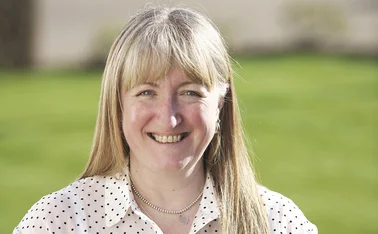
Yutree outlines plans after MBO
Laura Hancock, managing director of Yutree Insurance has outlined plans for the future following a management buyout, including opening an office in Norwich.

Should you sell your broking business to an Employee Ownership Trust?
Tax-efficient exit strategies and staff incentivisation have become hot topics among broker leaders since the recent increases in Capital Gains Tax and Employer National Insurance. In the second part of a series focused on the fallout from the 2024 Labour Budget, Catherine Heyes examines how broker owners can use Employee Ownership Trusts to respond to these developments.

Chaucer CUO named new CII president
Nicola Stacey, chief underwriting officer at Chaucer, has been elected the new president of the Chartered Insurance Institute.

Montagu agrees to sell Open GI to minority shareholder Ares
Ares Management is set to acquire Open GI, with the deal signed on 9 August 2024, Insurance Age can exclusively reveal.

“Nobody came close to AUB” – CEO Cheesbrough on Movo’s new investor
The Movo Group is looking to create larger broking hubs and kickstart its directly authorised network Fusion after AUB took an 80% equity stake, according to Lea Cheesbrough, Movo Partnership CEO.
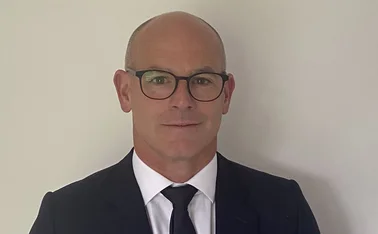
Ex-Ardonagh MD Barclay takes over as CEO of top 100 broker
Lycetts has appointed Ian Barclay to CEO, succeeding Charles Foster who is retiring after seven years in the role.