

Market Watch: Staying afloat

Marine insurance is tricky at best. Add a global recession, laid-up vessels and some soft sectors and you have a market in which only the most exacting will prosper, writes Jane Bernstein.
There is currently mixed news for the marine market. An abundance of capacity and soft rates on both hull and cargo should keep insureds happy but times remain challenging for insurers. While claims costs are stable, many think that laid-up ships and poor maintenance may mean storm clouds ahead unless insurers and brokers can convince their clients to implement effective risk management strategies.
Price and capacity issues have caused concern for some time. When Aon released its 2009 Marine Insurance Outlook, the national broker observed that abundant capacity in most classes of insurance is keeping a lid on rate rises. Is this still the case?
Duncan Southcott, head of marine at Allianz Global Corporate and Specialty UK, says: "Marine has two main markets: hull and cargo. The hull market has been hardening because of poor results but appears to be peaking, mainly influenced by surplus capacity. The cargo market has been softening for the last few years on the back of good market results. These margins are becoming thin and will disappear if there are some large losses this year." Furthermore, new entrants are increasing market capacity and the consensus is that this - coupled with falling trading volumes - will help to prevent the cargo market from hardening too quickly.
Tough sector
There is certainly much agreement that cargo remains a particularly competitive area. Peter Walker, director (cargo division) at Heath Lambert, comments: "The current cargo market continues, as it has done now for several years, to be one of the most competitive that we can recall, with no change of attitude from insurers to call a halt to such low rates. With no major losses having been incurred so far, it appears that insurers are happy to offer such terms on the back of a profitable UK book of business."
Despite a challenging environment, insurers and brokers insist that service levels remain a priority. Argo International is a recent entrant to the cargo sector, having added marine cargo to its portfolio in March this year and appointing Nick Derrick to head the new line. While Derrick recognises that price is an important factor, he believes it is possible to differentiate on service offerings too. Argo International chief executive officer Julian Enoizi observes: "Insureds are looking for good quality claims service." He adds that service at the front end of the transaction is also key, which highlights the importance of fast, accurate response times for brokers.
Jason Page, hull and war underwriter for Markel International, recognises that differentiation is not always easy but says that Markel emphasises its strengths in areas such as claims. He explains: "Service levels are paramount, including travel, to gain a fuller understanding of our assureds' businesses. We try to adopt a targeted approach to business acquisition rather than attempt to be all things to all men."
Risk management is one area in which insurers and brokers can potentially differentiate their services, although this can be challenging at a time when enthusiasm among insureds is low. Royston Ford, client director at Cunningham Lindsey marine, observes that, while larger businesses continue to benefit from risk management programmes, there is a worrying lack of commitment elsewhere. Insurers remain keen to ensure that clients manage their risks, on which Enoizi comments: "Certainly we look to work with insureds that want to take notice of the risk management advice we give them."
There is a view that marine is lagging behind other parts of the profession in this arena. Ford adds: "While other classes in this recession are really pushing ahead with risk management, there is a lack of impetus in marine."
Guard up
Southcott emphasises the need for insurers to maintain underwriting discipline in the face of falling volumes, increased competition and the cost pressures that both clients and brokers are facing. "With a soft market still existing, it will be even more important for underwriters to understand the risk profiles they underwrite to try to maintain sensible pricing levels," he observes.
The global recession further exacerbates the challenges inherent in a soft market. Despite the best efforts of insurers and brokers, cost is an increasingly important consideration as clients struggle with their own profitability. In terms of UK cargo business, Walker explains: "We have seen the preponderance of clients suggest a static turnover, with perhaps 10-15% reducing their expectations by about 10%. Insureds are now more willing to consider competitive quotes from insurers that might look out of kilter with the majority of other insurers' terms." Walker points to the temptation for some to accept what could be considered unsustainable premiums.
This is not, however, true of all insureds, even during the recession. Page highlights: "We have found our client base to be very loyal over a long period of time and believe this is largely because we focus on clients taking a holistic approach to our product rather than being purely price driven. Within the wider market this is not always the case, with trends pointing to less loyalty in turn producing worse results."
Working together
The role of the broker is well established and there is much consensus that there is room for the larger broker as well as the smaller niche players. Walker emphasises the importance of brokers working with insurers: "The need to be innovative has to come from both the broker and insurer because, without this joint relationship, our market will just stagnate."
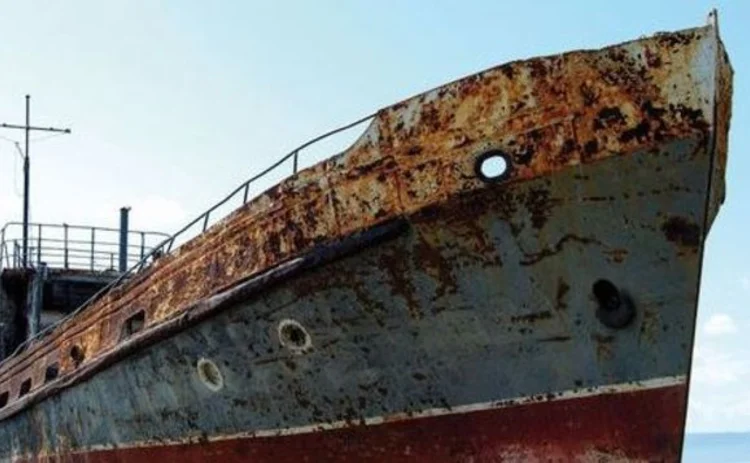
There is some good news on the claims side: anecdotal evidence suggests a trend of fewer major losses, though this is due to some extent to some of the poorer quality ships being laid up over the downturn, which could mean problems on the horizon. Ford says: "Potentially it could be a time bomb. Ships that are laid up attract much lower insurance premiums, although in some senses the risk might be just as bad and they can present serious maritime safety risks. There are always concerns that owners are going to lay up vessels at unapproved anchorages or at ill-advised locations where they are at greater risk or where they present a greater risk to other ships."
Ford adds that there are also likely to be problems when owners come to restart these vessels. "If they weren't in the best position to start with, they are not going to have improved while sitting in anchorage for extended periods of time. The reactivation of those ships to serve anticipated feeder markets is going to be a real problem."
Again, the problem is heightened by economic circumstances. Industry professionals report that the shipping industry over-expanded during the boom times and that there are effectively too many ships, which the owners cannot afford to maintain. Walker responds: "Vessels laid up and those that have now adopted slow steaming have already caused concern with insurers, as has lack of maintenance. The whole situation could lead to potentially much larger losses."
Andrew Bicknell, partner at law firm Clyde & Co., explains that the recession has had a notable effect on claims trends in steel cargo. Bicknell observes that when the credit crunch hit, the price of steel fell dramatically and quickly: "As a result, receivers were looking for problems with the cargo in order to reject it. What we saw was a spike of claims being caused, not by any difference in the quality of the goods or the quality of the carriage but in people being much more claims sensitive in a changed economic environment."
Recovery
As the credit crunch continued to bite, the industry then saw a reduced physical volume of steel, which meant fewer claims. Bicknell explains that we are now back to a more normal claims environment, though the reduced physical volume of steel means that there is less stock to insure.
There is no doubt that this is a challenging market, with insurers and brokers jostling for market share. The industry will also have to remain vigilant as the economy recovers, with many predicting it will not be plain sailing for some time.
Marine risks overview
Maritime insurance is a volatile business in which catastrophic accidents happen. On top of traditional perils such as adverse weather, piracy and man-made accidents, marine business remains vulnerable to a wider spectrum of emerging risks.
• Society is increasingly unwilling to tolerate the environmental damage caused by oil pollution spills and, as such, liabilities in this area are increasing.
• Pandemic diseases such as avian flu could lead to business interruption on a massive scale.
• Terrorists attacks on various modes of transport and the associated new security regulations to tackle the problem have turned security into a priority issue for all parties.
Source: PB – May 2010
Only users who have a paid subscription or are part of a corporate subscription are able to print or copy content.
To access these options, along with all other subscription benefits, please contact info@insuranceage.co.uk or view our subscription options here: https://subscriptions.insuranceage.co.uk/subscribe
You are currently unable to print this content. Please contact info@insuranceage.co.uk to find out more.
You are currently unable to copy this content. Please contact info@insuranceage.co.uk to find out more.
Copyright Infopro Digital Limited. All rights reserved.
As outlined in our terms and conditions, https://www.infopro-digital.com/terms-and-conditions/subscriptions/ (point 2.4), printing is limited to a single copy.
If you would like to purchase additional rights please email info@insuranceage.co.uk
Copyright Infopro Digital Limited. All rights reserved.
You may share this content using our article tools. As outlined in our terms and conditions, https://www.infopro-digital.com/terms-and-conditions/subscriptions/ (clause 2.4), an Authorised User may only make one copy of the materials for their own personal use. You must also comply with the restrictions in clause 2.5.
If you would like to purchase additional rights please email info@insuranceage.co.uk
More on Insurer

Blog: Consistency could be the next big differentiator for insurers
John Dunn, managing director of Brokerbility, argues insurers willing to focus on relationships that deliver reliable and consistent positive experiences have a significant opportunity to become a partner that brokers actively want to do more business with.

Shape MD Hunt to set landmark in 2028 as she is named deputy CII president
Mandy Hunt, managing director of Shape Underwriting, was confirmed as deputy president of Chartered Insurance Institute this afternoon at the CII’s AGM in London.

Arkel makes first CDL IHP move
Arkel is launching its non-standard home and landlord schemes on Proteus, CDL’s cloud-based Insurer Hosted Platform, to kick off a wider rollout.

Broker Expo 2026: Early and open conversations needed for brokers and underwriters to win
As the industry starts to lose its face-to-face culture, being open to early and open appetite conversations through different channels will be key to establishing good relationships between brokers and underwriters.

Aviva appoints Slabbert as new Lloyd’s/GCS boss
Aviva has appointed Johan Slabbert as managing director of its Global Corporate & Specialty business and CEO of Aviva Syndicates.

Aviva renews MGA commercial motor partnership in £200m GWP deal
Aviva and managing general agent Q Underwriting have renewed their more than two decade long commercial motor partnership for a further five years.
Aviva’s Birbeck: What two years in claims taught me that I never saw from the distribution side
Two years on from shifting roles, Ryan Birbeck, casualty and bodily injury claims director at Aviva, shares his learnings with brokers.

Markel UK looking to brokers to bridge cyber gap
Markel UK has launched its previously promised standalone cyber product for UK SMEs, and is hoping to work with brokers to address issues with selling to customers.