

The risks of reclamation
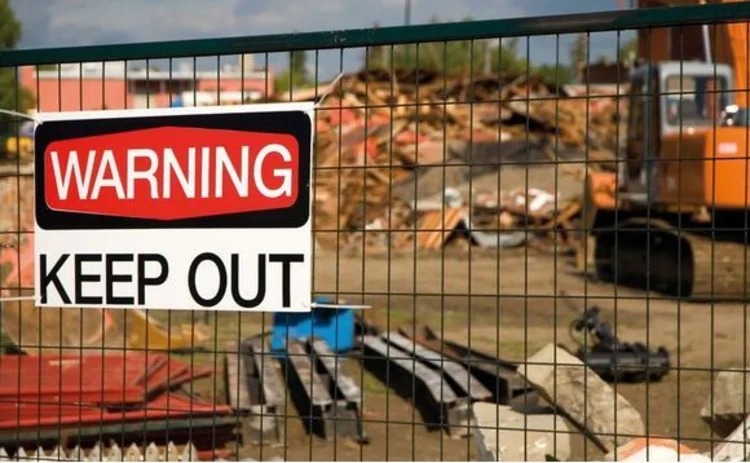

A ruling against a council that allowed birth defect-causing contaminants to escape from a reclamation site could add to the already heavy burden placed on the construction industry, explains Paula Jefferson.
At the end of July 2009, the courts concluded that reclamation works on the site of a former steelworks in Corby could be to blame for birth defects.
Corby Borough Council, which had taken on the reclamation works, was found to be in breach of its duty to take reasonable care to prevent the dispersal of mud and dust containing a range of contaminants. The council was also in breach of its statutory duty and liable in public nuisance. It was not insured.
Given the publicity surrounding the decision, there are bound to be concerns that this judgment has placed another burden on the construction industry, its brokers and insurers at a time when the economy and increasing red tape makes it more and more difficult to undertake work. But has it?
One of the key issues in this case was that the demolition works were not undertaken by sufficiently qualified or experienced contractors, so the council was found to have been negligent in not employing appropriate organisations to undertake the demolition works and for not supervising while the works took place. Had appropriate contractors been employed, there should not have been the exposure. Any organisation involved in activity in which harmful substances could be released in to the atmosphere must ensure that they have taken all the necessary steps to identify the potential contamination and that they either employ or have themselves the necessary skills to deal with that contamination.
The principles in the judgment apply not just where there is demolition in progress but to any activity in which the potential exists for exposure of harmful contaminants to the atmosphere. Where there could be such a release then construction and demolition businesses - and the landowners on whose land the demolition work will take place - must take into account the on-site workforce and those living and working in the surrounding area. In the Corby case, the area of risk was four kilometres from the demolition site. The area for potential exposure will vary depending on the circumstances of each case.
Brokers need to ensure that they are made fully aware of exactly what activities their clients are undertaking so that they can provide insurers with the appropriate information on which to make a proper underwriting decision. Insurers may also want to consider reviewing their reserves for potential historic claims.
In essence, the message remains the same: brokers must stress to their clients the importance of proper risk assessment - including identification of the appropriate people to do the job - and not cut corners. Full disclosure of all their business activities to enable clear understanding of the risks involved must be given.
The council has yet to decide whether or not it will appeal but, in the meantime, it has been ordered to make an interim payment on account of costs of £1.6m.
Only users who have a paid subscription or are part of a corporate subscription are able to print or copy content.
To access these options, along with all other subscription benefits, please contact info@insuranceage.co.uk or view our subscription options here: https://subscriptions.insuranceage.co.uk/subscribe
You are currently unable to print this content. Please contact info@insuranceage.co.uk to find out more.
You are currently unable to copy this content. Please contact info@insuranceage.co.uk to find out more.
Copyright Infopro Digital Limited. All rights reserved.
As outlined in our terms and conditions, https://www.infopro-digital.com/terms-and-conditions/subscriptions/ (point 2.4), printing is limited to a single copy.
If you would like to purchase additional rights please email info@insuranceage.co.uk
Copyright Infopro Digital Limited. All rights reserved.
You may share this content using our article tools. As outlined in our terms and conditions, https://www.infopro-digital.com/terms-and-conditions/subscriptions/ (clause 2.4), an Authorised User may only make one copy of the materials for their own personal use. You must also comply with the restrictions in clause 2.5.
If you would like to purchase additional rights please email info@insuranceage.co.uk
More on Management

AUB completes Prestige deal
AUB Group has completed its acquisition of 95.9% of Prestige Insurance Holdings.

NFP buys Bspoke to expand its UK specialist insurance services
NFP, an Aon company, has purchased Bspoke Insurance Group to strengthen its existing suite of insurance solutions while expanding technical underwriting expertise and specialist product knowledge.

Yutree outlines plans after MBO
Laura Hancock, managing director of Yutree Insurance has outlined plans for the future following a management buyout, including opening an office in Norwich.

Should you sell your broking business to an Employee Ownership Trust?
Tax-efficient exit strategies and staff incentivisation have become hot topics among broker leaders since the recent increases in Capital Gains Tax and Employer National Insurance. In the second part of a series focused on the fallout from the 2024 Labour Budget, Catherine Heyes examines how broker owners can use Employee Ownership Trusts to respond to these developments.

Chaucer CUO named new CII president
Nicola Stacey, chief underwriting officer at Chaucer, has been elected the new president of the Chartered Insurance Institute.

Montagu agrees to sell Open GI to minority shareholder Ares
Ares Management is set to acquire Open GI, with the deal signed on 9 August 2024, Insurance Age can exclusively reveal.

“Nobody came close to AUB” – CEO Cheesbrough on Movo’s new investor
The Movo Group is looking to create larger broking hubs and kickstart its directly authorised network Fusion after AUB took an 80% equity stake, according to Lea Cheesbrough, Movo Partnership CEO.

Ex-Ardonagh MD Barclay takes over as CEO of top 100 broker
Lycetts has appointed Ian Barclay to CEO, succeeding Charles Foster who is retiring after seven years in the role.