

Construction in crisis
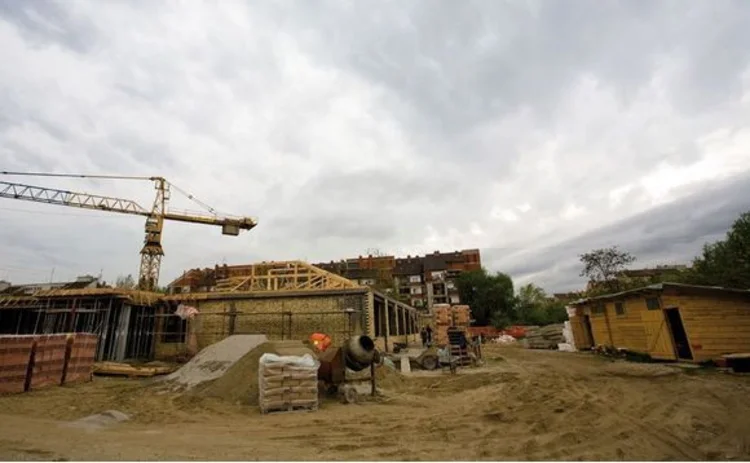

Recessionary pressure is hitting the construction industry harder than most. Emmanuel Kenning reviews an insurer's advice to brokers supporting clients struggling in the sector.
Of all the sectors affected by the recession, construction can arguably claim to have suffered the most. With just over 2.2 million people still employed in the UK's construction industry, most brokers are likely to have a construction firm or related company as a client.
Key construction industry indices have been making stark reading. Data from the Office for National Statistics shows that, between April and June 2007, 10,000 construction workers were made redundant and, with 21,000 vacancies in the sector's job market, this was not alarming. Over the same period this year, 49,000 workers lost their jobs and only 9,000 vacancies existed.
"Due to the recession, sites are being closed or the work is being put on hold because the funding is no longer as available for completion," said David Swigciski, regional training leader for construction at RSA.
Potential issues for closed or mothballed sites include the risks of theft and arson, especially on larger projects that are close to completion. Public liability issues on sites that have been levelled or where trenches have been dug could also be a worry, as one broker commented: "The most serious concern for sites where work has been suspended due to the recession - depending on location and security - would be the risk of trespass."
RSA has warned that if sites do not follow advice given to them by insurance companies then they may not be insured if equipment is stolen or the site is vandalised.
Open door
Swigciski continued: "Brokers should be helping customers understand the advice they are receiving through this difficult period. Broker-customer communication is vital so we can all work to reduce the likelihood of loss. Brokers should always be more than happy to offer advice and help."
Research for the Glenigan Index - an indicator of UK construction activity - showed that commencements of works in the three months to June were down 53% and 45% in the industrial and private housing sectors respectively. Government funding has ensured growth in the education and health sectors although, at between 2 to 3%, it is not proving enough to keep the industry going at pre-recession levels.
According to Julia Evans, chief executive officer at the National Federation of Builders, the entire industry is in decline.
She said: "The outlook is bleak across all sectors. Not only is it becoming increasingly difficult to win work but profit margins are being squeezed for those companies that do manage to land contracts."
Meanwhile, levels of detailed planning approvals in the private housing sector stand at only one-third of last year's total, indicating little chance of improvement in the short term. Global information services provider Experian has predicted no growth until 2011, with a further contraction of 1.6% in 2010.
Swigciski urged brokers to contact insurers where client circumstances change drastically: "We would make sure the broker is involved throughout. Where they wish, they can come on site visits. If each customer improves their risks, it is the best possible way to avoid losses on site and keep business moving."
Only users who have a paid subscription or are part of a corporate subscription are able to print or copy content.
To access these options, along with all other subscription benefits, please contact info@insuranceage.co.uk or view our subscription options here: https://subscriptions.insuranceage.co.uk/subscribe
You are currently unable to print this content. Please contact info@insuranceage.co.uk to find out more.
You are currently unable to copy this content. Please contact info@insuranceage.co.uk to find out more.
Copyright Infopro Digital Limited. All rights reserved.
As outlined in our terms and conditions, https://www.infopro-digital.com/terms-and-conditions/subscriptions/ (point 2.4), printing is limited to a single copy.
If you would like to purchase additional rights please email info@insuranceage.co.uk
Copyright Infopro Digital Limited. All rights reserved.
You may share this content using our article tools. As outlined in our terms and conditions, https://www.infopro-digital.com/terms-and-conditions/subscriptions/ (clause 2.4), an Authorised User may only make one copy of the materials for their own personal use. You must also comply with the restrictions in clause 2.5.
If you would like to purchase additional rights please email info@insuranceage.co.uk
More on Commercial

Aviva appoints Slabbert as new Lloyd’s/GCS boss
Aviva has appointed Johan Slabbert as managing director of its Global Corporate & Specialty business and CEO of Aviva Syndicates.

Ex-Ravenhall boss launches new broker Decello
Neil Grimshaw has opened commercial broker Decello in Huddersfield, labelling it a boutique ‘advice-led’ firm for businesses and private clients.

Seventeen Group recruits ex-Gallagher MD and Howden COO
Seventeen Group has appointed Stephen Smith as chief broking officer, overseeing broking and placement strategy across the group, including James Hallam and Touchstone Underwriting.

Konsileo completes latest fund raise
Top 100 broker Konsileo has completed a £5m equity investment to support its continued growth.

rrelentless and Zurich team up on specialist haulage
Managing general agent rrelentless has expanded into haulage fleet motor insurance backed by Zurich capacity.
Broker Expo 2026 Countdown Q&A: Pen Underwriting’s Nick Milton
Nick Milton, head of UK and European distribution at Pen Underwriting, advises the next generation of insurance professionals to “get out and meet people”, as the MGA looks forward to talking to brokers about its mid-market PI and cyber propositions at Broker Expo.

Clear adds to wholesale and MGA offering with latest deal
Clear Group has bought wholesale broker Commercial Risks (UK) and its managing general agent Troon Underwriting.

Arch’s Ian Grundy on bringing specialist expertise closer to brokers
As Broker Expo returns to the NEC, Arch Insurance is once again ready to engage with their brokers. Ian Grundy, regional manager for the Midlands and South West, shares what’s changed at the insurer over the past year and why he thinks it’s worth setting aside 15 minutes to stop by at Stand 17.