

Economists divided over duration of recession
The state of the economy is hitting brokers in the pocket and it is hard to predict when the recession will end, writes Andrew Tjaardstra.
As ever, the nation's economic think-tanks are busy envisaging differing versions of the future and there are contrasting weekly offerings on how quickly the recovery will come. Brokers opinions are also mixed (see the PB online poll results, opposite) the Organisation for Economic Co-operation and Development, has revised its forecast for contraction in 2009 from 3.7% to 4.3%; worse still, the organisation is predicting zero growth for 2010.
The OECD forecast, however, is at the gloomy end of the scale: the National Institute for Social and Economic Research has suggested that the recession is bottoming out, with growth returning in April and May 2009 by 0.2% and 0.1% respectively. Furthermore, the Confederation of British Industry believes that the economy will start to grow before the end of the year. However, Chancellor Alistair Darling has warned that rising oil prices might yet put a spanner in the works.
The Centre for Economics and Business Research said that the latest projection in March was a 4.5% annual contraction but that next month's will be a little more positive. An economist at CEBR, Jörg Radeke, told PB: "We have reached a turning point and the second-half decline will be less severe; we might even approach positive growth in the third or fourth quarters. At some stage, manufacturers will need to restock and increase their inventories."
Recovery roadmap
Radeke added that there will be sluggish growth in 2010, leading to a "dead-cat bounce", after which the recovery will kick in fully in 2011 and 2012; growth will not return to previous levels because of a substantial decline in public spending, while taxation levels will rise. Radeke also said that debt coming out of the system would hamper recovery: "There will also be deleveraging for both companies and private households. We have been living on high levels of debt and we expect the savings ratio for consumers to reach higher levels, especially as it had been declining to close to zero: when they save more, they will spend less. Similarly, high levels of debt at companies will not return. Lending in the housing and construction sectors will not reach pre-recession levels."
Overcapacity
Adrian Colosso, chief executive at Heath Lambert, said: "The rates of decline are nowhere near where they were, however there is still a long way to go. We are very aware of the changes in people's businesses and clearly communicating that to insurers. The pricing stability is there in the top sector but there is still overcapacity in the small and medium enterprise market and huge amounts of insurer competition. It is very difficult to put prices up with overcapacity. Right at the bottom, there are some rate increases and there are some large differentials between new business and renewals."
With the recession possibly bottoming out, the Financial Services Authority is already warning that banks and large institutions have not learned their lessons from the crisis. Speaking to a panel of MPs at a Commons Treasury Select Committee in June, FSA chairman Lord Turner said: "I do have concerns that we may see a more rapid return to risky trading activities than we had anticipated. There is a real danger that we don't seize the opportunities of this crisis."
As unemployment continues to rise, predictions of a recovery might appear of little relevance, yet it seems that despite potentially storing-up long-term problems for the future with regard its own debt levels, the government's short-term measures should see us out of the worst recession for over 60 years by the end of 2009.
Only users who have a paid subscription or are part of a corporate subscription are able to print or copy content.
To access these options, along with all other subscription benefits, please contact info@insuranceage.co.uk or view our subscription options here: https://subscriptions.insuranceage.co.uk/subscribe
You are currently unable to print this content. Please contact info@insuranceage.co.uk to find out more.
You are currently unable to copy this content. Please contact info@insuranceage.co.uk to find out more.
Copyright Infopro Digital Limited. All rights reserved.
As outlined in our terms and conditions, https://www.infopro-digital.com/terms-and-conditions/subscriptions/ (point 2.4), printing is limited to a single copy.
If you would like to purchase additional rights please email info@insuranceage.co.uk
Copyright Infopro Digital Limited. All rights reserved.
You may share this content using our article tools. As outlined in our terms and conditions, https://www.infopro-digital.com/terms-and-conditions/subscriptions/ (clause 2.4), an Authorised User may only make one copy of the materials for their own personal use. You must also comply with the restrictions in clause 2.5.
If you would like to purchase additional rights please email info@insuranceage.co.uk
More on Management

AUB completes Prestige deal
AUB Group has completed its acquisition of 95.9% of Prestige Insurance Holdings.

NFP buys Bspoke to expand its UK specialist insurance services
NFP, an Aon company, has purchased Bspoke Insurance Group to strengthen its existing suite of insurance solutions while expanding technical underwriting expertise and specialist product knowledge.
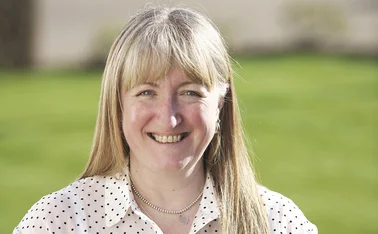
Yutree outlines plans after MBO
Laura Hancock, managing director of Yutree Insurance has outlined plans for the future following a management buyout, including opening an office in Norwich.

Should you sell your broking business to an Employee Ownership Trust?
Tax-efficient exit strategies and staff incentivisation have become hot topics among broker leaders since the recent increases in Capital Gains Tax and Employer National Insurance. In the second part of a series focused on the fallout from the 2024 Labour Budget, Catherine Heyes examines how broker owners can use Employee Ownership Trusts to respond to these developments.
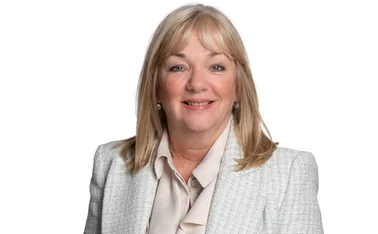
Chaucer CUO named new CII president
Nicola Stacey, chief underwriting officer at Chaucer, has been elected the new president of the Chartered Insurance Institute.

Montagu agrees to sell Open GI to minority shareholder Ares
Ares Management is set to acquire Open GI, with the deal signed on 9 August 2024, Insurance Age can exclusively reveal.

“Nobody came close to AUB” – CEO Cheesbrough on Movo’s new investor
The Movo Group is looking to create larger broking hubs and kickstart its directly authorised network Fusion after AUB took an 80% equity stake, according to Lea Cheesbrough, Movo Partnership CEO.
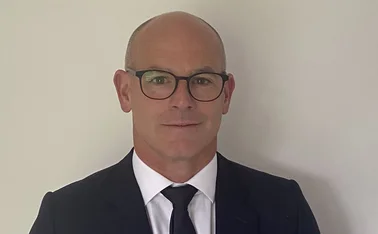
Ex-Ardonagh MD Barclay takes over as CEO of top 100 broker
Lycetts has appointed Ian Barclay to CEO, succeeding Charles Foster who is retiring after seven years in the role.