

Ways through the maze
After gaining Lloyd's provisional accreditation in 2002, The Broker Network embarked on a sharp learning curve. Chief executive Grant Ellis offers his insight into an institution that, while often frustrating to deal with, consistently delivers
Like many insurance brokers brought up in the provinces, I have to admit that my dealings with Lloyd's have tended to be as a market of last resort - only to be used when my favourite local insurer was not prepared to provide the client with the cover and/or terms he wanted.
Access was provided through a handful of Lloyd's brokers that set out their stall to service the needs of small brokers who needed an odd case placing.
It is not really surprising that, in days gone by, I only ever considered the Lloyd's market as a last resort as, if I am honest, I did not really understand it. It was entirely different from the markets with which I was used to working, with its own unique rules, traditions and ways of doing things. And, until very recently, despite 25 years spent broking, I have to admit I still found the ways of the Lloyd's market confusing and shrouded in mystery.
My coming of age started in 2002 when The Broker Network decided to build its own London Market operation from scratch; resulting in us needing to apply to become a Lloyd's broker. At the time, Lloyd's had streamlined the process for firms to gain access to its markets, and seemed keen for new players to take advantage of its infrastructure. 'Streamlined' proved to be a relative term, but BNL persevered and, in December 2002, became the first network to be provisionally accredited as a Lloyd's broker.
Full accreditation can only be attained once an apprenticeship of three years has been served.
At the time I remember being quite excited by the prospect of, at long last, being able to have direct access to Lloyd's underwriters without being kept at arm's length by another broker. Surely a whole new world would now open up to us? I soon discovered it was not quite that simple.
BNL had a small, experienced team that brought some relationships with underwriters to the table, but it was, in truth, simply not enough.
For a start, being accredited is one thing, but getting people to trade with you is quite another. This was 2002 - at the height of the hard market when a lot of business was being rejected by traditional insurers. As a result, Lloyd's underwriters were getting as much business as they wanted from people they were already comfortable with - why would they want to do business with a new upstart business based in the North?
As with much in life, timing is everything, and our timing could not have been worse. One thing I had learned about Lloyd's in those 25 years was that it worked to calendar years of capacity and, once exhausted, syndicates would close their doors. By the time BNL's accreditation came through in December 2002, capacity for 2003 had already, by and large, been allocated.
We spent months trudging around the streets of London meeting and greeting the great and the good from the Lloyd's market - managing agents, underwriters, anyone and everyone who would listen. A common theme emerged in their responses - it is an interesting business model but why would I want to write hundreds of little policies when I can write one large one and make the same return? It was difficult to argue with their logic.
Suffice to say it was a slow and often painful process, but looking back it was a terrific learning curve. At long last I began to see how the whole Lloyd's thing worked - but that in itself was not always an edifying experience. For example, I was not aware that queueing was a necessary evil. One of my colleagues started her first day in Lloyd's at 9:30am waiting at an underwriter's box for him to arrive. There were a handful of other brokers there too, so my colleague took her place in line. The underwriter arrived at 10:30am, dealt with the first few brokers, went for lunch at 11:30 and did not bother to come back. My colleague left empty-handed and very frustrated at 4:30pm.
This is an extreme example, and it was at the height of the hard market when many underwriters deliberately restricted their opening hours to eke out their available capacity. But it does illustrate how long-winded dealing with Lloyd's can be. Even in 2004, when capacity was no longer an issue, it took a broker colleague of mine three weeks to successfully place an abattoir with a selection of underwriters by queueing patiently at box after box until the whole slip was complete.
But, while many of the procedures and practices might appear outdated and unnecessarily complicated to us, it should be remembered that, ultimately, the Lloyd's market delivers in its inimitable way what it says it will - the ability to underwrite just about any risk, anywhere. It does it using not only skill and common sense but also by placing huge store on the relationship between broker and underwriter, and the mutual trust that results. And, if I am honest, that is what I really value as a broker - the ability to deal with a decision-maker who will take a 'can do' attitude to risk, rather than the more traditional negative approach adopted by other markets.
BNL is still a newcomer when it comes to Lloyd's, and earning its reputation with the market will take time. I do not mind that, because the market relies on reputation and that should be earned, not assumed. BNL is now finding markets more receptive, and is gradually short-circuiting some of the more tiresome rituals with the consent of these markets.
So now I am very glad we have started down this particular road. However, unless you are patient and are prepared to wait, I would still have to advise you to broke your Lloyd's risks through someone who has already gone through the pain - just accept that they will want paying for their contribution too.
- Grant Ellis, Chief executive officer, The Broker Network.
Only users who have a paid subscription or are part of a corporate subscription are able to print or copy content.
To access these options, along with all other subscription benefits, please contact info@insuranceage.co.uk or view our subscription options here: https://subscriptions.insuranceage.co.uk/subscribe
You are currently unable to print this content. Please contact info@insuranceage.co.uk to find out more.
You are currently unable to copy this content. Please contact info@insuranceage.co.uk to find out more.
Copyright Infopro Digital Limited. All rights reserved.
As outlined in our terms and conditions, https://www.infopro-digital.com/terms-and-conditions/subscriptions/ (point 2.4), printing is limited to a single copy.
If you would like to purchase additional rights please email info@insuranceage.co.uk
Copyright Infopro Digital Limited. All rights reserved.
You may share this content using our article tools. As outlined in our terms and conditions, https://www.infopro-digital.com/terms-and-conditions/subscriptions/ (clause 2.4), an Authorised User may only make one copy of the materials for their own personal use. You must also comply with the restrictions in clause 2.5.
If you would like to purchase additional rights please email info@insuranceage.co.uk
More on Management

AUB completes Prestige deal
AUB Group has completed its acquisition of 95.9% of Prestige Insurance Holdings.

NFP buys Bspoke to expand its UK specialist insurance services
NFP, an Aon company, has purchased Bspoke Insurance Group to strengthen its existing suite of insurance solutions while expanding technical underwriting expertise and specialist product knowledge.
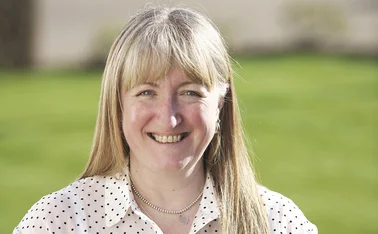
Yutree outlines plans after MBO
Laura Hancock, managing director of Yutree Insurance has outlined plans for the future following a management buyout, including opening an office in Norwich.

Should you sell your broking business to an Employee Ownership Trust?
Tax-efficient exit strategies and staff incentivisation have become hot topics among broker leaders since the recent increases in Capital Gains Tax and Employer National Insurance. In the second part of a series focused on the fallout from the 2024 Labour Budget, Catherine Heyes examines how broker owners can use Employee Ownership Trusts to respond to these developments.
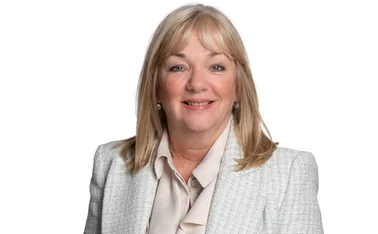
Chaucer CUO named new CII president
Nicola Stacey, chief underwriting officer at Chaucer, has been elected the new president of the Chartered Insurance Institute.

Montagu agrees to sell Open GI to minority shareholder Ares
Ares Management is set to acquire Open GI, with the deal signed on 9 August 2024, Insurance Age can exclusively reveal.

“Nobody came close to AUB” – CEO Cheesbrough on Movo’s new investor
The Movo Group is looking to create larger broking hubs and kickstart its directly authorised network Fusion after AUB took an 80% equity stake, according to Lea Cheesbrough, Movo Partnership CEO.
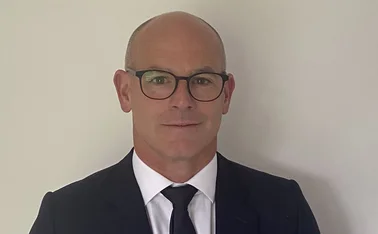
Ex-Ardonagh MD Barclay takes over as CEO of top 100 broker
Lycetts has appointed Ian Barclay to CEO, succeeding Charles Foster who is retiring after seven years in the role.