

A duty of care
Charlie Thomas discovers that although there is a rapidly increasing elderly population, there is potentially more money in other adult care home sectors
As Britain's ageing population continues to increase in number and the government appears to be unable to offer a state solution for caring for this booming demographic, adult care and nursing homes look to be good markets to invest in.
In particular, elderly residential care insurance has exploded in recent years, buoyed by a soft market that has encouraged smaller insurers to venture into the arena; but with all the competition, are adult care homes still a profitable venture for an aspiring broker?
The market for adult care can be simplified into two major sectors; elderly care and specialist adult care for those with mental health and learning disabilities. All of the major insurers in the care market cover elderly care, notably Ecclesiastical, Norwich Union, Royal and SunAlliance and St Paul Travelers, but the market has also seen an influx of smaller, younger insurers in this area because the risks are so much lower.
Primarily this is because the average life expectancy of these service users is significantly less than those in mental health or learning disability care homes, and as such, any ongoing claims will have a shorter lifespan. These more generic policies are certainly higher in terms of volume, but the premiums are much lower when compared to the more complex subject of care for mental health and learning disability service users.
Susan Green, a chartered insurer for St Paul Travelers, commented: "Elderly care is the easiest part of this market to enter as there are more insurers willing to write the risks and less information is required to provide a quote. However, premiums are generally small - other than for groups of homes - and competition in the market keeps the prices low." That said, there are also potential banana skins for elderly residential care and Ecclesiastical's regional manager for its Birmingham office, Tony Bloomer, warned that brokers should be aware of ancillary risks, such as days out, visitors to the home or other annual events that may require additional cover.
Understanding the risks
Among the brokers benefiting already from venturing into the riskier but more profitable market of mental health and learning disability care is Care Home Insurance Services, Towergate Patrick (known previously as GR Patrick), Bollington, Christie Law, Capita, Camberford Law and Aon. Provided a broker is confident that they can find an insurer willing to cover these sorts of care homes as well as providing an underwriting team that is knowledgeable about the sector, there is a sizeable amount of premium available.
"There's a fear factor, a fear of the unknown when it comes to insuring (mental health care and learning disability homes), particularly when it comes to legal liability issues," said Lindsay Gray, senior liability underwriter at Ecclesiastical. "Understanding your risk is key and it requires a bespoke underwriting approach." Liability is agreed across the industry generally to be the biggest risk in terms of cost per claim. The positive side of this is that the premium costs are a lot more stable than the simpler areas such as elderly care, which rise and fall with the amount of competition and the state of the market in general.
"Ostensibly, a care home insurance policy is a liability policy with property damage and business interruption covers included," explained David Hamblett, business development manager at Howard Wright Care Home Insurance, part of David Moore and Co. "The liability proportion of the premium is usually over 50% of the total annual premium." Hamblett added that the lack of risk management, combined with the emergence of no-win-no-fee arrangements, made the situation worse in the 1990s, and that despite rates hardening in the early 2000s the soft market has reduced those rates to the point where care homes now are paying typically 15 to 20% less than they were three years ago.
The soft market has impacted on the care home sector in two major ways. Firstly, it has allowed new players to enter the market as the low rates encouraged brokers and insurers to establish a new niche here. Secondly, it has led to premiums being written with a worrying number of exclusions in order to keep the premiums low. Towards the beginning of this most recent soft cycle some new entrants benefited from the lack of weather-related claims, but Hamblett believes these same new entrants may now be suffering as a result of the summer floods as they will have "little or no reserves to fund the claims and cushion their unrealistic underwriting performance". Writing exclusions in order to keep premiums low could prove to be dangerous for the care home owners in the event of a major incident, but in soft times where price appears to be dominating the market it appears to be occurring more regularly.
Adrian Carter, director at Towergate Patrick, explained: "If I told you that you could actually go and buy a care home policy... but on the back there's an exclusion that says 'limited to maladministration of prescribed drugs by professionally qualified nursing staff only' and that's buried in the small print, you might think twice about whether that's the (insurer) you want." In another policy from a rival insurer highlighted by Clark, he noted that the exclusions include "liability arising from lack of professional skill and professional care other than that provided by residential nurse or carer", before stressing that Towergate Patrick would never want to be in the situation where it was writing cover "like that".
Legal issues
In addition to the problems of the soft market, brokers considering moving into the care home sector should be aware of certain legal cases that have affected the way in which the courts look at liability claims. The most groundbreaking of these was Lister v Hesley Hall [2001], which found that an employer (in this case a care home operator) can be found vicariously liable for voluntary criminal acts of their employees, negating earlier beliefs that the employer could not be found at fault for an individual's actions.
While this case was about a children's home, it had wider repercussions and, together with the Longcare inquiry in the 1990s, played a significant part in the amendments of the Sexual Offences Act (2003). A large liability claim potentially could ruin a care home and cost the broker hundreds of thousands in the process, so it is imperative to know the limitations of malpractice and medical malpractice cover and, if necessary, be prepared to pay more for underwriters to cover additional risks.
It appears that the industry is divided on how it deals with this type of claim. St Paul Travelers' Green commented: "There is a big variance between insurers surrounding the provision of abuse cover, with some insurers providing it on a claims made basis or with very high excess levels, whereas others don't even have a definition of what constitutes abuse."
Indeed, Royal and SunAlliance has changed its malpractice system to operate from a claims made basis rather than a claims occurring one after witnessing an increase in case numbers in the 1990s and the vicarious liability ruling on the Lister case, which it insured. Group casualty director Phil Bell said that RSA now takes the issue out of general liability cover, seeking more information from the care home operator prior to offering a specific insurance for claims made against them. This includes staffing and recruitment policies, how the staff are trained, how complaints are handled and the policies and procedure that are in place to deal with instances of abuse.
One piece of legislation that actively helps the insurer, and therefore the broker, when finding cover for care homes is the Care Standards Act (2002), which lays out mandatory minimum health and safety standards in care homes. Combined with inspections from regulators such as England's Commission for Social Care Inspection, Wales' Care Standards Inspectorate for Wales, Scotland's Care Commission and the Northern Ireland Social Care Council, this means that many of the potential problems with staff training and accidents are less likely to occur.
Knowledge is key
With all of these potential pitfalls, including the fact that any new players are almost certainly looking at having to write new business at a loss for the first few months, it may seem strange that the sector is so popular. According to those successful brokers already operating in care home insurance, product knowledge is indispensable. "If you understand how care homes work and what actually goes on in care homes, it's easier to understand some of the perceived risks, as well as seeing that they're not really as bad as you think," said Towergate Patrick's Clark. "If you understand what you're doing and you're comfortable with the policies and the wording, care homes is a great market."
Clark added that the presence of the CSCI and its vast quantities of information on each of England's registered care homes made it easier to write the policies quickly, since the majority of the information needed for the premium - size, location, number of residents, type of residents and their care etc. - is available online. As with many areas within the insurance market, buyers are looking to purchase their policies online - something that has not gone unnoticed by those at the top of their game.
St Paul Travelers already has a web-enabled quote system up and running that, according to Green, is "proving very popular". Howard Wright Care Home Insurance also has an online free risk management service, while Ecclesiastical's Bloomer states that he almost expected the whole sector to soon begin producing internet products similar to SME businesses for elderly residential care, with brokers being able to then present themselves as value-adding in this respect. Care home aggregators may not be such a far-fetched idea in the future.
Perhaps the biggest attraction for regional brokers to invest the time, resources and manpower to this area is the fact that around 80% of the care homes market is controlled by independent or small chain operators and not the large conglomerates like Bupa, Craegmoor and Barchester. Smaller, local branches may well be attracted to a regional broker's personal touch and would be willing to pay slightly more for a value-added service that covered all eventualities in the long run.
If further proof of care home insurance's potential success is needed then consider that, according to Care Home Insurance Service's managing director, David Waters, just one care home could bring in a premium of £1 850 on average. Furthermore, for the year ending June 2007, CHIS' turnover will prove to be just under £800,000 commission income with a profit of almost £75,000. That figure comes from a premium income of £4m for all of CHIS' care home clients, with just 5% of that coming from associated businesses.
Simply, if the UK market continues on its current form the whole industry could soon be worth over £77m, making the care home market a sizeable part of the whole insurance community.
Only users who have a paid subscription or are part of a corporate subscription are able to print or copy content.
To access these options, along with all other subscription benefits, please contact info@insuranceage.co.uk or view our subscription options here: https://subscriptions.insuranceage.co.uk/subscribe
You are currently unable to print this content. Please contact info@insuranceage.co.uk to find out more.
You are currently unable to copy this content. Please contact info@insuranceage.co.uk to find out more.
Copyright Infopro Digital Limited. All rights reserved.
As outlined in our terms and conditions, https://www.infopro-digital.com/terms-and-conditions/subscriptions/ (point 2.4), printing is limited to a single copy.
If you would like to purchase additional rights please email info@insuranceage.co.uk
Copyright Infopro Digital Limited. All rights reserved.
You may share this content using our article tools. As outlined in our terms and conditions, https://www.infopro-digital.com/terms-and-conditions/subscriptions/ (clause 2.4), an Authorised User may only make one copy of the materials for their own personal use. You must also comply with the restrictions in clause 2.5.
If you would like to purchase additional rights please email info@insuranceage.co.uk
More on Management

AUB completes Prestige deal
AUB Group has completed its acquisition of 95.9% of Prestige Insurance Holdings.

NFP buys Bspoke to expand its UK specialist insurance services
NFP, an Aon company, has purchased Bspoke Insurance Group to strengthen its existing suite of insurance solutions while expanding technical underwriting expertise and specialist product knowledge.
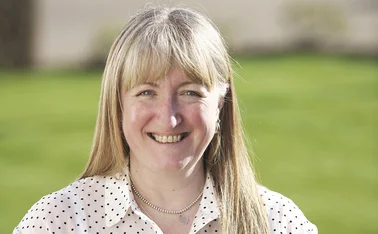
Yutree outlines plans after MBO
Laura Hancock, managing director of Yutree Insurance has outlined plans for the future following a management buyout, including opening an office in Norwich.

Should you sell your broking business to an Employee Ownership Trust?
Tax-efficient exit strategies and staff incentivisation have become hot topics among broker leaders since the recent increases in Capital Gains Tax and Employer National Insurance. In the second part of a series focused on the fallout from the 2024 Labour Budget, Catherine Heyes examines how broker owners can use Employee Ownership Trusts to respond to these developments.
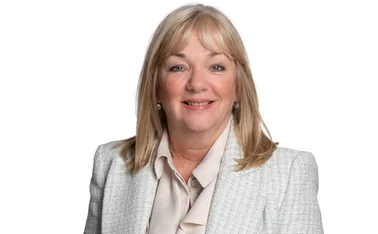
Chaucer CUO named new CII president
Nicola Stacey, chief underwriting officer at Chaucer, has been elected the new president of the Chartered Insurance Institute.

Montagu agrees to sell Open GI to minority shareholder Ares
Ares Management is set to acquire Open GI, with the deal signed on 9 August 2024, Insurance Age can exclusively reveal.

“Nobody came close to AUB” – CEO Cheesbrough on Movo’s new investor
The Movo Group is looking to create larger broking hubs and kickstart its directly authorised network Fusion after AUB took an 80% equity stake, according to Lea Cheesbrough, Movo Partnership CEO.
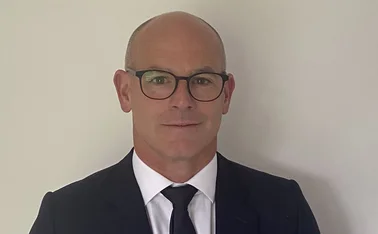
Ex-Ardonagh MD Barclay takes over as CEO of top 100 broker
Lycetts has appointed Ian Barclay to CEO, succeeding Charles Foster who is retiring after seven years in the role.