

Environmentally friendly?
Environmental liability insurance is an area in which many brokers have room to improve their understanding, as many consider it the domain of the large multinationals. However, Tony Lennon suggests the reality is far simpler than the common misconception
Having spoken to a lot of regional brokers all over the country in the past few months, for a fair number of them, it would seem that very few of their clients ask them about insurance for environmental liabilities.
The reasoning behind this is, if selling environmental insurance is going to be an uphill struggle in terms of educating clients and technical knowledge, why should brokers bother? Isn't this a class of business best left to the big multinational brokers?
While this view is understandable, the answer to this supposition is a resounding no. Environmental insurance is highly relevant to smaller regional brokers and, in developing the expertise and knowledge in this area, brokers can bring significant benefits to their clients and their own businesses.
Passive and active risks
Environmental insurance is currently being promoted as having a fundamental role in the risk-management strategy of businesses. The risks stem from two main areas: passive risks and active risks.
Passive risks relate to past use of the land on which the company operates.
Usually this comes down to contamination or environmental damage caused by the previous owners and users of the site. Current owners may well find that they have a liability for this pre-existing contamination even though they did not cause it. Often these risks will only become an issue when sites come up for sale, unless of course the contamination is so severe that tangible and readily identifiable damage is being caused.
Active risks arise from damage caused by the current activities of the occupiers - for example, releasing pollutants into the atmosphere or the water system - that threaten the health of people living in the area or cause damage to property. This is by no means restricted to manufacturing activities; offices, shops and hotels are also at risk. A leakage from an oil-storage system, for instance, is a common occurrence and can result in massive environmental damage.
So what about the role of public liability insurance in managing these risks? As brokers know, virtually all PL policies in the UK will have either a total pollution exclusion or, at the very least, an exclusion removing cover for so-called gradual pollution. The wording, in most cases, refers to limiting the cover to "a sudden unexpected and unintended event" causing pollution damage. As far as the client is concerned, they are effectively insured for pollution-related damage only if it is caused by a purely accidental event. Effectively, the wording removes cover from all forms of gradually forming pollution damage, particularly when it arises from normal everyday operations.
Gradual damage
Brokers would probably be the first to agree that most of their clients are relatively naive and uninformed about the detailed nature of PL cover.
As I travel around the country talking to brokers and their clients, I have been struck by the number of hard-headed business people who, when it comes to insurance, do not really know what they are covered for. Many, for instance, assume that any accidental environmental damage to their own sites will also be covered by their existing PL policy.
Of course, a client in a good relationship with a professional broker has a reasonable right to assume that they do not really need to know precisely what they are covered for under each specific policy. It is the broker's job, together with the client, to identify the risks confronting and threatening the business. The broker then sets about creating a cost-effective set of solutions. In this context, it does not matter whether a client has never heard about or asked about environmental insurance.
If it answers a genuine need, it should be part of the solution.
This, in short, is why brokers should be taking the whole issue of environmental insurance very seriously. Rather than waiting until they are asked by the client to arrange a quote, brokers ought to be proactive in identifying any significant shortcomings in existing cover and present the active and passive pollution risks to the client, together with value-for-money solutions. Failure to do this could be, at the very least, unprofessional and, more significantly, it exposes the broker to attack from other intermediaries that are actively promoting the benefits of environmental cover and highlighting gaps in existing arrangements.
Part of the problem stems from the ambiguity at the heart of the protection offered by PL cover, which even many brokers and insurers find justifiably confusing. On the face of it - with policies where PL insurance does not exclude pollution risks - any sudden, accidental event that gives rise to pollution-related claims will be covered for third-party liability.
On closer examination, however, the words are less than clear. The absence of any UK case law to help in identifying and defining the difference between 'sudden, accidental' and 'non-sudden, non-accidental' gives rise to a grey area and a real problem. Industry and general insurance buyers certainly do not categorise pollution damage in such vague terms. They are interested in the risk and its impact and, as far as they are concerned, it refers to all pollution, whether it happens overnight or takes weeks to build up.
It is rather like asking someone to buy a second-hand car after you have told them that the brakes work only intermittently. So, the question is, can the ambiguous pollution cover provided under a standard PL policy be relied upon to provide all the cover required? If the answer is no, then the insurance buyer deserves an explanation, otherwise they will not be able to trust the policy.
Past liability
One of the biggest growth areas in sales of environmental insurance over the last five years has been to support mergers and acquisitions, as well as land transfers, and land development. It is often the case that this is the time when brokers are asked by their clients for information about environmental insurance. Usually, the clients are prompted to ask the question by their lawyers or merchant bankers in support of the deal.
That is how they learn about the holes in their existing insurance cover in relation to environmental liabilities.
No insurance for passive risks may result in a deal falling through because the buyer is not willing to face the potential past pollution liabilities and the cost of reparation. Few clients are going to be amused by this scenario or indeed by being faced with liability claims that they find are not covered by their existing insurance policies. At an even more serious level, a small number of brokers have actually been sued for negligence by clients facing uninsured claims for environmental damage.
One of the great myths about environmental insurance is that it is highly technical and calls for someone with the skills of a specialist underwriter to understand the cover and to sell it competently to companies. Nothing could be further from the truth.
Clearly, underwriters are needed - as always - to get to grips with the risks they are being asked to write or transfer and, naturally, brokers need a full grasp of the policy wording. But, selling environmental insurance is no different from any other cover. It is certainly no more complicated than PL. Of course, the broker needs to know the risks and this will involve detailed discussion with the client about the characteristics of the business, the site and the surrounding areas. There is every likelihood that this may involve some technical knowledge beyond the broker's normal range of skills but so might a valuation of specialist machinery or the evaluation of workforce risk.
Any specialist insurer should be willing to support brokers and be willing to provide background information, training and advice on the types of pollution risks that businesses may face and, wherever necessary, to attend meetings with the client. This willingness to go the extra mile to help with technical detail reflects the real importance that decent insurers attribute to the role of brokers in getting to know their clients intimately and, consequently, understanding the risk better.
The soft-market phase
But, if these reasons are not compelling, the final point about the growth opportunity may clinch it. Many observers believe we are now entering the soft-market phase for many classes of commercial insurance and there is evidence that some premiums have dropped over the past 12 months. This means, of course, both falling commissions for brokers and intensified competition for business. A sensible strategy for most regional brokers is to attract new business from existing and new clients, and insurance for environmental damages has a big part to play here. As premiums fall, it may be a good time to talk to clients about increasing the overall future security of their business with more comprehensive insurance protection.
It is also time for brokers to talk to specialist insurers about help in developing expertise in environmental insurance and explaining the issues to clients. The results could be dramatic: a happier, more secure client, reduced risk of a professional liability claim for uninsured losses and maintained levels of commission income. At a time when competition for business is intensifying, the winners will be those best able to identify their clients' needs.
- Tony Lennon, Environmental underwriting manager, Chubb Insurance.
THE NEED FOR ENVIRONMENTAL LIABILITY COVER
Insurance for environmental liabilities has been available in the UK for more than 10 years and there has been a steady growth in its popularity - dramatic growth in some areas - prompted by more stringent environmental legislation and the associated penalties for breaching the rules. A number of insurers offer a range of environmental products and some of the larger insurance brokers have set up special units in this field to develop the market and answer their clients' questions and concerns.
Only users who have a paid subscription or are part of a corporate subscription are able to print or copy content.
To access these options, along with all other subscription benefits, please contact info@insuranceage.co.uk or view our subscription options here: https://subscriptions.insuranceage.co.uk/subscribe
You are currently unable to print this content. Please contact info@insuranceage.co.uk to find out more.
You are currently unable to copy this content. Please contact info@insuranceage.co.uk to find out more.
Copyright Infopro Digital Limited. All rights reserved.
As outlined in our terms and conditions, https://www.infopro-digital.com/terms-and-conditions/subscriptions/ (point 2.4), printing is limited to a single copy.
If you would like to purchase additional rights please email info@insuranceage.co.uk
Copyright Infopro Digital Limited. All rights reserved.
You may share this content using our article tools. As outlined in our terms and conditions, https://www.infopro-digital.com/terms-and-conditions/subscriptions/ (clause 2.4), an Authorised User may only make one copy of the materials for their own personal use. You must also comply with the restrictions in clause 2.5.
If you would like to purchase additional rights please email info@insuranceage.co.uk
More on Management

AUB completes Prestige deal
AUB Group has completed its acquisition of 95.9% of Prestige Insurance Holdings.

NFP buys Bspoke to expand its UK specialist insurance services
NFP, an Aon company, has purchased Bspoke Insurance Group to strengthen its existing suite of insurance solutions while expanding technical underwriting expertise and specialist product knowledge.
Yutree outlines plans after MBO
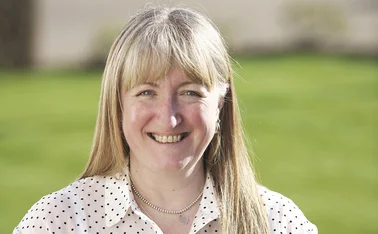
Laura Hancock, managing director of Yutree Insurance has outlined plans for the future following a management buyout, including opening an office in Norwich.

Should you sell your broking business to an Employee Ownership Trust?
Tax-efficient exit strategies and staff incentivisation have become hot topics among broker leaders since the recent increases in Capital Gains Tax and Employer National Insurance. In the second part of a series focused on the fallout from the 2024 Labour Budget, Catherine Heyes examines how broker owners can use Employee Ownership Trusts to respond to these developments.
Chaucer CUO named new CII president
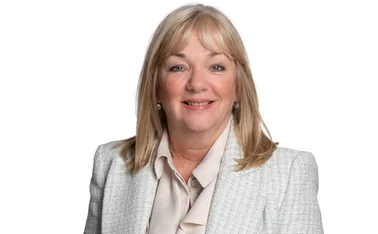
Nicola Stacey, chief underwriting officer at Chaucer, has been elected the new president of the Chartered Insurance Institute.

Montagu agrees to sell Open GI to minority shareholder Ares
Ares Management is set to acquire Open GI, with the deal signed on 9 August 2024, Insurance Age can exclusively reveal.

“Nobody came close to AUB” – CEO Cheesbrough on Movo’s new investor
The Movo Group is looking to create larger broking hubs and kickstart its directly authorised network Fusion after AUB took an 80% equity stake, according to Lea Cheesbrough, Movo Partnership CEO.
Ex-Ardonagh MD Barclay takes over as CEO of top 100 broker
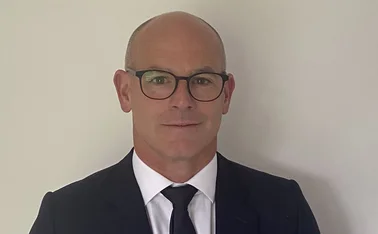
Lycetts has appointed Ian Barclay to CEO, succeeding Charles Foster who is retiring after seven years in the role.