

Broker Management Forum
Following the sale of Layton Blackham and Stuart Alexander to Axa, three major industry figures debated the issues around insurers buying brokers
Andrew Paddick, director general of Institute of Insurance Brokers
Stuart Reid, chief executive of Stuart Alexander
James Simpson, partner, IMAS
Richard Adams: When buying brokers what lessons from the past should insurers heed?
James Simpson: The main thing is to keep any broker-based business independent of the insurers' business. In the past, insurers have shown themselves unable to manage or adjust to the rather more entrepreneurial environment of the broker and have tried to institute underwriting disciplines over the brokers, which has failed. If they can leave brokers to evolve in the way they habitually develop, it will be more successful this time.
Andrew Paddick: I concur with that. If we look at examples, like the NFU and Country Mutual at the time, I just could not understand what they were doing and why they were buying these sort of firms. As we all know, they ended up selling it at a loss to Towergate. There have been other examples and, unltimately, insurers are not brokers.
Stuart Reid: Fundamentally I would not have entered into these conversations and done the deal had the independence not been maintained. Without that, Financial Services Authority registration would not be available to us, we would not be able to treat the customers fairly, we would not be attractive to those that might wish to sell. And we would not be a happy and safe home for the staff that we employ. Independence remains extremely important for us, now and in the future.
Richard Adams: A question from Simon Hickman of Access Underwriting asks: "The future for brokers who choose to remain independent looks rosy at the moment, because insurers will be under pressure to retain market share and may well have to offer some very good deals - is that a fair assumption?"
Andrew Paddick: I think the independent broker who is professional and switched on does have enormous opportunities while consolidation is going on. Local small to medium-sized enterprises like dealing with similar sized firms. So there is a lot of affinity and still enormous opportunities in the market for the enterprising broker.
James Simpson: I'm finding that my clients or potential clients are having a successful time at the moment, picking up clients from the large brokers including the large multinationals and even the consolidators. So, even in consolidation there is no sure-fire guarantee that you are going to hang on to the clients because competition is fierce.
Richard Adams: A question, from Mike Clarkson from Stewardship, asks: "I wonder how the other insurers will react to these purchases when dealing with agency matters in future. Will they be happy to grant and maintain agencies with brokers owned by competitors? Will they be satisfied that the brokers will remain independent or will they just be used as distribution chains for that owner insurer?"
Stuart Reid: Yes, (ours) being one of the first deals of this type, obviously the only way that we can maintain those agencies is by evidencing our independence and we will do so. If we were to strip all the good business, or large pieces of business that Axa might want away from other insurers, they would be quite within their rights to query why they have an agency with us. That is why we absolutely maintain our independence on placement. Without that fundamentally this deal does not work.
Richard Adams: Yes. But Axa owns you 100% now so it holds the power of ultimate veto, doesn't it.
Stuart Reid: Not over the placement of business.
Richard Adams: So that is maintained by somebody who is making sure that both businesses run separately?
Stuart Reid: Totally separately.
Richard Adams: But they are hardly an independent referee, are they.
Stuart Reid: Well we also have the FSA and if we are treating a customer unfairly, it will come in. And we need the market to be able to provide the products that we need for our clients. So it is extremely important for us to prove that and place business where it is best.
Andrew Paddick: Where an insurer buys a brokerage, it does it for two reasons. Primarily it is to maximise the business that that insurer can get from the brokerage and, secondly, the brokerage itself is something to invest in to provide another return. I think we saw that with Oval when it recently passed virtually its entire small SME book to Allianz Cornhill. Where we get a takeover by the insurer, one has got to be absolutely honest and say that that insurer will be seeking to maximise the amount of business it gets from the relationship. However, I am not saying that that won't be treating customers fairly. If you can do that and not really upset all the other insurers, you are going to flow whatever business you can to the parent company.
Stuart Reid: Actually no, putting all the business with Axa completely undermines the total basis for doing this. Being one of the first deals of this type, it is very difficult as I say. We have to evidence this by our actions and we will do so. This is not the first for Axa, it may be the first for an insurer in the UK but Axa has other models in other places in the world, namely Canada and Australia.
James Simpson: I expect the real risk for other insurers is if the insurer-owner starts to cherry pick. And it's not that this is going to disadvantage the client but if he can see what the competitors are quoting, he is going to cover at the best rate, the client is fine because he has got his insurance at a cheaper price. And it is the level of trust that the insurer-owned broker can maintain with the other insurers. It is a practice that has been going on in an established market in the personal lines area for years. People may suspend judgement for a while but if they see that they have not been adversely de-selected against, they will get used to it.
Richard Adams: Stuart, as a broker owned by an insurer, are you confident you will be able to get the best deals from other insurers? Assuming for a moment that Axa has got it right, you still have to deal with the rest of the market for your clients' sake. Do you have concerns about that?
Stuart Reid: No, not currently, we have had fantastic support from the market generally. We have not entered something new here, we have nudged it slightly to the right. We have seen other insurers buy other businesses, not commercial brokers but we have seen them buy niche. It is important for us to maintain the agencies that we have with other insurers to allow us to have competitive products, better service levels, to be able to provide the client with a range of options in the future. I don't have any fear of that, as long as we maintain that independence and are seen to maintain that independence and not let Axa cherry pick. Otherwise, we won't have the facilities and the ability to give the client what he needs.
Andrew Paddick: Wearing my Broker Direct chairman's hat where we have seen some of our brokers acquired by insurers in the motor insurance sector we have seen evidence of cherry picking. So I actually believe that does happen. And I think it is naive not to accept that fact.
Stuart Reid: On the commoditised products that has been evidenced. However, let's be sensible about this, Axa don't write every product. Even if it wanted to, which it doesn't - what about professional indemnity? You need a suite of insurers and products to be able to go out into that market and provide what that market requires. And to cherry pick would undermine your relationship with other insurers, which would undermine your independence, which would undermine the acquisition.
Richard Adams: Does the panel feel that insurer concerns about how they survive are driving them to buy brokers, given the shift in power over distribution to the likes of Towergate and consolidators?
James Simpson: It is down to the insurer to look after their core business and make a return on capital. If they can't generate enough business to generate those returns, they are going to struggle. I think insurers should look to their continued existence by making sure they generate the adequate returns and are attractive to their distribution chain. And it is matching those two requirements.
Andrew Paddick: I agree with James. In all businesses, he who controls the customer is king. And now, apart from perhaps on the commoditised motor insurance, the brokers still control most of the customers in our market. So they are in a very, very strong position. They are in exactly the same position as perhaps Tesco is to farmers, Kellogg's, or Heinz because they control the customers.
Stuart Reid: I am sure there will be more models, we have not talked about the nationals and what they are up to. They have got their problems at the moment - Lloyd's has been mentioned and it has got its own problems with modernisation. The broking market is widening by its very nature. There will be many models.
James Simpson: The market is healthy and a symptom of that is that it does change. The market is sufficiently strong at the moment for independents to have their part very comfortably. But age is a driver for independents and as somebody gets to retirement age, he is going to want to realise his investment. And if there is not another generation underneath it that is prepared to put their proverbials on the line and buy that person out, then somebody else is going to do it.
Andrew Paddick: There is definitely a lack of succession in insurance broking but that is true with accountants, solicitors and a lot of others. There are not so many sons and daughters following in father's footsteps. The other problem at the moment is that management buyouts are very, very difficult. In a medium size broker, the management really can't raise the cash they need to buy out the principals. And this is playing out to major consolidators advantage because they have the funds to buy out. As a result it is very difficult for the younger people now to actually buy a brokerage themselves.
Richard Adams: The results of a poll I put up earlier asking 'do you welcome the move' were 75% saying no because it will erode independence but 25% said yes because it will elevate prices paid for brokers. Stuart, given the concern about independence by our listeners today can I ask; will there not inevitably be a point at which Axa will exercise its rights as the parent company of Stuart Alexander and at that point, will that not surely diminish the firm's independence?
Stuart Reid: Axa has invested quite a lot of money in buying these two brokerages and, if things go according to plan, there will be further acquisitions down the line. It is doing this for a rate of return, not out of charity. It is my fundamental belief that we would not have got involved in this if Axa was doing it for a land grab, market share of Layton Blackham and Stuart Alexander's business. This was done because these are profitable businesses, the market is consolidating and Axa has a genuine desire to get involved and learn about the distribution and how that works. There are things that Axa will be controlling, it will have a look at the finances of the business, it has got fantastic assistance that it can give us on brand. But it will not be involved in the placement of business. I understand people's cynical view perhaps or that 75% were concerned about it. As we are one of the first that have done this we can only prove this by evidence of our actions. I am CEO of the company, I am telling you that that will happen.
Richard Adams: The response to the other poll question asking 'would you sell to an insurer?' was quite illuminating with 83% saying they would and 17% said no.
James Simpson: That reflects reality as we find it. A lot of principals want to make sure their staff are retained and are well looked after and that their exit is smooth, but when it comes down to it it is money that determines whether it goes ahead or not, rather than anything else.
Hear this debate in full, and previous debates, by accessing the archive on the website at www.brokermanagementforum.com.
Membership is free. Register online now to secure your place in the event on 'imarket' on 8 March.
The Panel
Richard Adams, Editor, Professional Broking magazine
Andrew Paddick, director general of the Institute of Insurance Brokers
Stuart Reid, chief executive of Stuart Alexander
James Simpson, partner, IMAS
Only users who have a paid subscription or are part of a corporate subscription are able to print or copy content.
To access these options, along with all other subscription benefits, please contact info@insuranceage.co.uk or view our subscription options here: https://subscriptions.insuranceage.co.uk/subscribe
You are currently unable to print this content. Please contact info@insuranceage.co.uk to find out more.
You are currently unable to copy this content. Please contact info@insuranceage.co.uk to find out more.
Copyright Infopro Digital Limited. All rights reserved.
As outlined in our terms and conditions, https://www.infopro-digital.com/terms-and-conditions/subscriptions/ (point 2.4), printing is limited to a single copy.
If you would like to purchase additional rights please email info@insuranceage.co.uk
Copyright Infopro Digital Limited. All rights reserved.
You may share this content using our article tools. As outlined in our terms and conditions, https://www.infopro-digital.com/terms-and-conditions/subscriptions/ (clause 2.4), an Authorised User may only make one copy of the materials for their own personal use. You must also comply with the restrictions in clause 2.5.
If you would like to purchase additional rights please email info@insuranceage.co.uk
More on Broker

Momentum AR outlines challenges of launching his first business
A new Momentum Broker Solutions’ appointed representative has outlined the challenges he has faced setting up his own business for the first time and why he made the leap.

People Moves: 24 – 28 August 2026
Follow the latest personnel moves in insurance.

Biba and Markel AI Academy opens for applications
Members of the British Insurance Brokers’ Association can now apply to join the founding cohort of the AI Academy being offered in partnership with Markel.
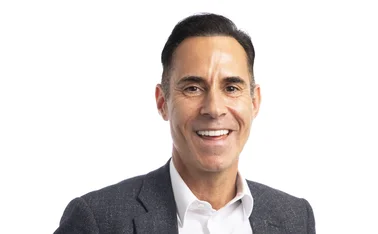
Broking Success: Vista Insurance Brokers’ CEO Gavin Ruben – leader of PE niches
Gavin Ruben, CEO of Vista Insurance Brokers, has set out the goal of becoming the leader of its specialist mergers and acquisitions insurance niche, along with the other parts of the firm’s 2035 ambitions.
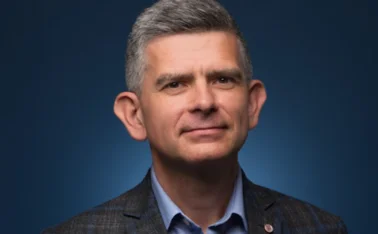
Blog: AI fraud is becoming a broker problem, not just an insurer problem
AI-generated documents extend the risk of fraud beyond claims settlement to the application and quote stages. Oleh Petrivskyy, founder and CEO of Binariks, explains why insurance distribution needs its own authentication mechanisms and offers four low-cost steps brokers can start with now.

Lockton brings in ex-Aviva and Gallagher leader Piper
Louise Piper has joined Lockton as a placement director in its major accounts business, working across large and complex clients.

Liquidators reveal estimated £9m hole at broker Anthony Jones
The liquidators of Kent-based Anthony Jones (UK) have released a statement of affairs estimating a £9.22m deficit, with numerous insurance businesses and HMRC facing potential losses, some as high as six figures, after the collapse of the broker.

Ardonagh reveals advisory growth in year of Everywhen name switch
Ardonagh Advisory grew income by 4.7% in 2025, the year it switched name to Everywhen, a filing at Companies House has revealed.