

Small firm - big ideas
The competition to supply small and medium-sized enterprises with the insurance they need is intense. Nicolle Farthing explains how the drive for innovation and service is changing the market
Traditionally, the categorisation of personal and commercial insurance has always been distinct - but the needs of time-pressed small and medium-sized enterprises for packaged cover is seeing the line become increasingly blurred.
Usually, insurers segment the commercial market according to industry, size of business and location. For example, Zurich is set up to accommodate the needs of small businesses right through to global companies. It has a number of commercial units: Zurich London, Zurich UK Commercial, Zurich Commercial Direct, Zurich Municipal and Zurich Difficult Risks.
Royal & Sun Alliance also arranges its commercial business in segments. Small businesses with less than £1m turnover receive its Enterprise proposition. Companies with between £1m and £100m turnover are classed as mid-market businesses. Its Risk Solutions arm looks towards the top end of the market. It also has a specialist business segment for covers such as engineering, directors' and officers', marine and transport.
Similarly, Colin Calder, head of broker development at Axa, says: "Our customers are the brokers, and we organise ourselves around them. How we trade with a broker is then down to the way he trades with his clients. We have teams and processes that match the needs of the customer."
Allianz Cornhill has a branch network operating from 14 locations. Five offices have dedicated teams dealing specifically with products for small businesses. SMEs make up 99% of the UK business sector, and as a result the majority of insurers and brokers are chasing this market. Brokers are keen to grow in this area as it is fairly straightforward to get cover from underwriters.
Compliance
The Financial Services Authority decided against categorising SME business with retail custom for compliance purposes following strong objection from brokers. FSA spokeswoman Kate Bristowe explains: "The FSA proposed to follow the arrangement that exists in other financial sectors, where retail customers include small businesses with a turnover of up to £1m.
"We listened to the feedback from brokers, who said small businesses did not need additional protection as they have the knowledge and experience to act as informed customers."
Dave Smith, head of market management at Zurich, believes the FSA made the right decision. He says: "Small businesses already have additional protection through access to the Financial Ombudsman Service, The Financial Services Compensation Scheme and professional advice from accountants and solicitors."
However, Smith acknowledges that SMEs are often dealt with in a different way to large companies. As he says: "SMEs tend to need a packaged approach that deals with their requirements quickly and simply, whereas large corporates require a far more bespoke approach. Their needs are similar, but they are on a different scale."
Brokers are taking a more strategic approach to doing business, according to Calder: "Broking is moving into the world of big business and regulation, and we are moving away from the cottage-industry approach into something more 'plc'."
He continues: "Brokers have outsourced personal lines for a while and it's now happening at the bottom end of the SME market. It is a combination of ensuring the customer gets the right price as quickly as possible. Brokers are adding their expertise in choice of carrier, choice of product, and in the renewal process."
Simon Cooter, director for small business and e-business at RSA, argues that it would be bad news for the industry if the SME market went the same way as personal lines. The real challenge is for the broker market to continue to provide the advice clients need for the right return, he says.
"Commercial insurance ranges from the tradesman with a van to multinationals. The one thing all businesses have in common is a lack of time. Firms want to arrange insurance with a minimum amount of fuss, and in the vast majority of cases they will look to a broker.
"For very small businesses, we recognise that brokers can't spend the same amount of time that they would for a larger company. We provide them with a portfolio of packaged products to make sure that the coverage is broad and includes things like accidental damage."
Although the purchase of commercial insurance is not as simple as personal lines, Smith explains that Zurich does offer insurance direct to small businesses as part of its commitment to provide customer choice. "The majority of businesses arrange their insurance through a broker. However, research showed that a number of SMEs wanted the opportunity to deal directly with the insurer. But brokers are our primary route to market for small businesses by some margin and we expect this to remain the case," he says.
RSA also has a direct offering, but has reassured brokers that its new direct commercial insurance initiative will only complement its main commercial business sold through brokers. It has extended its direct financial services arm More Th>n into commercial insurance for small businesses. More Th>n Business will target SMEs with turnovers of less than £1m and offer a range of commercial covers - office, van, company car, shop, contractor, business, club and property. Cooter says: "More Th>n Business does not detract from our broker offering, but provides an effective route to market for those businesses that are confident enough to buy their insurance direct. Much less than 20% of small businesses want to buy cover direct; we offer it because there are a small number that do. They tend to be very small companies or those that are well-established with needs that don't change much from one year to another."
Axa's direct commercial insurance offering accounts for less than 10% of its business, according to Calder, who argues that there isn't a lot of difference between 'one-man bands' and personal lines: "Some SMEs will come direct with the benefit of having broker advice, but we don't predict a massive migration away from the broker market."
However, Allianz Cornhill does not offer commercial insurance direct to businesses and would not advise a small business to buy insurance direct. Paul Maidment, director of south region and London trading at Allianz Cornhill commercial, says his firm has underwriters dealing with the SME business rather than administration staff to process it. An underwriter will go over every enquiry irrespective of the size of the business, he explains, adding: "It's a brave entrepreneur that believes he can understand all his business risks, and then know where to go and what price to pay."
Commercial lines online
The internet is growing in importance as a channel for the sale of insurance through brokers to small businesses, according to Smith. "We expect to see the SME marketplace moving towards transacting online. Both brokers and insurers are seeking to take the cost out of the process and offer the best combination of expertise, service and price to the customer," he says.
Norwich Union has launched its Commercial Toolkit - a range of segment-specific commercial products to provide businesses with cover specifically tailored to their needs. New enquiries can be submitted by brokers via new e-enquiry forms, either electronically or printed off as a hard copy.
David Read, head of commercial product management at NU, says: "Different businesses have different insurance needs, and rather than adopt a one-size-fits-all approach we have taken NU's target market segments and developed products to meet these customers' individual needs."
The web-based insurance portal Polaris imarket will, it is hoped, radically change online transactions, enabling brokers to get quotations electronically from a range of insurers for hundreds of personal lines and commercial products. Calder says: "We have a paper-chase at the moment and it all takes time. imarket will simplify the process - but it doesn't change the need for discussion and negotiation."
Maidment agrees that imarket will help speed up processes, but reiterates that a qualified underwriter will still look at any exposure Allianz Cornhill is being asked to accept.
Peter Staddon, head of technical services at the British Insurance Brokers' Association, says: "Brokers need to transact in a more cost-effective way and imarket is a good example of how this can be done. There is no reason why a broker should not be able to get a quotation while the client is sitting in front of him. Standardised SME products will develop through imarket - huge savings can be made, and this can make up for the cost of regulation."
BIBA is due to launch a new web-enabled product for the SME market. It is also trying to get more brokers online and has set up an initiative that enables brokers to buy in to a tariff in order to reduce the costs of using the telephone. It is also looking to launch a similar initiative for broadband, and is currently in negotiation with a major insurer to supply this.
While SME cover can be packaged and sold online and even direct, the exposures today's firms face may be far from simple. A recent survey by Zurich revealed that keeping up with employment and health and safety regulations are a major cause for concern amongst small businesses.
Calder says: "Every aspect of society, whether it is our personal life or working life, is becoming more complicated. The challenge for insurers is to come up with a solutions - and a good example is the use of rehabilitation."
Complex environment
Andy Glynne, SME business manager for First Assist, says small employers are grappling with an increasingly bureaucratic and complex business environment. He argues that this presents an opportunity for brokers to extend their offering, and points by way of example to the Health and Safety Executive's Code of Practice, due to come into force during 2004, which provides a legal basis for reducing stress to a manageable basis. The new regulations demand that employers demonstrate they have assessed the risk of stress, identified ways of making the risk lower and are monitoring the risk on an on-going basis.
Glynne says: "Insurers, brokers and IFAs are all in the ideal position to expand into services such as help and support on legislation, health and safety, taxation and employment issues. They should be looking to work with providers who will be able to help them deliver business-assistance packages; access to employment consultants; and health and safety, taxation, legal advice and counselling services. This is an opportunity for insurers and intermediaries to break free from traditional insurance-based relationships and deliver innovative solutions that meet their SME clients' needs."
Cooter believes that risks are changing all the time and agrees that this brings opportunities for brokers. He points to D&O and corporate governance risks, which apply to all businesses regardless of size. He says: "It is essential to understand your client's business to ensure you provide for all its insurance needs. There are many brokers that provide a solution across the board, but there are also many that are niche. Specialists are emerging in highly hazardous areas where it is difficult to get cover in the open market. Also, large companies tend to want a tailored approach and have detailed programmes of insurance, and their requirements are more complicated."
So whether your client requires commercial insurance that comes in a package, is segmented by trade or specialism, is specially tailored, or is available online, understanding their needs and providing good advice at the right price is crucial - even if the threat of the direct route gaining significant market-share is said to be small.
Only users who have a paid subscription or are part of a corporate subscription are able to print or copy content.
To access these options, along with all other subscription benefits, please contact info@insuranceage.co.uk or view our subscription options here: https://subscriptions.insuranceage.co.uk/subscribe
You are currently unable to print this content. Please contact info@insuranceage.co.uk to find out more.
You are currently unable to copy this content. Please contact info@insuranceage.co.uk to find out more.
Copyright Infopro Digital Limited. All rights reserved.
As outlined in our terms and conditions, https://www.infopro-digital.com/terms-and-conditions/subscriptions/ (point 2.4), printing is limited to a single copy.
If you would like to purchase additional rights please email info@insuranceage.co.uk
Copyright Infopro Digital Limited. All rights reserved.
You may share this content using our article tools. As outlined in our terms and conditions, https://www.infopro-digital.com/terms-and-conditions/subscriptions/ (clause 2.4), an Authorised User may only make one copy of the materials for their own personal use. You must also comply with the restrictions in clause 2.5.
If you would like to purchase additional rights please email info@insuranceage.co.uk
More on Commercial
From transactional to tailored: rethinking insurance for the middle market
The opportunity for the market is to return to the fundamentals of insurance says Stuart Sutherland, head of UK retail at Liberty Specialty Markets, as he tackles the dangers of commoditisation for mid-market businesses and the risks of a one-size-fits-all approach.

Adler Fairways buys Mason Owen Financial Services
Adler Fairways Insurance Group has bought Liverpool-headquartered Mason Owen Financial Services expanding into the North and East of England, Insurance Age can reveal.
Meet the MGA: Lumara
Having helped set-up one MGA in Arista two decades ago, Lumara CEO David Aslin explains why he is going again, seeking to be a top three partner with its brokers through a combination of expertise, flexible products and agency exclusivity.

Jensten buys largest Coversure franchise in Midlands deal
Jensten Group has signed up to buy Coversure Midlands, the largest in its franchise network.

Gallagher partners with HSBC bank in business insurance launch
Gallagher is working with HSBC UK providing insurance services to the bank’s commercial clients, the pair have confirmed.
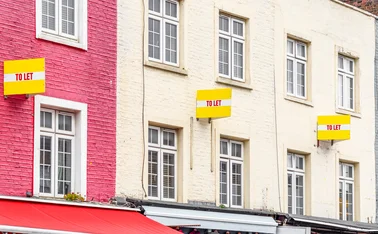
Simply Business adds MGA to panel expanding its landlord offering
Simply Business has partnered with Mission-backed commercial and residential property managing general agent Ventis, to expand its landlord insurance offering.

MGAs increasingly important in placing niche fleet, according to broker survey
Waste, hazardous and recycling fleets are the hardest commercial motor segment to place due to limited market capacity, according to 71% of brokers surveyed by Direct Commercial.
Podcast: Reid and Clegg present Double Indemnity – episode 12, Cameron Specialty’s Tom Kirkland
MGA entrepreneur Tom Kirkland joins Stuart Reid and Toby Clegg for the latest episode of the Double Indemnity podcast series.