

Corporate Manslaughter - Keep death off the roads
With the Corporate Manslaughter Act in force from 6 April 2008, brokers should pay serious attention to a police campaign aimed at motorists involved in serious or fatal road traffic collisions
Research published in 2003 by the Health and Safety Executive found that 20 people were killed and 250 people seriously injured every week in road accidents involving individuals driving on company business. The Department of Transport also estimates that 300 people are killed every year as a result of drivers falling asleep at the wheel and about 40% of collisions involving tired drivers are, again, those driving for work purposes.
Previously, police investigating a serious or fatal accident have been concerned primarily with the action of the individual behind the steering wheel. The focus of enquiries is shifting towards identifying the reason for that motorist being on the road and, if on company business, whether or not a manager was pressurising that individual to fulfil too many appointments in a day or undertake business journeys while unfit to do so as a result of fatigue.
The Corporate Manslaughter Act provides a mechanism for companies to be held liable for their employees' negligent acts. Directors will have a six-month period after April in which to ensure that company policies are in place: a conviction under the Act could mean an unlimited fine and tremendously damaging media coverage, should a fatal collision occur involving an at-work employee.
As a start, employers should check that all staff hold valid driving licences and verify prospective new employees' licences against the DVLA database before making a job offer. Companies can then use the information to implement additional risk assessments and driver training, particularly for employees with endorsements on their licences.
They should also nominate a director to be responsible for the company's corporate health and safety, which includes at-work driving. The HSE publication, Driving at Work - Managing Work-Related Road Safety, is available in.pdf format from the HSE's website; it details the steps directors and senior managers should take to manage these risks effectively.
If a serious or fatal accident occurs, the director or manager responsible is likely to have to provide police with an audit trail of drivers, vehicles and journey schedules to show that a risk management strategy is in place and is being adhered to actively.
As well as criminal proceedings arising for at-work accidents, it is likely that companies will also face civil claims from injured employees and third parties if they have failed to pay sufficient attention to the risks involving at-work drivers. With these threats hanging over their heads, directors and senior managers cannot afford to ignore the changes afoot and must put company policies in place to deal with these risks as soon as possible.
- Kate Archer, associate, injury risk group, Beachcroft.
Only users who have a paid subscription or are part of a corporate subscription are able to print or copy content.
To access these options, along with all other subscription benefits, please contact info@insuranceage.co.uk or view our subscription options here: https://subscriptions.insuranceage.co.uk/subscribe
You are currently unable to print this content. Please contact info@insuranceage.co.uk to find out more.
You are currently unable to copy this content. Please contact info@insuranceage.co.uk to find out more.
Copyright Infopro Digital Limited. All rights reserved.
As outlined in our terms and conditions, https://www.infopro-digital.com/terms-and-conditions/subscriptions/ (point 2.4), printing is limited to a single copy.
If you would like to purchase additional rights please email info@insuranceage.co.uk
Copyright Infopro Digital Limited. All rights reserved.
You may share this content using our article tools. As outlined in our terms and conditions, https://www.infopro-digital.com/terms-and-conditions/subscriptions/ (clause 2.4), an Authorised User may only make one copy of the materials for their own personal use. You must also comply with the restrictions in clause 2.5.
If you would like to purchase additional rights please email info@insuranceage.co.uk
More on Broker

Momentum AR outlines challenges of launching his first business
A new Momentum Broker Solutions’ appointed representative has outlined the challenges he has faced setting up his own business for the first time and why he made the leap.

People Moves: 24 – 28 August 2026
Follow the latest personnel moves in insurance.

Biba and Markel AI Academy opens for applications
Members of the British Insurance Brokers’ Association can now apply to join the founding cohort of the AI Academy being offered in partnership with Markel.
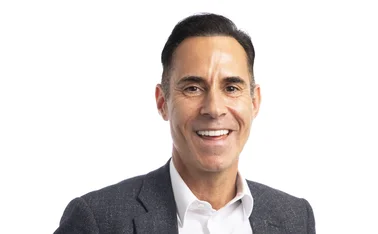
Broking Success: Vista Insurance Brokers’ CEO Gavin Ruben – leader of PE niches
Gavin Ruben, CEO of Vista Insurance Brokers, has set out the goal of becoming the leader of its specialist mergers and acquisitions insurance niche, along with the other parts of the firm’s 2035 ambitions.
Blog: AI fraud is becoming a broker problem, not just an insurer problem
AI-generated documents extend the risk of fraud beyond claims settlement to the application and quote stages. Oleh Petrivskyy, founder and CEO of Binariks, explains why insurance distribution needs its own authentication mechanisms and offers four low-cost steps brokers can start with now.

Lockton brings in ex-Aviva and Gallagher leader Piper
Louise Piper has joined Lockton as a placement director in its major accounts business, working across large and complex clients.

Liquidators reveal estimated £9m hole at broker Anthony Jones
The liquidators of Kent-based Anthony Jones (UK) have released a statement of affairs estimating a £9.22m deficit, with numerous insurance businesses and HMRC facing potential losses, some as high as six figures, after the collapse of the broker.

Ardonagh reveals advisory growth in year of Everywhen name switch
Ardonagh Advisory grew income by 4.7% in 2025, the year it switched name to Everywhen, a filing at Companies House has revealed.