

Expanding European horizons
A recent EU directive has paved the way for independent brokers in Europe. However, while true uniformity may not be realised for some time, opportunities are emerging, as Nicolle Farthing reports
Last year, the Insurance Mediation Directive put in place the regulatory framework to enable brokers to do business throughout the European Union from 14 January 2005. However, despite the IMD promise of a level playing-field in Europe for independent brokers, many will find that obstacles to trading remain, according to Howard Pearson, retail division director at Miller Insurance.
"Efforts to harmonise legislation are a long way from being successful and uniform practices among brokers and insurers across the EU are even further away. We will continue to need expertise from local brokers in each territory for a minimum of 10 years. It is likely to be 20 years before we will have truly European solutions," he states.
However, David Hough, executive director of the London Market Insurance Brokers' Committee, says opportunities are arising. "EU directives have not affected global brokers as they already have a presence throughout member countries and the resources to open new offices or acquire established brokers internationally.
"But, the open market has created opportunities for medium-sized brokers with a number of broker networks, such as the International Insurance Brokers' Association, the Worldwide Broker Network and the European Insurance Brokers' Consortium, having sprung up."
He continues: "Medium-sized brokers are finding that their clients are doing more business internationally and are looking at ways to meet their needs. It is not realistic to serve a client's subsidiary in France from the UK, as you need somebody with local knowledge. As a result, brokers are forming partnerships with intermediaries on the Continent."
Patrick Thomas, European development director of Aon, agrees. "More and more companies are doing business abroad and have subsidiaries in Europe. The question for the broker is how best to deal with these interests. They need certain types of cover that meet local requirements and these need to be arranged in the local market place."
David Howden, chief executive of specialist Lloyd's broker Howden, argues that UK brokers can enter Europe in a number of ways. These include joining a network, opening offices, acquiring brokers, offering wholesale, offering new products and seeking new capacity.
He continues: "In theory, any UK broker can go to Europe but, in practice, there are language barriers and practical issues such as how to service claims. I am not convinced we will see large numbers of UK brokers opening offices in Europe as this is likely to be restricted to the large corporations.
In Europe, there has been consolidation of the broking market but not to the same extent as in the UK so there are opportunities for acquisitions.
"The greatest opportunity is in partnering with brokers overseas and offering wholesale products. To win new business, brokers have to offer something that is not already offered and bring in new products. For example we were the first in Spain to offer directors' and officers' cover."
However, Alec Finch, chairman of the Alec Finch Group and executive committee member of the WBN, believes that business in the EU is largely limited to UK clients' business rather than winning new business from overseas.
He says: "People want to deal with someone locally who can speak their language. Unless you are a local, it is difficult to win any new accounts."
International ability
Thomas says that many brokers believe there is enough UK business to keep them going for the next five to 10 years. However, he warns that, in the long term, many clients will expand internationally, particularly those that are successful so, ultimately, brokers will need to have some form of international ability.
He says: "Most brokers won't have the capital to buy foreign brokerages, therefore, strategic partnerships and building global chains is the only option. If you don't join a network you must become the best in your particular field. If you find a niche market, you could get away with staying UK focused, as people will come to you."
As a retail broker, it is important to be able to serve clients across Europe, according to Pearson. Miller has a global team working with brokers worldwide to maintain clients with commercial business in more than one country.
Miller is also part of the newly created network of general insurance brokers, E-QUA. So far, it has members in the Netherlands, Germany, Poland, Hungary and the UK. E-QUA aims to slowly add other countries, but focusing initially on Europe.
In addition to medium-sized brokers there are also opportunities for small regional players. Thomas believes that, while the larger, more powerful brokers have seen an increase in market share at the expense of smaller brokers, a growing insurance market means that there is more business for everyone.
Thomas says: "Increasingly, smaller brokers are looking to tap into similar expertise throughout Europe. The challenge is finding equivalent international players."
Associations such as the Bureau International des Producteurs d'Assurances et de Reassurances (BIPAR) and the Association of Insurers and Risk Managers provide help to set up links for brokers that occasionally have clients with interests abroad.
The British Insurance Brokers' Association provides members with access to Partners of Insurance Intermediaries, the BIPAR web-based database of EU intermediaries.
Hough says that there are two principal objectives of this facility.
The first is to provide a directory offering members the opportunity to contact brokers in other European countries with a view to cross-border co-operation. The second is to provide information on market and regulatory developments in the national markets in Europe.
The European broker market is largely dominated by tied agents. Ireland and the Netherlands are the only other countries in Europe that have the same distribution method as the UK - operating mainly through independent brokers, according to Finch.
He continues: "It is firstly about providing client service and secondly the placing of the insurance business. Independent brokers can serve your account around the world, which the tied agents cannot. Our colleagues in Germany are finding that having the ability to place business outside of Germany, for example in London, is a good selling point. The fact that we can look after our clients' overseas subsidiaries is proving very useful."
The types of insurances applicable across borders include material damage, business interruption, product liability and directors' and officers' cover. Many other commercial insurances such as employers liability, engineering and travel are specific to countries and have specific rules.
Finch says: "We cannot write everything internationally, unless you achieve complete harmonisation of social services, transport, taxes and so on, you won't see global solutions. For example, in France they do not have mandatory employer's liability and the state covers accidents in work."
In theory, personal lines can be sold across borders, for example, via the internet. However, in practice, this has proven quite difficult, according to Hough. Attempts to sell directly have not taken off to the extent that they have in the UK where the internet has had more of an impact.
Ashley Canning, chief executive of commercial property specialist Keelan Westall, criticises company market insurers for failing to consider risks simply because a property is located overseas.
He says: "Despite being European, some insurers refuse to offer a solution for our clients' overseas properties and have told us to speak with a global broker such as Marsh or Aon. This is not satisfactory as it can get messy for the client when you have to divide their portfolio and we have turned away business in the past."
In comparison, Lloyd's welcomes overseas clients and is innovative when taking on difficult risks. A shortage of capacity for risks such as terrorism and liability in the European market has created an opening for Lloyd's says Finch.
He says: "Lloyd's is a good market for Europe when placing difficult risks. Traditionally, France and Germany always had enough capacity but this is changing and more European business is being written in Lloyd's."
Lloyd's brokers are a step ahead when it comes to taking up opportunities overseas. Thomas says: "Lloyd's has always operated through approved brokers, many of whom have worked hard to develop links, travelling throughout Europe to meet with brokers with offers to place business."
He adds: "Very rarely will Lloyd's brokers go out and speak to the foreign clients directly. This would prove too difficult as they face the same language, legal and cultural challenges."
However, Howden argues: "Lloyd's does not have enough market share in Europe and is more exposed to risks from the US. It has travelled across the pond rather than across the channel."
In contrast, Howden has benefited from focusing on Europe, with 35% of its business coming from Continental Europe and less than 2% from the US. Howden's latest acquisition is a 56% interest in Swedish insurance broker Holm & Co, which further consolidates its presence across Scandinavia.
New capacity
Howden also believes there is an opportunity for brokers to find new capacity in Europe. It has identified an Austrian insurer, Uniqa, with which it is hoping to do business.
He says: "Over the last five years there has been a shift in capacity away from Lloyd's and the London market. There are insurers operating in the EU that want to expand into new territories and risks. This could be interesting for brokers as there is currently a lack of choice. However, you have to find some form of niche if you want to bring in a new insurer."
This month the EU is due to add 10 new Member States and nine new official languages. The expansion will undoubtedly create new opportunities for brokers and increase pressure to join networks to ensure they can look after clients' needs.
Thomas says: "Europe is divided into two - those countries in the EU and those outside it. Brokers have seen good growth within the EU and this is likely to continue into Eastern Europe. Poland, for example, is a new member and a developing industrialising country that will continue to open up its markets."
For those brokers wanting to take the plunge into Europe, now is the time to start by building relationships, joining a network and seeking suitable partnerships with EU intermediaries. As well as keeping existing, expanding clients happy, Europe also offers the opportunity to win new business. Plus, brokers may also gain access to new capacity, especially in niche and emerging markets.
The Institute of Financial Services (ifs) is one of the leading providers of education and lifelong career support services to the financial services industry. Call us on 01227 818609 or visit www.ifslearning.com to find out about our qualifications for insurance professionals.
Only users who have a paid subscription or are part of a corporate subscription are able to print or copy content.
To access these options, along with all other subscription benefits, please contact info@insuranceage.co.uk or view our subscription options here: https://subscriptions.insuranceage.co.uk/subscribe
You are currently unable to print this content. Please contact info@insuranceage.co.uk to find out more.
You are currently unable to copy this content. Please contact info@insuranceage.co.uk to find out more.
Copyright Infopro Digital Limited. All rights reserved.
As outlined in our terms and conditions, https://www.infopro-digital.com/terms-and-conditions/subscriptions/ (point 2.4), printing is limited to a single copy.
If you would like to purchase additional rights please email info@insuranceage.co.uk
Copyright Infopro Digital Limited. All rights reserved.
You may share this content using our article tools. As outlined in our terms and conditions, https://www.infopro-digital.com/terms-and-conditions/subscriptions/ (clause 2.4), an Authorised User may only make one copy of the materials for their own personal use. You must also comply with the restrictions in clause 2.5.
If you would like to purchase additional rights please email info@insuranceage.co.uk
More on Broker

Biba and Markel AI Academy opens for applications
Members of the British Insurance Brokers’ Association can now apply to join the founding cohort of the AI Academy being offered in partnership with Markel.
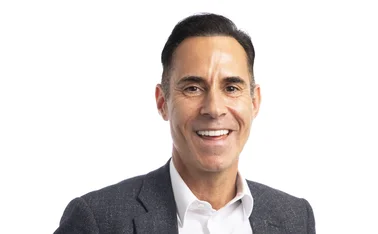
Broking Success: Vista Insurance Brokers’ CEO Gavin Ruben – leader of PE niches
Gavin Ruben, CEO of Vista Insurance Brokers, has set out the goal of becoming the leader of its specialist mergers and acquisitions insurance niche, along with the other parts of the firm’s 2035 ambitions.
Blog: AI fraud is becoming a broker problem, not just an insurer problem
AI-generated documents extend the risk of fraud beyond claims settlement to the application and quote stages. Oleh Petrivskyy, founder and CEO of Binariks, explains why insurance distribution needs its own authentication mechanisms and offers four low-cost steps brokers can start with now.

Lockton brings in ex-Aviva and Gallagher leader Piper
Louise Piper has joined Lockton as a placement director in its major accounts business, working across large and complex clients.

Liquidators reveal estimated £9m hole at broker Anthony Jones
The liquidators of Kent-based Anthony Jones (UK) have released a statement of affairs estimating a £9.22m deficit, with numerous insurance businesses and HMRC facing potential losses, some as high as six figures, after the collapse of the broker.

Ardonagh reveals advisory growth in year of Everywhen name switch
Ardonagh Advisory grew income by 4.7% in 2025, the year it switched name to Everywhen, a filing at Companies House has revealed.

Clear buys Lloyd’s wholesale broker
Clear Group has bought Lloyd’s wholesale broker Newman Pearce & Partners, adding to its portfolio after snapping up Lilley Plummer Risks in 2024.

Coversure launches construction-focused broker
Coversure Network has launched Elliott & Associates Risk Management led by John Elliott, focused on construction industry clients.