

Grand plans, grand designs

Having recently taken up the post of UK commercial director at Royal & SunAlliance, Brendan McManus talks to Nicolle Farthing about his aspirations to promote sales capability in the industry, recruiting staff from outside of the industry and building a portfolio of new initiatives
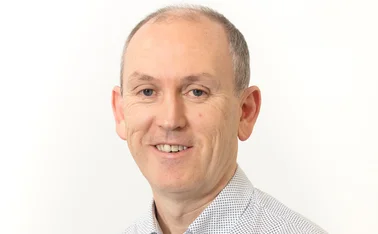
Brendan McManus describes his new role as UK commercial director of Royal & SunAlliance as the greatest challenge of his career.
He says: "The UK commercial business is critical to RSA both in terms of size and performance. It is the group's biggest business, representing 34% of the group's turnover and more than 50% of the group's profits in this year's half-year results.
"I have aspired to run the UK commercial business for a while. There is a huge breadth of businesses and it is a significant challenge trying to maintain the bottom line in a market that is getting more difficult in terms of price and, at the same time, trying to inject some vigour into our top-line growth."
McManus was formerly director of commercial corporate business at RSA and replaces Peter Webster, who retired in April after 32 years with the company. McManus himself has been with the insurer for 25 years, having joined an engineering subsidiary of Sun Alliance straight from school at the age of 19. Apart from a brief time spent in Australia, he has remained with the group working in a range of roles mainly within the general insurance arm.
McManus describes his new role as more complex and intellectually more challenging than his previous position. Responsible for leading more than 4000 people from 14 sites in the UK - and six outside of the UK - he admits to being a lot busier nowadays and regrets missing out on day-to-day contact with brokers.
"As I settle into my new role I plan to get out in the market place as much as possible. One of the things I enjoy most is working with brokers and I miss that buzz," he says.
Appointing from other industries
McManus hopes the appointment of Mike Canif - formerly responsible for setting strategic direction at GE Consumer Finance - to his former role of commercial corporate director will relieve some of his responsibilities and give him more time to focus on the things he enjoys most.
"It is important for RSA to appoint people from outside the industry and Canif is a good example of this," he says.
"We need to constantly refresh the talent within the organisation and are looking to bring in a number of people from outside the industry. Canif's experience in banking makes him a strong addition to our team."
Brokers have welcomed Canif's appointment and recognise he can add something fresh and different, according to McManus.
He says: "I was concerned brokers would prefer someone from the insurance market but all their comments have been positive and they think it is great we are not thinking too traditionally."
"When you stack the insurance industry talent up against the talent outside the market, there is generally a gap. We need to bring new talent to the industry to ensure it maintains its competitive edge."
In addition, McManus is keen to discover and quickly develop the existing talent within RSA. He says: "We are taking risks on people and propelling them into new roles at a faster pace than usual."
RSA will continue to invest in developing underwriting skills and to complement training with the best underwriting tools, says McManus. For example, it is investing in leading-edge technology such as its geographical risk assessment tool, which is used for measuring flood and subsidence risks.
However, RSA has focused on its underwriting and claims skills during the last few years at the expense of its sales, which McManus argues should be given equal importance. A major goal now is to bring in 'solid sales capability' throughout the organisation.
He says: "My job is to try and get some sales capability into the organisation, which I believe we have lost in recent years. This does not just involve hiring salespeople. It means getting good sales 'DNA' throughout all the teams in the business so we know which customers we are looking for and we are building relationships with them a long time in advance. We want to build a pipeline of business rather than just going out with uninteresting propositions.
"It is about moving away from passive underwriting to a more assertive style where we set about winning the business."
He adds: "We have spent a long time ignoring sales as a fundamental skill in the business and it will take some time to bring it up again. This will involve a mixture of improving skills and bringing in new people."
McManus also plans to introduce a number of specialist micro-segments
He says: "RSA is a big business but comprises many small segments, and micro-segment initiatives will enable us to differentiate ourselves. These will be areas in which we are able to attain the right price and differentiate in terms of product or in terms of risk engineering or claims service.
Next year, we plan to launch a number of initiatives that will build into a portfolio of micro-segments, which enable us to get some growth even in a softening market."
Softening market
McManus says that, despite reports of market softening, so far he has not found that prices have corrected in a major way. He says: "We have been able to retain the vast majority of our book at very good rates.
There are pressures in the market, driven from new capital retention and a significant number of brokers that are trying to drive growth, which puts pressure on price. So far this has not converted into anything significant in terms of us having to reduce rates.
"Everybody's jury is out to see what happens over the next two quarters. We hope that our resolve in maintaining ratings at the current level will be followed by our major competitors."
He adds: "Shareholders of all major insurers are demanding superior performance following a number of years in which they received inferior performance. I think this pressure will continue to keep performance high. Our main goal is to protect our bottom line and, if that is under threat, we will do everything to protect it rather than try and grow our business in a softening market."
The commercial division recently launched a new broker proposition targeted at those bringing in up to £250,000 of premium income. Entitled Access, it has been developed following research with over 600 brokers.
The study showed that brokers with smaller accounts wanted greater access to RSA's expertise, especially for more complex risks.
In response, RSA created dedicated teams specifically to meet Access broker needs for all mid-sized customers with a turnover between £1m and £100m.
McManus says: "We felt that the smaller broker often gets missed out. We wanted to improve levels of support. This will be properly resourced so we can deliver quotes and policies quickly."
Access not only puts the brokers in touch with people that understand their business, it provides them with a single point of contact, some of the best insurance experts in the industry and a comprehensive product range."
Regulatory pressure
RSA is also surveying its brokers to find out whether they have applied to become authorised.
He says: "All our major players have applied, or are in the process of applying, to the Financial Services Authority. We do not expect there is going to be a lot of orphan business at the end of the year to manage, although we have contingencies around that."
McManus says RSA has no intention of culling broker agencies as it already has the brokers it wants work with.
He says: "We only want to deal with the most compliant and professional brokers and took the decision a long time ago that we would not deal with anybody who was not a full-time professional insurance broker.
"We went through 'agency culling exercises' between 1997 and 2000. We cannot give the same proposition to all our brokers and each of their needs are different, however, we have no plans to trim our agency base any further."
Although there is a lot of talk about consolidation in the broker market, McManus argues that the vast majority of it is still to occur.
He says: "The reasons people sell their businesses are not due to regulatory pressure, but because of the age profile of those brokers. I am not sure that the age profile has steepened enough for the big consolidation to occur. The time for serious consolidation is three or four years from now when there will be more pressure on the age profile and the real regulatory pressure will have begun to bite."
McManus is the first to admit that RSA has not always got things right, particularly with regard to the regulatory process. He says: "RSA has learned lots of lessons about how regulation has been applied and how the industry has responded and we are wiser now. We needed to implement changes earlier and be better prepared - next time around we will be ready. Regulation tends to creep in and there are bound to be further changes."
Terms of business agreements
However, McManus says he was surprised and frustrated by the fuss surrounding its terms of business agreements. RSA is currently reissuing its TOBAs following a campaign by the Institute of Insurance Brokers warning brokers not to sign the original terms as they did not include a non-solicitation clause.
He says: "We respect the input of IIB and the British Insurance Brokers' Association with regard to TOBAs and have a long history consulting on the issue. In 1999, we issued TOBAs without a non-solicitation clause as it was not a market norm and had not been raised in any great detail.
Shortly afterwards, BIBA raised the issue of non-solicitation and we agreed that, if ever there were complaints about RSA, we would invite BIBA to mediate. Since then we have not received a single compliant about soliciting broker clients so we thought we would continue with this agreement.
"We have no desire to 'pinch' brokers' clients - why would we want to upset brokers if we are working with them everyday? I decided to make absolutely clear the situation to include the clause once and for all to remove any doubt."
The big issue for all insurers is how to deal with January renewals as most work to renewal cycles that are eight weeks or more and they may not know if the FSA intends to authorise a broker until after this date, according to McManus.
Despite the lack of time left to get itself in order, McManus believes regulation will be good for the industry. He says: "Ultimately, provided it is applied equally, it is fair because it requires everyone to operate at the same standard. It will be good for customers as they can expect a higher standard from the industry."
Only users who have a paid subscription or are part of a corporate subscription are able to print or copy content.
To access these options, along with all other subscription benefits, please contact info@insuranceage.co.uk or view our subscription options here: https://subscriptions.insuranceage.co.uk/subscribe
You are currently unable to print this content. Please contact info@insuranceage.co.uk to find out more.
You are currently unable to copy this content. Please contact info@insuranceage.co.uk to find out more.
Copyright Infopro Digital Limited. All rights reserved.
As outlined in our terms and conditions, https://www.infopro-digital.com/terms-and-conditions/subscriptions/ (point 2.4), printing is limited to a single copy.
If you would like to purchase additional rights please email info@insuranceage.co.uk
Copyright Infopro Digital Limited. All rights reserved.
You may share this content using our article tools. As outlined in our terms and conditions, https://www.infopro-digital.com/terms-and-conditions/subscriptions/ (clause 2.4), an Authorised User may only make one copy of the materials for their own personal use. You must also comply with the restrictions in clause 2.5.
If you would like to purchase additional rights please email info@insuranceage.co.uk
More on Commercial

Rural fraudster bleaten by shear force of the law
City of London Police’s Insurance Fraud Enforcement Department is investigating suspected fraudulent insurance claims over the alleged theft of more than 650 sheep.

FSCS opens for claims from customers of failed broker Anthony Jones
The Financial Services Compensation Scheme has opened to claims from customers who paid for insurance through collapsed broker Anthony Jones (U.K.) but find themselves without the relevant cover and unable to recover the premiums by other means.

UK commercial softening approaching three year mark – Marsh
UK commercial market rates softened by 8% in the third quarter, maintaining the rate seen throughout the year and the eleventh quarterly drop in a row, according to Marsh.
MOFS MD Gibbons on why it chose Adler Fairways over PE or the big consolidators
Mason Owen Financial Services managing director Andrew Gibbons speaks for the first time about its takeover by Adler Fairways. And tells Jonathan Swift culture and future proofing trumped cash when it came to choosing a new partner, and that the type of tea available to staff post-merger was also a consideration.

Simply Business names ex-Go Compare MD Sanga as UK CCO
Simply Business has added a new UK chief commercial officer, and a managing director of its MGA, to its senior leadership team.

Seventeen expands in Lloyd’s and London market with latest deal
Seventeen Group has bought Dashwood Brewer & Phipps, labelling the deal as “transforming” its Lloyd’s and London market capabilities.

Subscribe adds £5m Fortegra capacity
Subscribe MGA has secured a long-term capacity agreement with Fortegra Insurance UK.
Arch recruits Donald from Axa for Glasgow branch manager role
Arch Insurance’s UK regional division has appointed Karen Donald as branch manager of its Glasgow operations, effective immediately.