

Taking the plunge
The issue of cross-selling high net worth cover can be an enormous dilemma for brokers, potentially souring relationships with their clients. John Sims explains why, after a little basic research, this should not be the case
It is one of the greatest dilemmas to face a commercial insurance broker in their career: they have a client, the managing director of a successful light engineering plant somewhere relatively close to their office. They have had a good relationship with this client for five or six years - the sort of relationship where business can be done, followed by a drink and a joke and chat about life, the universe and everything. The sort of relationship in which the client genuinely consults them about what they think in terms of insurance and risk management and actually takes their advice.
The policy has run pretty smoothly and during the past five years it has been claims free, apart from a small fire in one of the workshops, and that was sorted very quickly by speaking to one of the broker's contacts at the insurer.
However, something happens, something that creates ripples in this placid and tranquil business relationship - the veritable fly in the ointment, so to speak - the client mentions that they have become the proud owner of a brand new Aston Martin.
For any good broker, this is a moment of mental turmoil. On the one hand, business instincts are telling them that an Aston Martin is going to need some good quality, specialist cover and they know this client has their household and motor with some bog-standard composite offering. On the other, there is the fear that getting involved on the high net worth personal lines side may well cause problems that rebound on the carefully nurtured broker-client relationship. Let us face it, many commercial brokers still see personal lines as the ultimate banana skin.
The broker would break out in a nervous sweat as the following nightmare scenario played itself out in their head. They would recommend some cover for the client's car and the client would accept. Within a couple of weeks, however, the sweetness has turned sour. The client has had a small accident - a dent in one of the wings - but already the poor service and 'so what?' attitude of the composite you placed the HNW cover with has begun to irritate your client.
Within a fortnight, that irritation has deepened to downright annoyance as the insurer issues a string of petty instructions as to how the repairs will be done and with what repair shop. The client's anger boils over and before the broker knows it, they are on the phone saying they are utterly infuriated by the insurer the broker recommended, they are taking their business elsewhere. All of it.
So there it is: every commercial broker's nightmare. A simple piece of cross-selling on the HNW side backfires with horrible consequences. However, does it really have to be this way? Does this nightmare represent a very real possibility, or is it merely a self-restricting belief that lurks in the depths of brokers' psyches and needs exorcising in the light of day?
Huge differences
The answer is there is a chance that introducing a commercial client to your HNW insurers could create problems. There is a big caveat to that statement, however, which is: it depends on the type of HNW insurer you recommend. The reality is that there are huge differences in the range of HNW policies available on the market today - and do not be fooled it is simply a matter of scope of coverage. Quality of service and claims handling is a vital part of any HNW policy, if only because HNW clients are used to, and demand, significantly better service than the average policyholder.
Cross-selling itself is one of those things the insurance industry has been using as a buzz word for quite a few years now. In many respects, it is an obvious move. Taking one book of business and looking for opportunities to earn additional commission by selling in another class of cover is very sensible. Remember, policies at the upper end of the personal lines side may well have premiums starting at £3000, which is quite a bit of commission.
Indeed, clients may thank a broker for cross-selling - particularly if the broker sells them the right cover. After all, insurers themselves have been spending a lot of time and energy looking at their own cross-selling capabilities recently. As the market softened from 2003 onwards, more and more of the big composites started talking about how they were going to look to 'build synergies' and 'leverage their exist client base' - all code for 'we are going to do some more cross-selling'. So cross-selling itself is a pretty sensible way forward for any business.
The fear for a broker is that cross-selling introduces a new element of risk into a carefully managed client relationship. As an industry founded on the management of risk, introducing it into relationships is not something that comes naturally. However, it must be introduced if brokers are to flourish and maximise their business potential. Any form of cross-selling carries with it an element of risk but then so does running a business or indeed crossing a road. The key is that brokers can, as they so often tell their clients, manage that risk.
Thankfully, managing risk when cross-selling a HNW policy is a relatively straight forward thing to do. The key is to understand the difference between the range of HNW providers. There are two main types: the general insurers that have HNW cover in their portfolio of products, and the specialist HNW insurers that do little else. The odds are it is the general insurers that are the most likely to let a broker and a newly cross-sold client down.
Creating a HNW policy is not rocket science. All a broker has to do is take someone else's HNW product and copy the wording. Now this is not a suggestion that general insurers have merely copied other people's wordings, it is a demonstration that the ability to print HNW policy documentation does not in itself prove any great knowledge or expertise. If an insurer introduces a new add-on cover for '4x4 rage', it can be added to all policies. It does not mean anyone else has an idea about what '4x4 rage' might actually be or how it will manifest itself.
Risk management
The proof of the pudding where HNW clients are concerned is the way in which the policyholder is treated. Good specialist HNW insurers will offer some form of pre-cover appraisal service to ensure the client is actually valuing their assets correctly. Experience has taught that more than 80% of HNW clients will fail to appreciate the true value of their property or their possessions. Indeed, many of them turn out to have items of extreme value lurking in their attics or their grandfather's old study that, had they not been spotted in advance, would not have been covered under one of the more generalised HNW policies.
An appraisal is also an opportunity to introduce the issue of risk management into the conversation with the client. Once an expert appraiser is on the premises, they can see first-hand that an old tree poses a particular threat, or that a thatched roof needs additional fire precautions. Appraisers can also advise on security matters and even spot the odd patch of potentially harmful woodworm.
The importance of the appraisal is that it allows the risk to be underwritten upfront. A visit to the property also means that an all-risk policy can be provided without any warranties. In many respects, it is this approach that really highlights the difference in approach between the generalists and the specialists. Generalists underwrite the claim, whereas specialists underwrite the client. When the claim comes in the generalists start looking at the small print while the specialists pay without quibble. There is nothing worse than convincing a commercial client to shell out that little bit extra on a HNW policy than to have the insurer start to penny-pinch when it comes to settling the claim.
The speed and efficiency of claim settlement is paramount to the HNW specialist insurers. It is the thing that makes all the difference between a satisfied customer and an angry one. However, knowing how much they are going to get paid when their beloved car or home is damaged is also a powerful tool for making a happy client. The specialist HNW insurers will agree a firm value on various key items in advance, such as cars or pieces of jewellery, and stick to those valuations until the next annual renewal. Bearing in mind the huge disappointment many motorists feel when the smaller than expected settlement for their car is announced, a pre-agreed value really can give peace of mind.
Rival brokers
With renewals in mind, one of the other strong arguments for cross-selling a client personal lines cover is that it may well remove a rival broker from the equation. If a commercial client has its current personal lines cover with another firm of brokers, chances are that broker is wondering how it can cross-sell the client some commercial cover. If the personal lines business is taken from them, the door is closed on that relationship and greater control is gained of the client's total insurance needs.
Cross-selling personal lines HNW products to a commercial client has several significant advantages: increased revenue, a grateful client and a tighter grip on the client's portfolio of policies. While the risk of damaging the relationship with a client by selling them a poor quality cover is a consideration, research into the breadth of coverage and the quality of a HNW insurer's service should allay most brokers' fears. Cross-selling is really all about looking for the win-win scenario for both the broker and the client. The last thing it should turn into is a nightmare; what it should do is make your relationship with the client turn into a dream.
- John Sims, Chubb Insurance, head of personal lines, Europe.
Only users who have a paid subscription or are part of a corporate subscription are able to print or copy content.
To access these options, along with all other subscription benefits, please contact info@insuranceage.co.uk or view our subscription options here: https://subscriptions.insuranceage.co.uk/subscribe
You are currently unable to print this content. Please contact info@insuranceage.co.uk to find out more.
You are currently unable to copy this content. Please contact info@insuranceage.co.uk to find out more.
Copyright Infopro Digital Limited. All rights reserved.
As outlined in our terms and conditions, https://www.infopro-digital.com/terms-and-conditions/subscriptions/ (point 2.4), printing is limited to a single copy.
If you would like to purchase additional rights please email info@insuranceage.co.uk
Copyright Infopro Digital Limited. All rights reserved.
You may share this content using our article tools. As outlined in our terms and conditions, https://www.infopro-digital.com/terms-and-conditions/subscriptions/ (clause 2.4), an Authorised User may only make one copy of the materials for their own personal use. You must also comply with the restrictions in clause 2.5.
If you would like to purchase additional rights please email info@insuranceage.co.uk
More on Broker

Tower eyes £100m GWP launching buy-and-build strategy with first deal
Tower Insurance Brokers has bought Wilmslow-based Riskworks to kick off its acquisition plans. with the goal of becoming a £100m gross written premium national broker.

Chris Withers steps into head of schemes role at Macbeth
Macbeth has recruited ex-Ecclesiastical leader Chris Withers for the newly created head of schemes and market placement role, to support the next phase of the firm’s long-term growth strategy.

Gallagher’s landlord specialist launches legal protection cover
Specialist landlord insurance provider Vasek has launched a legal protection policy designed to help landlords manage the cost of disputes, legal proceedings and other property-related challenges.

Coversure opens in Yeovil
Coversure Insurance Services has opened an office in Yeovil, as it continues to expand its branch footprint across the country.

Momentum AR outlines challenges of launching his first business
A new Momentum Broker Solutions’ appointed representative has outlined the challenges he has faced setting up his own business for the first time and why he made the leap.

People Moves: 24 – 28 August 2026
Follow the latest personnel moves in insurance.

Biba and Markel AI Academy opens for applications
Members of the British Insurance Brokers’ Association can now apply to join the founding cohort of the AI Academy being offered in partnership with Markel.
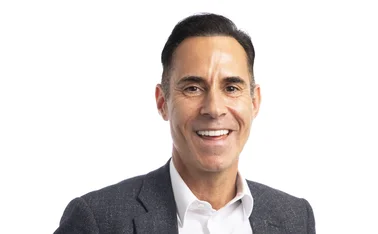
Broking Success: Vista Insurance Brokers’ CEO Gavin Ruben – leader of PE niches
Gavin Ruben, CEO of Vista Insurance Brokers, has set out the goal of becoming the leader of its specialist mergers and acquisitions insurance niche, along with the other parts of the firm’s 2035 ambitions.