

The cost of pollution - who pays?
The Bartoline v Royal and SunAlliance court case has highlighted the need to manage environmental risk policies with care
The 'polluter pays' principle is now well established, both in law and the calculations of underwriters. The principle requires the person responsible for pollution to clean it up, or if not, at least to pay for the cost of the clean-up. What is not always clear is whether the clean-up costs will be covered by the insurance policy.
In Bartoline v Royal and SunAlliance, the High Court held that the particular wording in the defendant insurer's policy did not cover the Environment Agency's clean-up costs. The claim followed a massive explosion and fire at the claimant's factory in East Yorkshire, which led to chemicals entering a nearby watercourse. The EA carried out remediation works and sent the claimant a bill for £622,000. The claimant also carried out works themselves, at a cost of £148,000.
The policy provided an indemnity "against legal liability for damages". The claimant passed on the bill to the defendant, saying that the EA's costs were covered by that term. The defendant disagreed, and the dispute found its way to the High Court.
The judge decided the word "damages" meant some form of recompense following an actionable wrong. It did not include the EA's clean-up costs, which were a statutory debt.
He rejected the claimant's argument that the policy term should be seen in a wider "commercial" context. Accordingly, the claimant had to pay the EA from its own resources. The court also held that the policy did not require the insurers to indemnify the claimant for their own costs, even though they had been required by the notice.
While this is good news for insurers, for insureds and brokers advising them the Bartoline case is not so welcome. However, it does illustrate the need to think carefully about possible environmental liabilities, and to manage environmental risk. The new environmental liability regime can impose expensive responsibilities on companies. It also illustrates the need to check policy wording carefully. Some policies undoubtedly will include cover for EA costs. If a PL policy does not cover the EA's costs and other environmental liabilities, there are other policies that are specifically designed to do so.
This will not, however, be the last word on the matter - the case is due to go before the Court of Appeal in October 2007.
Tom Corrigan, partner
Michael Feakes, associate
Commercial and property risks group, Beachcroft LLP.
Only users who have a paid subscription or are part of a corporate subscription are able to print or copy content.
To access these options, along with all other subscription benefits, please contact info@insuranceage.co.uk or view our subscription options here: https://subscriptions.insuranceage.co.uk/subscribe
You are currently unable to print this content. Please contact info@insuranceage.co.uk to find out more.
You are currently unable to copy this content. Please contact info@insuranceage.co.uk to find out more.
Copyright Infopro Digital Limited. All rights reserved.
As outlined in our terms and conditions, https://www.infopro-digital.com/terms-and-conditions/subscriptions/ (point 2.4), printing is limited to a single copy.
If you would like to purchase additional rights please email info@insuranceage.co.uk
Copyright Infopro Digital Limited. All rights reserved.
You may share this content using our article tools. As outlined in our terms and conditions, https://www.infopro-digital.com/terms-and-conditions/subscriptions/ (clause 2.4), an Authorised User may only make one copy of the materials for their own personal use. You must also comply with the restrictions in clause 2.5.
If you would like to purchase additional rights please email info@insuranceage.co.uk
More on Regulation

Which? demands ban on brokers charging high motor APRs
Which? has named and shamed motor insurance brokers charging high interest rates on monthly policies and called for a ban on the practice.

No ‘particular targets’ for insurance regulation simplification, says FCA
Consumer Duty will be a building block for any future work on the simplification of insurance regulations that affect brokers, according to David Geale, executive director of consumers, payments and competition at the Financial Conduct Authority.

FCA kicked off financial year with improved authorisation service bar one outlier
The Financial Conduct Authority has upped its game on authorisation service levels in categories affecting brokers, with improvements in four areas, but one notable outlier where the performance dipped.

FCA alerts of Kent-based broker clone
Quotemetoday.co.uk has made clear it has no affiliation with Quote Me Go as the Financial Conduct Authority has reported fraudsters have been impersonating the Kent-headquartered broker.
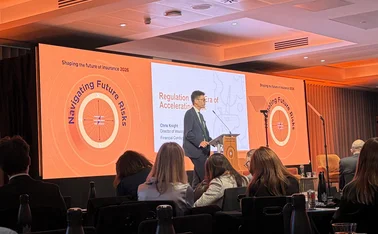
FCA’s Knight updates on cyber insurance report
Chris Knight, director of insurance at the FCA, has updated on the progress of its report into the take up of cyber insurance, and how the regulator has to keep pace with technological advancements.
Growing FCA attestation appetite a warning for brokers
The Financial Conduct Authority has increased the level of attestation requests dished out to insurance firms in recent years, and the serious regulatory tool is one brokers need to keep a keen eye on according to compliance specialists.

Why insurer oversight cannot become another regulatory box-ticking exercise
With regulatory workloads continuing to grow and the FCA maintaining its focus on customer outcomes, Insurance DataLab co-founder Matt Scott explains why brokers need a practical, evidence-led approach to insurer oversight.

FCA cancels insurance distribution business’ permissions
The Financial Conduct Authority cancelled Professional Liability Network’s permission to carry out regulated activities on 11 September 2026.