

Qualified successes
Demand for graduates in the industry is starting to outstrip supply. Mira Butterworth investigates what brokers and insurers like so much about college-leavers, and what steps they are taking to attract and keep them
The insurance industry is keen to attract more graduates to its ranks - but latest figures from one leading recruitment agency suggest that the number of good-quality candidates who have been through university is in decline.
Companies in the industry need to fight back and take steps to combat this trend according to Robert Charles, associate director of the general insurance division at recruitment consultants Joslin Rowe. Charles suggests many large insurance companies have been reducing their graduate programme in recent years because of cost. "There has been a period of consolidation in the industry, which has inevitably included a host of redundancies. Combine this with the money lost by Lloyd's in the 1990s, and you can see why the industry has taken its eye off the ball in terms of recruitment," he says.
Historically, insurance has always lost out to other parts of the financial services industry in terms of attracting the highest number of graduates. "Sadly, insurance has been given a rather 'non-sexy' image," says Charles.
Standards of achievement
The drop in 'good-quality' applicants coming into the insurance industry has been noticeable in the past three to four years, according to Joslin Rowe. It defines such applicants as graduates with two to three years' experience in their first job who are looking for a move up the career ladder in insurance.
"There are a number of excellent graduates in the industry - but, overall, they do not make better employees," argues Charles. "For example, someone who has a degree in geography is not more likely to make a good professional indemnity account handler. I am not saying they may not be good, but an individual with an A-level education may do equally well."
Most of the requests that the agency receives for graduates are concentrated between June and September, when college-leavers come onto the job market. But outside these months, requests tend to be just on a one-off basis, rather than for a batch of four or five graduates. Depending on the vacant position, Joslin Rowe also gets requests for A-level students. However, if the job is a client-focused role or an underwriting position, then the company seeking the employee tends to request a graduate, on the grounds that they are better educated and, as such, usually more confident.
Gaining an industry qualification such as the ACII exam is becoming increasingly beneficial to applicants because of FSA regulations, argues Charles. If individuals can become qualified at whatever job they do, it will only prove good in the long term in terms of credibility, he says.
Each company has its own recruitment policy and so there will always be certain companies that will only recruit graduates, and others that will consider those with other qualifications. Charles concludes: "In my job, I see equally good poorly educated individuals as I do well-educated individuals. At the end of the day, insurance is a people business - it's about relationship-building and looking after people in the long term. It is not like banking, where deals and trades are made every day with hundreds of different people. Insurance is a '12-months' industry, because nearly every company insures over that time-frame. It is about tying people in to the long term. To do that, you have to have the personality to attract clients to stick with you; and education does not give you personality."
Training programmes
Norwich Union has a graduate scheme that is open to both internal and external candidates. In order to be considered, applicants must have at least a 2:1 degree. The insurer says that it does not matter what subject the degree is in, because achieving this level in any discipline demonstrates that the candidate is able to learn, research and study in depth.
NU uses a variety of methods to recruit candidates, including the print media, online media (the most successful channel), career fairs and presentations at universities. A spokeswoman for the insurer agrees with Joslin Rowe that a graduate is not necessarily better in the same job than a non-graduate. However, she adds that graduates have a different skill-set and tend to take a fresh approach to issues, think differently and have a more questioning attitude.
Axa currently provides a graduate scheme for up to eight people a year. The programme is two years long with four six-month placements, during which graduates get to see as many areas of the firm as their personal development requires.
One of the group's current graduate employees, Richard Walker, explains that he took a year out to apply for jobs after gaining an economics degree at St Andrews University. Walker has worked in various departments at Axa over the past 18 months, including a placement in the financial planning team. He is currently working as a trainee account manager in Axa's personal lines intermediary team, working with its personal lines brokers.
"It's going really well," he says. "If you had asked me three years ago whether I would be working for an insurance company, I would have probably said no, but the graduate scheme is fantastic. There is a lot of flexibility to develop in areas that you are interested in."
He adds: "You get a lot of support. Perhaps this is because there are quite a few other employees who started out on the scheme, and so there is a lot of understanding about what the scheme is about. You are going to get some resentment in some places, but it is down to the individual to react appropriately. If you have a good work ethic then it is very difficult for someone to resent you."
Walker says he 'would debate' whether graduates get paid more, claiming he is in line with the others in the rest of the company. However, he adds: "The difference, perhaps, is that our prospects are better over the longer term. But anyone who wants to do well can drive their own personal development. The difference with graduates is that they are the type of people who will always drive themselves."
The issue of resentment
Judy Kelly of Intelligent Marketing says it is vital to manage graduates and those working around them properly. She says: "They are given a fast-track route to the top, but unless this process is managed properly, it can cause some disquiet with other employees and an air of resentment may come into the office.
"The other office employees see the bright young graduates, and see them being speeded up through the system and getting higher salaries. Graduates need to prove themselves by the way they react and behave to this. If a company has a graduate recruitment process, it has to be handled carefully or you run the risk of creating a 'them-and-us' situation. Employers need to explain what the graduates are doing - for example, to explain that part of a graduate's programme is to work in different departments.
"The graduates need to show that they are willing to listen to those around them, especially those with experience. You need a balance and a grass-roots approach, so that not just the graduates are managed properly but also those around them."
Why graduates?
John Mullin, managing director of Composite Legal Expenses, believes graduates are the way forward for the insurance industry because there are areas where substantial intellect and the ability to concentrate on wordings and details is needed.
"Someone with an English degree would fit in, but having a law or management degree is very important for us," he says. "The days of being able to ask people to work their way up are limited because of the hurdles in the way. People say they have had enough, or say that this is as far as they want to go. With graduates, you can put them in positions where they can take responsibility and be involved at the cutting edge of what you are doing."
He adds: "It is good if graduates can grow with the company while they are at university - or before they go to university. Then they will have an idea of what the business is about and have the time to think about what they want to do within the company, and what they can contribute to it."
Marsh also provides a graduate recruitment programme that offers a grounding in the risk and insurance business, as well as the opportunity to gain professional qualifications. The three to five year programme, run by a dedicated team, teaches essential business skills and knowledge, from insurance and finance to project management and sales, and from general industry knowledge to specific technical training.
"The emphasis is on the individual," explains a company spokeswoman. "From day one, all graduate trainees are treated as individuals with individual career paths. The team works closely with each one to ensure that they achieve career success and satisfaction. Through a mentoring and 'buddy' programme every graduate receives all the support, guidance and encouragement needed."
In addition, a graduate joins a specific department working with a manager and a team. Each graduate has the opportunity to undertake two secondments to broaden their experience before final placement.
There are a number of roles available for a graduate in the firm, all offering different types of professional experience. For example, trainees in broking get exposure to the London market as part of a professional team, while risk management gives them the chance to work with chief executives and development directors on specific cases.
A technical analysis role involves providing Marsh production services with a wide range of technical support, while graduates in the employee benefits consultancy work towards becoming professional business advisors. In risk consulting, graduates are able to work closely with clients to provide a range of risk consulting services, and as part of a new business project management team they are able to manage tender processes for broker reviews, while in a client development role they can help secure new business by prospecting target companies.
In the fourth or fifth year, graduates at Marsh are offered the chance to take part in a GAP & Community programme, which gives the opportunity to spend time doing voluntary work abroad. They are also offered financial support and study time, and are provide with financial rewards on successful completion of professional exams.
With training and competency standards in the industry being unilaterally dragged up by the bootlaces, thanks to the FSA, brokers would do well to cast their nets early to catch good-quality graduates - before they are enticed by the insurers.
Only users who have a paid subscription or are part of a corporate subscription are able to print or copy content.
To access these options, along with all other subscription benefits, please contact info@insuranceage.co.uk or view our subscription options here: https://subscriptions.insuranceage.co.uk/subscribe
You are currently unable to print this content. Please contact info@insuranceage.co.uk to find out more.
You are currently unable to copy this content. Please contact info@insuranceage.co.uk to find out more.
Copyright Infopro Digital Limited. All rights reserved.
As outlined in our terms and conditions, https://www.infopro-digital.com/terms-and-conditions/subscriptions/ (point 2.4), printing is limited to a single copy.
If you would like to purchase additional rights please email info@insuranceage.co.uk
Copyright Infopro Digital Limited. All rights reserved.
You may share this content using our article tools. As outlined in our terms and conditions, https://www.infopro-digital.com/terms-and-conditions/subscriptions/ (clause 2.4), an Authorised User may only make one copy of the materials for their own personal use. You must also comply with the restrictions in clause 2.5.
If you would like to purchase additional rights please email info@insuranceage.co.uk
More on Management

AUB completes Prestige deal
AUB Group has completed its acquisition of 95.9% of Prestige Insurance Holdings.

NFP buys Bspoke to expand its UK specialist insurance services
NFP, an Aon company, has purchased Bspoke Insurance Group to strengthen its existing suite of insurance solutions while expanding technical underwriting expertise and specialist product knowledge.
Yutree outlines plans after MBO
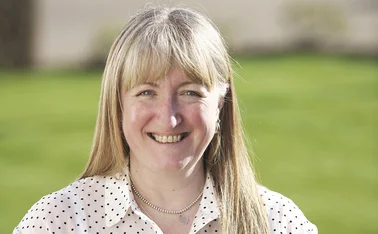
Laura Hancock, managing director of Yutree Insurance has outlined plans for the future following a management buyout, including opening an office in Norwich.

Should you sell your broking business to an Employee Ownership Trust?
Tax-efficient exit strategies and staff incentivisation have become hot topics among broker leaders since the recent increases in Capital Gains Tax and Employer National Insurance. In the second part of a series focused on the fallout from the 2024 Labour Budget, Catherine Heyes examines how broker owners can use Employee Ownership Trusts to respond to these developments.

Chaucer CUO named new CII president
Nicola Stacey, chief underwriting officer at Chaucer, has been elected the new president of the Chartered Insurance Institute.

Montagu agrees to sell Open GI to minority shareholder Ares
Ares Management is set to acquire Open GI, with the deal signed on 9 August 2024, Insurance Age can exclusively reveal.

“Nobody came close to AUB” – CEO Cheesbrough on Movo’s new investor
The Movo Group is looking to create larger broking hubs and kickstart its directly authorised network Fusion after AUB took an 80% equity stake, according to Lea Cheesbrough, Movo Partnership CEO.
Ex-Ardonagh MD Barclay takes over as CEO of top 100 broker
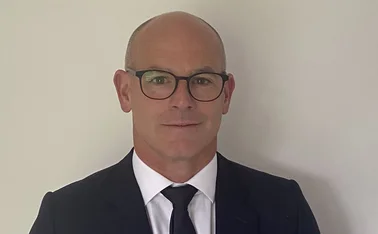
Lycetts has appointed Ian Barclay to CEO, succeeding Charles Foster who is retiring after seven years in the role.