

Where did all the good grads go?
Insurance is suffering as the well of talent coming in dries up and the skills gap widens. Marcus Alcock looks at the industry's recruitment failures and what is being done to address the problem
If there is one issue guaranteed to draw vociferous criticism from brokers far and wide then it is the issue of a skills shortage within the industry. Talk to any self-respecting broker that remembers the days of Commercial Union and Sedgwick and they will tell you 'things ain't what they used to be, m'lad'.
There is no doubt about it, the insurance broking sector is suffering from a serious skills shortage, and this is caused in no small part by its failure to take on board decent graduates and train them up. The question must be asked of how much of this sort of talk is simply rose-tinted romanticism, and is the broking industry really failing to get the right people it needs to prosper these days?
As far as Mark Grice, a partner at Mazars, was concerned, there is no doubt that a problem does exist: "The insurance industry does not come across to a graduate as a sexy place in which to work, but the focus should be on how important insurance is to the economy and the fact that you can be doing really interesting and challenging stuff. Unfortunately, peoples' perception of the industry is so different from the reality - most people just think of life insurance and don't get further than that.
"This was an industry that has not tried that hard to attract graduates, however, the largest organisations now have graduate programmes. Everyone recognises that there is going to be a shortage of good talent in the future, so it is important that brokers and insurers up their game."
Nicholas Burrell is a director at specialist insurance recruitment agency IPS Group. As far as he could see, the real problem is a lack of opportunities. "I'm actually quite passionate about this issue," he declared. "I was in discussions with the Association of British Insurers at one stage in an attempt to get them to understand the problem, which is not so much about getting good graduates but making the jobs available for them in the first place. Everyone's talking about getting good people into the industry, but there just doesn't seem to be the jobs available to them. In my opinion it is a real catch-22 situation.
"Brokers and underwriters have been reluctant historically to train someone from scratch. Everyone wants the second jobber; someone they can pinch from someone else without having to do the training themselves."
He added that the situation had been quite different in the past, with the likes of Willis, Sedgwick and Commercial Union all offering "fantastic" graduate programmes that were curtailed as a result of the recession of the early 1990s and that have never really recovered since, with only a few people taken on each year.
He remarked: "It's a shame, because many of the people that will have been taken on as a result of these programmes are now the cream of the crop in insurance and will be in senior positions within their respective companies."
Asked if there are there any decent programmes today, Burrell argued: "People telling you they have programmes probably weren't around in the 1980s. A company will maybe take on a half-dozen people a year, whereas in the past they would have taken on 50. Nobody wants to take the initiative here, but if one organisation decides to start a good programme today then I suppose the others might follow. Maybe they just don't have the opportunities available as they once did."
Is the appetite really there from graduates in the way it once was, though? As far as Burrell was concerned, it is difficult to tell: "We used to get a lot of enquiries, but the numbers have diminished because we will have to charge a fee and the brokers and insurers don't want to pay a fee for someone they see as not knowing anything."
The programmes may not be what they were, but some organisations are taking graduate recruitment seriously again. Claire Hollingsworth, is the resourcing manager at Aon responsible for graduate recruitment, which she said had been running in a structured way only relatively recently in the UK: "We have three different graduate recruitment programmes, one of which is our insurance and risk management programme that covers all of our insurance industries including reinsurance.
"It has been running since 2000 and has been developing ever since. It was set up to find gaps in talent initially, but more recently we've developed it to find the leaders of the future. All of the recruitment, assessment and development is based on our leadership model."
She explained that 14 people were taken on for this year's scheme that started in September and that the company recruits throughout the UK, advertising in graduate periodicals such as Prospect and Insight Careers. Hollingsworth added that Aon focuses on careers fairs and skills workshops as well as universities, concentrating the company's recruitment efforts on people with business modules built into their degrees.
She said: "We're attempting quite a targeted approach, but we definitely don't just target redbrick universities. It's not just about academic achievements; graduates need to be more marketable to the industry. That's not to say we don't like traditional degrees, as someone could be doing a history degree but could be developing the right skills we're looking for as part of that degree, for example.
"In one form or another, we need to get fresh talent into the industry. We are aware that it's not just about graduates; we might even extend the scheme to encompass schools leavers or second jobbers. The potential is huge, it could grow to cover more of Europe in time."
The features of Aon's graduate trainee scheme include a central development programme involving acquisition of basic technical knowledge such as the Lloyd's test, as well as core modules such as an introduction to business, presentation skills and project planning. Hollingsworth commented: "After (the scheme), graduates will be placed with different parts of the business and do secondments within different units, such as a placement within marine and a placement within natural resources. They get to see the end-to-end procedure. It takes 12 months at the moment but we're thinking of extending it to 18 so that when they finish the programme they will be a well-placed professional that is ready to hit the ground running."
She continued, explaining that Aon is trying to build its brand on campus but is aware that this should not be just about raising awareness of her company: "The insurance industry is not an automatic career choice for graduates, so we're focusing on building up the industry's image in general. We've signed up to the Chartered Insurance Institute's Talent Initiative and will be supporting the body's forthcoming event in Manchester."
Launched in October 2006, this initiative is the central plank of the CII's offering at the moment and the CII claims that it has already made an impact with university graduates. As evidence it cites its website, www.insurancecareers.co.uk, which has seen over 50,000 unique visits and over 1,600 students registered. Since its launch, the so-called Talent Taskforce has made four presentations at leading UK universities and attended eight careers fairs. The Talent Initiative's first major event, Know Risk: The Big Event, was billed as the first insurance-only careers event.
One of the insurers supporting the CII initiative is Groupama, another company that has only recently gone back into the graduate recruitment market seriously, according to its corporate services director, Paul Picknett: "I've written a few times on the subject because I think we're a staid industry with a real image problem. I really applaud the efforts of the CII to give a better image than before because I think it's a real uphill battle."
Of his own company, Picknett said: "We've dipped into the graduate recruitment market this year for the first time in many. It has been a pleasant surprise; we're going to go back into the market this year. The reason we went away from it was that we went through a number of restructurings over the years so it didn't seem appropriate to go to the graduate market, but we now in a different stage of development.
"Last Friday I took some graduate recruits to Paris and it went extremely well. Now I know it's not everything, but just as an example, one of the young women said that our head office was one of the nicest she had ever visited."
Personal visits to universities are not such a high priority to him these days: "I have three sons who are aged between 20 and 24 and if I look at what they've done, it's more the virtual milk round that's important. So much of it is done on the net at the moment. We did that and received 400 responses, and of the five we've taken on three of them ended up getting firsts at Russell Group universities. It was nice that they chose us!"
Even though companies like Aon and Groupama may feel pleased with their schemes, such programmes are far from widespread throughout an industry that, even at the top level, cannot compete with many of its financial services cousins, especially in financial terms. As Neil Coulson, a partner at CLB Littlejohn Frazer pointed out: "Just look at Lloyd's. I get the feeling that it's not necessarily getting the brightest and best graduates. It's just not a career that people think of - they all seem to look at investment banking."
Still, Paul Picknett felt that it is not simply a question of money: "We've benchmarked our salary against our peer groups. The issue is more that insurance isn't sexy, but what we've said to our graduates is that there are many disciplines within insurance."
Looking forward, it seems difficult to predict that the situation is going to change overnight, and it would be optimistic to suppose that the industry is ever going to return the sort of large-scale graduate recruitment it once embarked upon as a matter of course. But one should not necessarily be too despondent; a look at what the likes of Aon and Groupama are doing should give reason for good cheer. In the wider sphere, the fact that the CII now devotes considerable resources to this very issue could well have far-reaching repercussions. What is undeniable is that, in recent years, this area of concern has fostered a growing dialogue within the industry as it becomes self-evident that more needs to be done. The chairman of Lloyd's, Lord Levene, highlighted this very problem only recently, and with figures such as he speaking out it can only add to the pressure for change.
Ultimately, it will be up to the industry to decide whether or not it is happy to spout more rhetoric or whether it is actually prepared to make the sort of time and money available to invest seriously in graduate recruitment once more.
Only users who have a paid subscription or are part of a corporate subscription are able to print or copy content.
To access these options, along with all other subscription benefits, please contact info@insuranceage.co.uk or view our subscription options here: https://subscriptions.insuranceage.co.uk/subscribe
You are currently unable to print this content. Please contact info@insuranceage.co.uk to find out more.
You are currently unable to copy this content. Please contact info@insuranceage.co.uk to find out more.
Copyright Infopro Digital Limited. All rights reserved.
As outlined in our terms and conditions, https://www.infopro-digital.com/terms-and-conditions/subscriptions/ (point 2.4), printing is limited to a single copy.
If you would like to purchase additional rights please email info@insuranceage.co.uk
Copyright Infopro Digital Limited. All rights reserved.
You may share this content using our article tools. As outlined in our terms and conditions, https://www.infopro-digital.com/terms-and-conditions/subscriptions/ (clause 2.4), an Authorised User may only make one copy of the materials for their own personal use. You must also comply with the restrictions in clause 2.5.
If you would like to purchase additional rights please email info@insuranceage.co.uk
More on Management

AUB completes Prestige deal
AUB Group has completed its acquisition of 95.9% of Prestige Insurance Holdings.

NFP buys Bspoke to expand its UK specialist insurance services
NFP, an Aon company, has purchased Bspoke Insurance Group to strengthen its existing suite of insurance solutions while expanding technical underwriting expertise and specialist product knowledge.
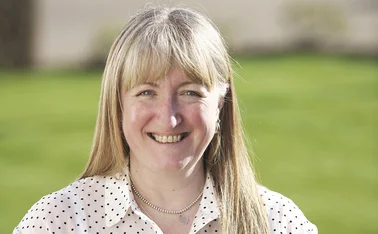
Yutree outlines plans after MBO
Laura Hancock, managing director of Yutree Insurance has outlined plans for the future following a management buyout, including opening an office in Norwich.

Should you sell your broking business to an Employee Ownership Trust?
Tax-efficient exit strategies and staff incentivisation have become hot topics among broker leaders since the recent increases in Capital Gains Tax and Employer National Insurance. In the second part of a series focused on the fallout from the 2024 Labour Budget, Catherine Heyes examines how broker owners can use Employee Ownership Trusts to respond to these developments.
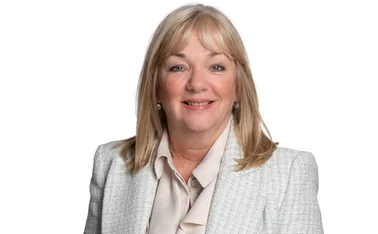
Chaucer CUO named new CII president
Nicola Stacey, chief underwriting officer at Chaucer, has been elected the new president of the Chartered Insurance Institute.

Montagu agrees to sell Open GI to minority shareholder Ares
Ares Management is set to acquire Open GI, with the deal signed on 9 August 2024, Insurance Age can exclusively reveal.

“Nobody came close to AUB” – CEO Cheesbrough on Movo’s new investor
The Movo Group is looking to create larger broking hubs and kickstart its directly authorised network Fusion after AUB took an 80% equity stake, according to Lea Cheesbrough, Movo Partnership CEO.
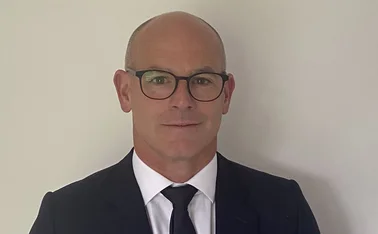
Ex-Ardonagh MD Barclay takes over as CEO of top 100 broker
Lycetts has appointed Ian Barclay to CEO, succeeding Charles Foster who is retiring after seven years in the role.