

News Analysis - Conferences: Prime Minister announces £200m university and enterprise link

This year's Chartered Management Institute and Confederations of Business Industry conferences pulled in the big hitters as business leaders attended to work out how best to plan for the period of austerity ahead.
Dragons' Den's James Caan was a surprise guest at the CMI and told managers that he was holding investment tight until the end of the year, though expects to spend more money in 2011. A CMI survey revealed the greatest business concern at the conference from managers was the cost of energy. Employment disputes have also become increasingly concerning over the last year-and-a-half.
Bric exports
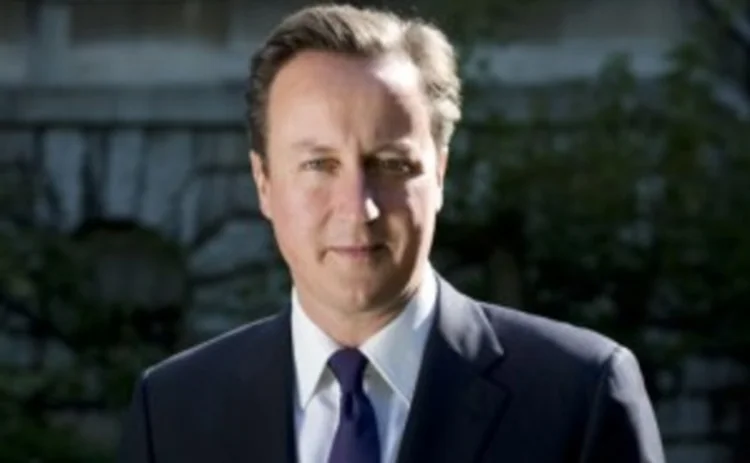
The highest-profile speaker at the CBI conference was the Prime Minister, who spelled out a plan to increase exports to the Bric countries, saying that our share of exports to China and India was just 3.2% of GDP. David Cameron said that he wanted to get behind "those industries in which Britain enjoys competitive advantages" such as "creative industries…retail, pharmaceuticals and advanced engineering".
Cameron also spoke of wanting to support entrepreneurs in young, high-growth companies and backing "the big businesses of tomorrow". In order to help, the government will invest £200m in what it calls Technology and Innovation Centres, which will bring together universities and businesses, such as in Orgreave, where the University of Sheffield, Rolls Royce and Boeing have tied up. Cameron confirmed that up to £60m would be spent on developing ports to provide infrastructure to support wind farms.
The Prime Minister was followed by Paul Martin, former Prime Minister of Canada, who oversaw dramatic spending cuts in the mid-1990s and spoke about the difficulties of cutting spending: "Getting the public onside is one thing, keeping them onside is quite another. Within four years, the deficit was no more and we had started generating substantial surpluses; we used that to pay down debt and invest in areas that would enable us to build a stronger economy." Martin noted that Canada's economy had benefited from a revival in the US economy.
Banking reform
Banks were on the minds of all the speakers. At the CBI, Labour party leader Ed Miliband proposed a radical look at the banking system and the case for "new models of ownership in the banking sector", welcoming the idea of a small-business bank. Miliband also said that government needed to help industries such as manufacturing and to grow talent to attract new industries.
Meanwhile, business secretary Vince Cable, who is already overseeing a review of the banking sector, said that he wanted to gather evidence on pay, corporate governance and takeovers. He asked how remuneration for chief executive officers grew 15% each year from 1999-2008 whereas average earnings growth over that period was only 4% while the FTSE fell a total of 3%. Cable emphasised the importance of long-term decision-making and questioned the mindset of fund managers, who remain focused on the short term.
Helen Alexander, president of the CBI, chairman of PB's publisher Incisive Media and a member of Cameron's advisory council, said that the purpose of business was to create "prosperity for all of us". She also called for taxation to help create jobs, arguing that increasing private sector jobs by 0.5% a year would pick up the slack from looming public sector cuts.
Following these lively conferences, business managers will be in no doubt, as they form their companies' strategies, that big change is in the air.
Only users who have a paid subscription or are part of a corporate subscription are able to print or copy content.
To access these options, along with all other subscription benefits, please contact info@insuranceage.co.uk or view our subscription options here: https://subscriptions.insuranceage.co.uk/subscribe
You are currently unable to print this content. Please contact info@insuranceage.co.uk to find out more.
You are currently unable to copy this content. Please contact info@insuranceage.co.uk to find out more.
Copyright Infopro Digital Limited. All rights reserved.
As outlined in our terms and conditions, https://www.infopro-digital.com/terms-and-conditions/subscriptions/ (point 2.4), printing is limited to a single copy.
If you would like to purchase additional rights please email info@insuranceage.co.uk
Copyright Infopro Digital Limited. All rights reserved.
You may share this content using our article tools. As outlined in our terms and conditions, https://www.infopro-digital.com/terms-and-conditions/subscriptions/ (clause 2.4), an Authorised User may only make one copy of the materials for their own personal use. You must also comply with the restrictions in clause 2.5.
If you would like to purchase additional rights please email info@insuranceage.co.uk
More on Management

AUB completes Prestige deal
AUB Group has completed its acquisition of 95.9% of Prestige Insurance Holdings.

NFP buys Bspoke to expand its UK specialist insurance services
NFP, an Aon company, has purchased Bspoke Insurance Group to strengthen its existing suite of insurance solutions while expanding technical underwriting expertise and specialist product knowledge.
Yutree outlines plans after MBO
Laura Hancock, managing director of Yutree Insurance has outlined plans for the future following a management buyout, including opening an office in Norwich.

Should you sell your broking business to an Employee Ownership Trust?
Tax-efficient exit strategies and staff incentivisation have become hot topics among broker leaders since the recent increases in Capital Gains Tax and Employer National Insurance. In the second part of a series focused on the fallout from the 2024 Labour Budget, Catherine Heyes examines how broker owners can use Employee Ownership Trusts to respond to these developments.
Chaucer CUO named new CII president
Nicola Stacey, chief underwriting officer at Chaucer, has been elected the new president of the Chartered Insurance Institute.

Montagu agrees to sell Open GI to minority shareholder Ares
Ares Management is set to acquire Open GI, with the deal signed on 9 August 2024, Insurance Age can exclusively reveal.

“Nobody came close to AUB” – CEO Cheesbrough on Movo’s new investor
The Movo Group is looking to create larger broking hubs and kickstart its directly authorised network Fusion after AUB took an 80% equity stake, according to Lea Cheesbrough, Movo Partnership CEO.
Ex-Ardonagh MD Barclay takes over as CEO of top 100 broker
Lycetts has appointed Ian Barclay to CEO, succeeding Charles Foster who is retiring after seven years in the role.