

Legal - Compensation Claims: Seeing sense on compensation culture


The law regarding risk perception, negligence, responsibility and compensation is about to undergo a massive overhaul, writes Andrew Parker.
The title of Lord Young's report, Common Sense, Common Safety, is indicative of a no-nonsense approach to tackling the perception of risk in society. The report is endorsed by the Prime Minister and has the full backing of the cabinet, so it should not be taken lightly.
Critics say that the proposals around compensation are too broad brush: full implementation of the Jackson Review on civil costs, including removing recovery of success fees and after-the-event premiums; restrictions or a complete ban on high-pressure advertising techniques by claims farmers and lawyers; an end to selling injury claims for referral fees; extension of the Ministry of Justice's new RTA claims process into all fast-track accident claims. Others have accused Lord Young of talking up a compensation culture that exists only in the eyes of the media, yet the very reasons why he was asked to produce this report are clear to many every day through adverts in newspapers, on radio and TV, as well as texts and e-mails soliciting claims.
Dose of reality
In truth, it is high time that people were discouraged from believing that every incident should lead automatically to a claim. As the Prime Minister said often before the general election: "We simply cannot go on like this."
Compensation culture is not the sole focus of the report, which also aims to remove "senseless rules" that inhibit volunteering and introduce more proportionate risk assessment for low-risk businesses.
Arguably, we have been here before. Some of the proposals on claims farmers and on the law of negligence echo the words of former Prime Minister Tony Blair in speeches leading up to The Compensation Act (2006). There is a need to revisit these issues though, learning the lessons from 2006 and the astonishing growth of claims farmers since they were regulated.
The referral fees debate will roll on: the Legal Services Board has indicated that there is nothing wrong with them but fails to consider how a lawyer can find up to £1,000 from fees generated by a claim to pay to an intermediary without any obvious advantage to the client. An enlightened view of consumer interest is to accept that the £1,000 does not all need to be in the system in the first place so that other consumers, those who pay insurance premiums, do not lose out.
The end of Lord Young's report sets out an ambitious timetable for full implementation by April 2012. That date is not coincidental: there is a real imperative to ensure his recommendations are in place before the London Olympics so that the thousands of volunteers needed to make the games a success are not deterred by fear of claims farmers and petty claims.
Andrew Parker is head of strategic litigation at Beachcroft.
Only users who have a paid subscription or are part of a corporate subscription are able to print or copy content.
To access these options, along with all other subscription benefits, please contact info@insuranceage.co.uk or view our subscription options here: https://subscriptions.insuranceage.co.uk/subscribe
You are currently unable to print this content. Please contact info@insuranceage.co.uk to find out more.
You are currently unable to copy this content. Please contact info@insuranceage.co.uk to find out more.
Copyright Infopro Digital Limited. All rights reserved.
As outlined in our terms and conditions, https://www.infopro-digital.com/terms-and-conditions/subscriptions/ (point 2.4), printing is limited to a single copy.
If you would like to purchase additional rights please email info@insuranceage.co.uk
Copyright Infopro Digital Limited. All rights reserved.
You may share this content using our article tools. As outlined in our terms and conditions, https://www.infopro-digital.com/terms-and-conditions/subscriptions/ (clause 2.4), an Authorised User may only make one copy of the materials for their own personal use. You must also comply with the restrictions in clause 2.5.
If you would like to purchase additional rights please email info@insuranceage.co.uk
More on Regulation

Which? demands ban on brokers charging high motor APRs
Which? has named and shamed motor insurance brokers charging high interest rates on monthly policies and called for a ban on the practice.

No ‘particular targets’ for insurance regulation simplification, says FCA
Consumer Duty will be a building block for any future work on the simplification of insurance regulations that affect brokers, according to David Geale, executive director of consumers, payments and competition at the Financial Conduct Authority.

FCA kicked off financial year with improved authorisation service bar one outlier
The Financial Conduct Authority has upped its game on authorisation service levels in categories affecting brokers, with improvements in four areas, but one notable outlier where the performance dipped.

FCA alerts of Kent-based broker clone
Quotemetoday.co.uk has made clear it has no affiliation with Quote Me Go as the Financial Conduct Authority has reported fraudsters have been impersonating the Kent-headquartered broker.
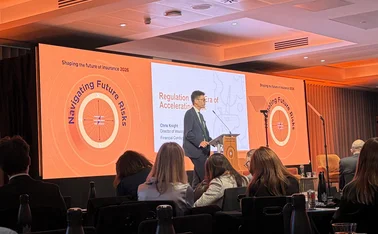
FCA’s Knight updates on cyber insurance report
Chris Knight, director of insurance at the FCA, has updated on the progress of its report into the take up of cyber insurance, and how the regulator has to keep pace with technological advancements.
Growing FCA attestation appetite a warning for brokers
The Financial Conduct Authority has increased the level of attestation requests dished out to insurance firms in recent years, and the serious regulatory tool is one brokers need to keep a keen eye on according to compliance specialists.

Why insurer oversight cannot become another regulatory box-ticking exercise
With regulatory workloads continuing to grow and the FCA maintaining its focus on customer outcomes, Insurance DataLab co-founder Matt Scott explains why brokers need a practical, evidence-led approach to insurer oversight.

FCA cancels insurance distribution business’ permissions
The Financial Conduct Authority cancelled Professional Liability Network’s permission to carry out regulated activities on 11 September 2026.