

Handling grievances

Q. I am unclear on how to deal with grievance complaints. Can you advise?
Often a grievance will be resolved informally by line managers but if the employee is contemplating a tribunal claim, or has resigned and intends to claim constructive dismissal, they must ensure that they follow the statutory grievance procedure laid down in the 2004 Dispute Resolution Regulations. They must set out their grievance in writing.
Any written complaint should be regarded as a potential grievance, even if the employee does not ask for the formal procedure to be invoked. The employer should discuss the grievance with the employee and inform the employee's right to appeal.
Not part of the statutory grievance procedures, but under separate legislation, the employee has the right to be accompanied by a fellow employee or a trade union representative. It is advised that the decision should be given to the employee in writing. The meeting should be held within 28 days of the grievance being received.
The employer should then carry out an investigation. This may conclude the grievance is well-founded, in whole or in part, or the employer should indicate on what grounds he finds the grievance to be not substantiated. The employee can then appeal. The appeal should be heard by a different manager, with the same right to be accompanied, and a conclusion given to the employee in writing. This will complete the statutory procedure but the employer's own grievance procedure may have additional steps.
Where a former employee raises a grievance after their employment has ended - typically a constructive dismissal claim - the Regulations provide for a 'modified' grievance procedure. This does not require a meeting to be held - the employer can respond in writing to the grievance. Both parties have to agree for the modified procedure to be followed. Thus, an employer is within his rights to reject the request.
Employees who have been dismissed have a right of appeal against their dismissal, but they do not have to exercise that right in order to bring a tribunal claim.
Failing to respond to a grievance in compliance with the statutory procedures will not in itself be grounds for a tribunal claim but tribunal awards for constructive dismissal or discrimination, for example, can be increased by up to 50% if the employer has not complied with the relevant procedures.
The regulations permit the time limit, for an employee to bring a tribunal claim, to be extended in order for a grievance to be lodged. These rules are complex and tax even the experts. Tribunal claims can now be presented up to six months after a resignation or an alleged incident of discrimination.
There is a fundamental reason for dealing with grievances promptly and efficiently - an aggrieved employee is a potential disaster waiting to upset a client.
Only users who have a paid subscription or are part of a corporate subscription are able to print or copy content.
To access these options, along with all other subscription benefits, please contact info@insuranceage.co.uk or view our subscription options here: https://subscriptions.insuranceage.co.uk/subscribe
You are currently unable to print this content. Please contact info@insuranceage.co.uk to find out more.
You are currently unable to copy this content. Please contact info@insuranceage.co.uk to find out more.
Copyright Infopro Digital Limited. All rights reserved.
As outlined in our terms and conditions, https://www.infopro-digital.com/terms-and-conditions/subscriptions/ (point 2.4), printing is limited to a single copy.
If you would like to purchase additional rights please email info@insuranceage.co.uk
Copyright Infopro Digital Limited. All rights reserved.
You may share this content using our article tools. As outlined in our terms and conditions, https://www.infopro-digital.com/terms-and-conditions/subscriptions/ (clause 2.4), an Authorised User may only make one copy of the materials for their own personal use. You must also comply with the restrictions in clause 2.5.
If you would like to purchase additional rights please email info@insuranceage.co.uk
More on Regulation

Which? demands ban on brokers charging high motor APRs
Which? has named and shamed motor insurance brokers charging high interest rates on monthly policies and called for a ban on the practice.

No ‘particular targets’ for insurance regulation simplification, says FCA
Consumer Duty will be a building block for any future work on the simplification of insurance regulations that affect brokers, according to David Geale, executive director of consumers, payments and competition at the Financial Conduct Authority.

FCA kicked off financial year with improved authorisation service bar one outlier
The Financial Conduct Authority has upped its game on authorisation service levels in categories affecting brokers, with improvements in four areas, but one notable outlier where the performance dipped.

FCA alerts of Kent-based broker clone
Quotemetoday.co.uk has made clear it has no affiliation with Quote Me Go as the Financial Conduct Authority has reported fraudsters have been impersonating the Kent-headquartered broker.
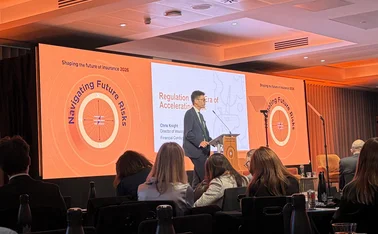
FCA’s Knight updates on cyber insurance report
Chris Knight, director of insurance at the FCA, has updated on the progress of its report into the take up of cyber insurance, and how the regulator has to keep pace with technological advancements.
Growing FCA attestation appetite a warning for brokers
The Financial Conduct Authority has increased the level of attestation requests dished out to insurance firms in recent years, and the serious regulatory tool is one brokers need to keep a keen eye on according to compliance specialists.

Why insurer oversight cannot become another regulatory box-ticking exercise
With regulatory workloads continuing to grow and the FCA maintaining its focus on customer outcomes, Insurance DataLab co-founder Matt Scott explains why brokers need a practical, evidence-led approach to insurer oversight.

FCA cancels insurance distribution business’ permissions
The Financial Conduct Authority cancelled Professional Liability Network’s permission to carry out regulated activities on 11 September 2026.