

Health and Safety - Rules of the house

I will be employing two home-based brokers. Are there any rules regarding their health and safety welfare that I need to consider?
We live in a 24-7 world. Work can require employees to be left alone and isolated, and although not always obvious it can prevent risks. Lone working may be defined as any work activity intended to be carried out in isolation from other workers by an individual or a small team of people. Examples include those that work at a fixed site, e.g. at home; those separate from others; those working from remote locations; those that work outside normal hours; and those travelling as part of their work.
There are no specific legal duties on employers in relation to lone working, however the general duty of employers to maintain safe working arrangements under the Health and Safety at Work Act (1974) applies. The HSE advises employers that they have a legal duty to ensure enough is done to protect employees that work alone.
Hazards that lone workers can encounter include accidents or emergencies arising from the work, sudden illnesses, inadequate provision of rest, hygiene and welfare facilities as well as stress. Employers must maintain safe working arrangements and, under Regulation 3 of the Management of Health and Safety at Work Regulations, carry out a risk assessment of the hazards to which their employees are exposed, such as ensuring equipment is safe. A further follow-up risk assessment should be carried out six months later and repeated every 12 months, unless there are significant changes.
If someone works from home at a remote location then you should take into account how long the work takes and how frequently the worker reports in if the employee has a safe means of travel to and from the location, especially out of normal hours. Thought should also be given to whether or not there is access to adequate rest, hygiene, refreshment, welfare and first aid facilities, as well as the provision for emergency services to approach the location without hindrance. Procedures for responding to worst-case emergencies should be in place.
Appropriate conditions should be available to those employees required to work alone as part of their normal duties. The conditions that necessitate review and should be afforded to these employees are: a safe means to entry and exit to the workplace; adequate illumination, heating and ventilation for the job to be carried out; that all equipment, such as computers, can be used safely; that lifting operations can be performed safely by one person and finally that fire precautions are sufficient to meet the demands of the job.
Appropriate communications should be maintained with the lone worker, especially when continual supervision is required. The lone worker should be equipped with a means of two-way communication, a pager or a personal alarm or, at the very least, a mobile phone. Ideally some kind of instant alarm should be available.
- Peter Done, managing director, Peninsula.
If you would like to ask a question to our Management Clinic panel please contact editor Andrew Tjaardstra at andrew.tjaardstra@incisivemedia.com.
Only users who have a paid subscription or are part of a corporate subscription are able to print or copy content.
To access these options, along with all other subscription benefits, please contact info@insuranceage.co.uk or view our subscription options here: https://subscriptions.insuranceage.co.uk/subscribe
You are currently unable to print this content. Please contact info@insuranceage.co.uk to find out more.
You are currently unable to copy this content. Please contact info@insuranceage.co.uk to find out more.
Copyright Infopro Digital Limited. All rights reserved.
As outlined in our terms and conditions, https://www.infopro-digital.com/terms-and-conditions/subscriptions/ (point 2.4), printing is limited to a single copy.
If you would like to purchase additional rights please email info@insuranceage.co.uk
Copyright Infopro Digital Limited. All rights reserved.
You may share this content using our article tools. As outlined in our terms and conditions, https://www.infopro-digital.com/terms-and-conditions/subscriptions/ (clause 2.4), an Authorised User may only make one copy of the materials for their own personal use. You must also comply with the restrictions in clause 2.5.
If you would like to purchase additional rights please email info@insuranceage.co.uk
More on Regulation

Which? demands ban on brokers charging high motor APRs
Which? has named and shamed motor insurance brokers charging high interest rates on monthly policies and called for a ban on the practice.

No ‘particular targets’ for insurance regulation simplification, says FCA
Consumer Duty will be a building block for any future work on the simplification of insurance regulations that affect brokers, according to David Geale, executive director of consumers, payments and competition at the Financial Conduct Authority.

FCA kicked off financial year with improved authorisation service bar one outlier
The Financial Conduct Authority has upped its game on authorisation service levels in categories affecting brokers, with improvements in four areas, but one notable outlier where the performance dipped.

FCA alerts of Kent-based broker clone
Quotemetoday.co.uk has made clear it has no affiliation with Quote Me Go as the Financial Conduct Authority has reported fraudsters have been impersonating the Kent-headquartered broker.
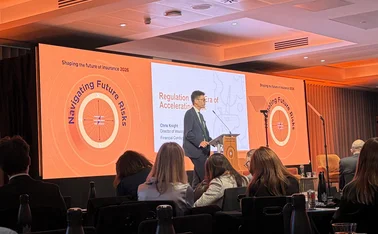
FCA’s Knight updates on cyber insurance report
Chris Knight, director of insurance at the FCA, has updated on the progress of its report into the take up of cyber insurance, and how the regulator has to keep pace with technological advancements.
Growing FCA attestation appetite a warning for brokers
The Financial Conduct Authority has increased the level of attestation requests dished out to insurance firms in recent years, and the serious regulatory tool is one brokers need to keep a keen eye on according to compliance specialists.

Why insurer oversight cannot become another regulatory box-ticking exercise
With regulatory workloads continuing to grow and the FCA maintaining its focus on customer outcomes, Insurance DataLab co-founder Matt Scott explains why brokers need a practical, evidence-led approach to insurer oversight.

FCA cancels insurance distribution business’ permissions
The Financial Conduct Authority cancelled Professional Liability Network’s permission to carry out regulated activities on 11 September 2026.