

CPD from the school of Spitzer
The festive season promises to bring some much-needed light relief for the industry, from mulling ov...
The festive season promises to bring some much-needed light relief for the industry, from mulling over the implications of Spitzer, the impending switch-on of state regulation and where rate softening will end. But, before raiding the hamper to briefly escape such things, it should be remembered that the industry has seen some encouraging developments during 2004.
While rates have generally softened this year, 2004 saw the industry continue to enjoy profitability. And there are several factors, such as reinsurers' balance sheets and keeping shareholders furnished with dividends, that arguably make rates look reasonably stable for the time being.
Also, in the year that Folgate made its gazillionth acquisition, an impressive amount of work has been undertaken by the industry to comply with the incoming regulators requirements; something that many hope and believe will bring greater levels of professionalism and help improve the image of an industry that, in many ways, has got it but doesn't flaunt it. Commingling was finally agreed and the government, too, made increasingly positive noises in recognition of the compensation culture. The recent comments by Constitutional Affairs Secretary Lord Falconer, who cited new government measures to combat the growing problem, is surely welcome progress (see p10).
But, the closing comment at the end of my first year as editor would be incomplete without mention of Spitzer - one of the biggest events ever to affect the insurance industry, according to Lloyd's US chief Wendy Baker (see p20) But, seemingly like so many things in insurance, this may be a bitter pill and one that brokers seem increasingly resigned to as an opportunity to build client trust for the future. Marsh UK chief executive officer Bruce Carnegie-Brown has urged brokers to communicate values and strategies clearly and address inefficiencies because the industry has been traditionally bad at this (see p6).
Brokers are resignedly starting to nod in agreement that what Spitzer has started may lead to a needed and widespread purging. In last month's PB opinion poll, which asked: Will the Marsh fallout have an impact on UK brokers? A resounding 65% voted 'yes'.
It maybe some time before this bitter-tasting medicine acts as an elixir for the industry but, if there is a genuine desire for it to become more professional - and recognised as such - I certainly hope to be able to recap further encouraging developments this time next year.
Only users who have a paid subscription or are part of a corporate subscription are able to print or copy content.
To access these options, along with all other subscription benefits, please contact info@insuranceage.co.uk or view our subscription options here: https://subscriptions.insuranceage.co.uk/subscribe
You are currently unable to print this content. Please contact info@insuranceage.co.uk to find out more.
You are currently unable to copy this content. Please contact info@insuranceage.co.uk to find out more.
Copyright Infopro Digital Limited. All rights reserved.
As outlined in our terms and conditions, https://www.infopro-digital.com/terms-and-conditions/subscriptions/ (point 2.4), printing is limited to a single copy.
If you would like to purchase additional rights please email info@insuranceage.co.uk
Copyright Infopro Digital Limited. All rights reserved.
You may share this content using our article tools. As outlined in our terms and conditions, https://www.infopro-digital.com/terms-and-conditions/subscriptions/ (clause 2.4), an Authorised User may only make one copy of the materials for their own personal use. You must also comply with the restrictions in clause 2.5.
If you would like to purchase additional rights please email info@insuranceage.co.uk
More on Regulation

Which? demands ban on brokers charging high motor APRs
Which? has named and shamed motor insurance brokers charging high interest rates on monthly policies and called for a ban on the practice.

No ‘particular targets’ for insurance regulation simplification, says FCA
Consumer Duty will be a building block for any future work on the simplification of insurance regulations that affect brokers, according to David Geale, executive director of consumers, payments and competition at the Financial Conduct Authority.

FCA kicked off financial year with improved authorisation service bar one outlier
The Financial Conduct Authority has upped its game on authorisation service levels in categories affecting brokers, with improvements in four areas, but one notable outlier where the performance dipped.

FCA alerts of Kent-based broker clone
Quotemetoday.co.uk has made clear it has no affiliation with Quote Me Go as the Financial Conduct Authority has reported fraudsters have been impersonating the Kent-headquartered broker.
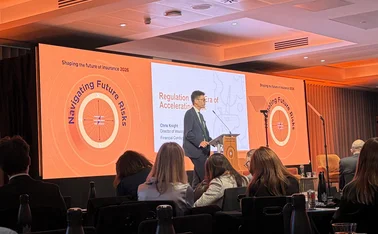
FCA’s Knight updates on cyber insurance report
Chris Knight, director of insurance at the FCA, has updated on the progress of its report into the take up of cyber insurance, and how the regulator has to keep pace with technological advancements.

Growing FCA attestation appetite a warning for brokers
The Financial Conduct Authority has increased the level of attestation requests dished out to insurance firms in recent years, and the serious regulatory tool is one brokers need to keep a keen eye on according to compliance specialists.

Why insurer oversight cannot become another regulatory box-ticking exercise
With regulatory workloads continuing to grow and the FCA maintaining its focus on customer outcomes, Insurance DataLab co-founder Matt Scott explains why brokers need a practical, evidence-led approach to insurer oversight.

FCA cancels insurance distribution business’ permissions
The Financial Conduct Authority cancelled Professional Liability Network’s permission to carry out regulated activities on 11 September 2026.