

Why whine about Spitzer?
The Post-Enron corporate mistrust in the US is the climate in which Eliot Spitzer has brought his in...
The Post-Enron corporate mistrust in the US is the climate in which Eliot Spitzer has brought his investigation into Marsh. But where there is a lack of detailed information, speculation incriminates everyone.
Perhaps, to use an ungainly analogy, this is the '9/11 mentality' - it has happened there so it is bound to happen here. But surely the vast majority of insurers and brokers in the UK have been limbering up for such a challenge through the painstaking process of preparing for regulation under the Financial Services Authority. And while further clarity from the regulator on what is included under inducements - i.e. are profit share and volume overriders included? - a body of opinion is growing to suggest that it is the abuse of such competitive incentives that is the real problem - not these age-old practices in themselves (see p5).
Could some comfort be taken in the UK's nationwide regulatory standards, as the US has a much more fragmented approach to regulation with standards differing from state to state?
While it is undoubtedly true that large premiums may attract greater temptations, this surely fixes the parameters of Spitzer's righteous spotlight on the top tier. What he believes to be an industry-wide, institutionalised problem may turn out not only to be localised to conglomerate organisations but to one particular family that runs three of the largest.
Another problem with trying to translate events in the US to the UK is that the market here is a more open and competitive one compared with the US, where major risks are dominated by just two brokers. It is within these particular market dynamics that the alleged bullying of insurers for upfront sweeteners has occurred.
Moderate scrutiny of Spitzer's personal/political agenda reveals other dynamics and drivers that are absent in the UK; it is in his interest to go about things in a noisy, publicity-seeking manner, as he obviously wants to be re-elected.
After the initial and inevitably frenzied reception the issue has received in the UK, many are giving way to scepticism about the transferability of Spitzer-type concerns to the market here.
However, despite all these differences, which show a direct translation of the issues to the UK is fraught, the FSA is now under pressure from insurers whose chief executives feel nervous about being accused of similar misconduct under the new regime from January. And, while the regulator declines to make clear exactly what it will be watching for, nerves and speculation will reign.
Only users who have a paid subscription or are part of a corporate subscription are able to print or copy content.
To access these options, along with all other subscription benefits, please contact info@insuranceage.co.uk or view our subscription options here: https://subscriptions.insuranceage.co.uk/subscribe
You are currently unable to print this content. Please contact info@insuranceage.co.uk to find out more.
You are currently unable to copy this content. Please contact info@insuranceage.co.uk to find out more.
Copyright Infopro Digital Limited. All rights reserved.
As outlined in our terms and conditions, https://www.infopro-digital.com/terms-and-conditions/subscriptions/ (point 2.4), printing is limited to a single copy.
If you would like to purchase additional rights please email info@insuranceage.co.uk
Copyright Infopro Digital Limited. All rights reserved.
You may share this content using our article tools. As outlined in our terms and conditions, https://www.infopro-digital.com/terms-and-conditions/subscriptions/ (clause 2.4), an Authorised User may only make one copy of the materials for their own personal use. You must also comply with the restrictions in clause 2.5.
If you would like to purchase additional rights please email info@insuranceage.co.uk
More on Regulation

Which? demands ban on brokers charging high motor APRs
Which? has named and shamed motor insurance brokers charging high interest rates on monthly policies and called for a ban on the practice.

No ‘particular targets’ for insurance regulation simplification, says FCA
Consumer Duty will be a building block for any future work on the simplification of insurance regulations that affect brokers, according to David Geale, executive director of consumers, payments and competition at the Financial Conduct Authority.

FCA kicked off financial year with improved authorisation service bar one outlier
The Financial Conduct Authority has upped its game on authorisation service levels in categories affecting brokers, with improvements in four areas, but one notable outlier where the performance dipped.

FCA alerts of Kent-based broker clone
Quotemetoday.co.uk has made clear it has no affiliation with Quote Me Go as the Financial Conduct Authority has reported fraudsters have been impersonating the Kent-headquartered broker.
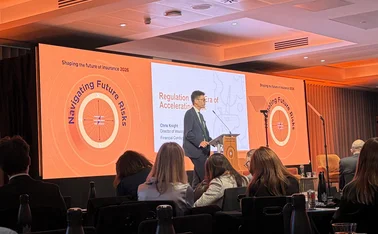
FCA’s Knight updates on cyber insurance report
Chris Knight, director of insurance at the FCA, has updated on the progress of its report into the take up of cyber insurance, and how the regulator has to keep pace with technological advancements.

Growing FCA attestation appetite a warning for brokers
The Financial Conduct Authority has increased the level of attestation requests dished out to insurance firms in recent years, and the serious regulatory tool is one brokers need to keep a keen eye on according to compliance specialists.

Why insurer oversight cannot become another regulatory box-ticking exercise
With regulatory workloads continuing to grow and the FCA maintaining its focus on customer outcomes, Insurance DataLab co-founder Matt Scott explains why brokers need a practical, evidence-led approach to insurer oversight.

FCA cancels insurance distribution business’ permissions
The Financial Conduct Authority cancelled Professional Liability Network’s permission to carry out regulated activities on 11 September 2026.