

Better lobbying leads to government action
Insurance has gradually climbed higher on the present government's agenda than at any other time during its term of office
The insurance industry seems to be having a good run with government.
I have little doubt that some of the recent encouraging signs have much to do with the huge rise in the cost of insurance over the last couple of years, which has forced the availability/affordability argument to the forefront.
Stephen Byers recently lashed out at the perceived effects of the compensation culture in no uncertain terms and this was followed up by the Education Secretary, Charles Clarke, speaking at one of the teachers' union conferences over Easter. If fear of being sued pushes us any further towards a risk-averse society, it seems clear that the government will step in with some further reforms to the civil justice system designed to deter excessive or speculative claims.
Rehabilitation is a subject that the insurance industry has been trying to engage government on for several years. Now it looks to be making serious progress.
The Department for Work and Pensions has issued a draft proposal on vocational rehabilitation, which is a start. Again, this was driven by concerns over pricing and availability and springs from the DWP's review of difficulties in the employers' liability market.
For years, the Association of British Insurers has been lobbying to have insurance fraud made a specific criminal offence - last month this came a significant step closer.
The Home Office wants to tighten up on financial fraud and, while stopping short of creating a specific offence of insurance fraud, has produced a set of proposals that go further than anyone in the industry could have hoped.
While difficult to pin down the reason for the government's change of heart, better lobbying, with major insurers adding their weight to the ABI's better co-ordinated efforts, clearly plays a role. Ministers have stopped seeing the insurance industry as a regulatory problem and started to look at what it does and the way it does it, thus, it appears to be getting a fair hearing.
We have certainly come a long way since Helen Liddell's post-election agenda in 1997 to 'name and shame' major firms for their part in the pensions mis-selling scandal.
Only users who have a paid subscription or are part of a corporate subscription are able to print or copy content.
To access these options, along with all other subscription benefits, please contact info@insuranceage.co.uk or view our subscription options here: https://subscriptions.insuranceage.co.uk/subscribe
You are currently unable to print this content. Please contact info@insuranceage.co.uk to find out more.
You are currently unable to copy this content. Please contact info@insuranceage.co.uk to find out more.
Copyright Infopro Digital Limited. All rights reserved.
As outlined in our terms and conditions, https://www.infopro-digital.com/terms-and-conditions/subscriptions/ (point 2.4), printing is limited to a single copy.
If you would like to purchase additional rights please email info@insuranceage.co.uk
Copyright Infopro Digital Limited. All rights reserved.
You may share this content using our article tools. As outlined in our terms and conditions, https://www.infopro-digital.com/terms-and-conditions/subscriptions/ (clause 2.4), an Authorised User may only make one copy of the materials for their own personal use. You must also comply with the restrictions in clause 2.5.
If you would like to purchase additional rights please email info@insuranceage.co.uk
More on Regulation

Which? demands ban on brokers charging high motor APRs
Which? has named and shamed motor insurance brokers charging high interest rates on monthly policies and called for a ban on the practice.

No ‘particular targets’ for insurance regulation simplification, says FCA
Consumer Duty will be a building block for any future work on the simplification of insurance regulations that affect brokers, according to David Geale, executive director of consumers, payments and competition at the Financial Conduct Authority.

FCA kicked off financial year with improved authorisation service bar one outlier
The Financial Conduct Authority has upped its game on authorisation service levels in categories affecting brokers, with improvements in four areas, but one notable outlier where the performance dipped.

FCA alerts of Kent-based broker clone
Quotemetoday.co.uk has made clear it has no affiliation with Quote Me Go as the Financial Conduct Authority has reported fraudsters have been impersonating the Kent-headquartered broker.
FCA’s Knight updates on cyber insurance report
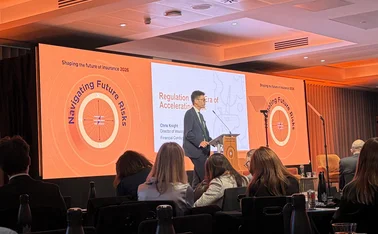
Chris Knight, director of insurance at the FCA, has updated on the progress of its report into the take up of cyber insurance, and how the regulator has to keep pace with technological advancements.
Growing FCA attestation appetite a warning for brokers
The Financial Conduct Authority has increased the level of attestation requests dished out to insurance firms in recent years, and the serious regulatory tool is one brokers need to keep a keen eye on according to compliance specialists.

Why insurer oversight cannot become another regulatory box-ticking exercise
With regulatory workloads continuing to grow and the FCA maintaining its focus on customer outcomes, Insurance DataLab co-founder Matt Scott explains why brokers need a practical, evidence-led approach to insurer oversight.

FCA cancels insurance distribution business’ permissions
The Financial Conduct Authority cancelled Professional Liability Network’s permission to carry out regulated activities on 11 September 2026.