

Treating staff fairly

Q. Our workforce includes staff who are hard of hearing. Following the fire safety legislation changes recently introduced how do I take this into consideration?
Deaf people are often overlooked in emergency evacuation procedures, which could expose them to unnecessary risks. In most premises fire warning or alarm systems generally have no provision for persons who are hearing impaired and do not employ flashing beacons or other methods to alert persons with hearing difficulties.
Deafness is one of the most common disabilities, affecting around 15% of the population. Couple that with the fact that more than 100 000 fires occur in premises each year, you can see that the risks posed to deaf people are very high.
The commencement of the Regulatory Reform (Fire Safety) Order on 1 October 2006 placed a duty on the 'responsible person' to carry out a risk assessment of their premises and implement any of the identified control measures required by their own findings of the assessment.
Alarms are a physical feature of a building and, therefore, in accordance with the 2004 Disability Discrimination Act, adjustments must be made to ensure the safety of deaf persons whilst on your premises and it should be remembered that they also need the protection of an emergency alarm.
Where there is a need to evacuate high-risk groups, personal evacuation plans are required. The PEP will identify a safe method to apply for the evacuation of an individual with a disability. This will be achieved by establishing the level of warning the person requires and an effective procedure for this person's safe means of escape.
If you have established a need to alter your premises or facilities, you must ensure the adjustments are made according to the correct standards and regulations. It is important to note that in applying the Disability Discrimination Act you should not overlook the requirements of any specific health and safety legislation and any adjustments needed should only be made if they do not affect health and safety or endanger others.
The installation of a fire alarm system, with equipment geared towards deaf people, will only comply with health and safety legislation if it conforms to the standards outlined in BS5839 - 1: Fire Detection and Alarm Systems for Buildings.
Guidance within BS5839 - 1 states that measures, other than those given in the standard, should be suitably assessed so that they do not put persons at risk. The completion of this assessment is required under the Management of Health and Safety at Work Regulations and the Regulatory Reform (Fire Safety) Order.
See the full answer at www.professionalbroking.com.
Only users who have a paid subscription or are part of a corporate subscription are able to print or copy content.
To access these options, along with all other subscription benefits, please contact info@insuranceage.co.uk or view our subscription options here: https://subscriptions.insuranceage.co.uk/subscribe
You are currently unable to print this content. Please contact info@insuranceage.co.uk to find out more.
You are currently unable to copy this content. Please contact info@insuranceage.co.uk to find out more.
Copyright Infopro Digital Limited. All rights reserved.
As outlined in our terms and conditions, https://www.infopro-digital.com/terms-and-conditions/subscriptions/ (point 2.4), printing is limited to a single copy.
If you would like to purchase additional rights please email info@insuranceage.co.uk
Copyright Infopro Digital Limited. All rights reserved.
You may share this content using our article tools. As outlined in our terms and conditions, https://www.infopro-digital.com/terms-and-conditions/subscriptions/ (clause 2.4), an Authorised User may only make one copy of the materials for their own personal use. You must also comply with the restrictions in clause 2.5.
If you would like to purchase additional rights please email info@insuranceage.co.uk
More on Regulation

Which? demands ban on brokers charging high motor APRs
Which? has named and shamed motor insurance brokers charging high interest rates on monthly policies and called for a ban on the practice.

No ‘particular targets’ for insurance regulation simplification, says FCA
Consumer Duty will be a building block for any future work on the simplification of insurance regulations that affect brokers, according to David Geale, executive director of consumers, payments and competition at the Financial Conduct Authority.

FCA kicked off financial year with improved authorisation service bar one outlier
The Financial Conduct Authority has upped its game on authorisation service levels in categories affecting brokers, with improvements in four areas, but one notable outlier where the performance dipped.

FCA alerts of Kent-based broker clone
Quotemetoday.co.uk has made clear it has no affiliation with Quote Me Go as the Financial Conduct Authority has reported fraudsters have been impersonating the Kent-headquartered broker.
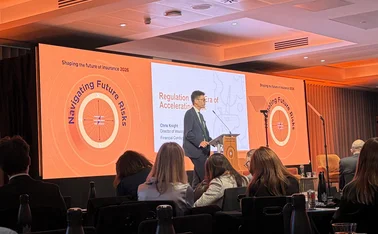
FCA’s Knight updates on cyber insurance report
Chris Knight, director of insurance at the FCA, has updated on the progress of its report into the take up of cyber insurance, and how the regulator has to keep pace with technological advancements.
Growing FCA attestation appetite a warning for brokers
The Financial Conduct Authority has increased the level of attestation requests dished out to insurance firms in recent years, and the serious regulatory tool is one brokers need to keep a keen eye on according to compliance specialists.

Why insurer oversight cannot become another regulatory box-ticking exercise
With regulatory workloads continuing to grow and the FCA maintaining its focus on customer outcomes, Insurance DataLab co-founder Matt Scott explains why brokers need a practical, evidence-led approach to insurer oversight.

FCA cancels insurance distribution business’ permissions
The Financial Conduct Authority cancelled Professional Liability Network’s permission to carry out regulated activities on 11 September 2026.