

A delicate claims balancing act
New proposals to tackle the crisis in the employers' liability market are a step in the right direction but whether they go far enough remains to be seen
The insurance industry will be asking whether the lobbying was all worthwhile, following the publication by the Department of Work and Pensions of its proposals for tackling the problems in the employers' liability market. The proposals are more limited in scope and ambition than many had hoped, especially on the issues surrounding the funding of long-term disease claims.
It is two years since the market went into spasm when the years of heavy losses and spiralling claims costs collided with the aftershock of the 11 September loss.
The DWP suspected elements of this crisis were short term and that the market was under-going a correction, albeit a drastic one. Its faith in the ability of a free market to correct itself and find a new equilibrium seems to have been justified.
The EL market is still there and most employers can find cover. Government and industry concern is now focused on whether that equilibrium has settled at too high a level and should be lowered through government intervention.
This gives context to the proposals the DWP has produced, which are almost all aimed at reducing the cost of claims.
Most of the proposals are relatively uncontroversial. No one is going to argue against the high-profile endorsement of rehabilitation or the further encouragement of non-confrontational methods for settling claims.
The bite comes with the proposal for a fixed legal fee regime for workplace accidents. This has been welcomed by insurers but bitterly attacked as premature (at best) by claimant solicitors.
The DWP is right to focus its proposals on claims because the proportion of payouts soaked up in legal fees is, frankly, obscene.
If this doesn't work, the government will probably return to the issues of separating accident claims from long-term disease claims, something the insurance industry is keen to keep on the agenda. And it is not hard to see why. It would only take one more significant addition to the menu of long-term diseases to unbalance the fragile new equilibrium in the EL market.
Only users who have a paid subscription or are part of a corporate subscription are able to print or copy content.
To access these options, along with all other subscription benefits, please contact info@insuranceage.co.uk or view our subscription options here: https://subscriptions.insuranceage.co.uk/subscribe
You are currently unable to print this content. Please contact info@insuranceage.co.uk to find out more.
You are currently unable to copy this content. Please contact info@insuranceage.co.uk to find out more.
Copyright Infopro Digital Limited. All rights reserved.
As outlined in our terms and conditions, https://www.infopro-digital.com/terms-and-conditions/subscriptions/ (point 2.4), printing is limited to a single copy.
If you would like to purchase additional rights please email info@insuranceage.co.uk
Copyright Infopro Digital Limited. All rights reserved.
You may share this content using our article tools. As outlined in our terms and conditions, https://www.infopro-digital.com/terms-and-conditions/subscriptions/ (clause 2.4), an Authorised User may only make one copy of the materials for their own personal use. You must also comply with the restrictions in clause 2.5.
If you would like to purchase additional rights please email info@insuranceage.co.uk
More on Regulation

Which? demands ban on brokers charging high motor APRs
Which? has named and shamed motor insurance brokers charging high interest rates on monthly policies and called for a ban on the practice.

No ‘particular targets’ for insurance regulation simplification, says FCA
Consumer Duty will be a building block for any future work on the simplification of insurance regulations that affect brokers, according to David Geale, executive director of consumers, payments and competition at the Financial Conduct Authority.

FCA kicked off financial year with improved authorisation service bar one outlier
The Financial Conduct Authority has upped its game on authorisation service levels in categories affecting brokers, with improvements in four areas, but one notable outlier where the performance dipped.

FCA alerts of Kent-based broker clone
Quotemetoday.co.uk has made clear it has no affiliation with Quote Me Go as the Financial Conduct Authority has reported fraudsters have been impersonating the Kent-headquartered broker.
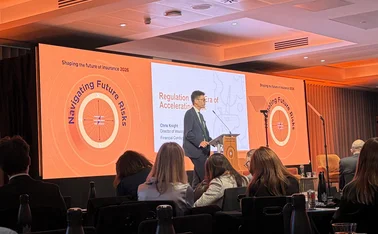
FCA’s Knight updates on cyber insurance report
Chris Knight, director of insurance at the FCA, has updated on the progress of its report into the take up of cyber insurance, and how the regulator has to keep pace with technological advancements.

Growing FCA attestation appetite a warning for brokers
The Financial Conduct Authority has increased the level of attestation requests dished out to insurance firms in recent years, and the serious regulatory tool is one brokers need to keep a keen eye on according to compliance specialists.

Why insurer oversight cannot become another regulatory box-ticking exercise
With regulatory workloads continuing to grow and the FCA maintaining its focus on customer outcomes, Insurance DataLab co-founder Matt Scott explains why brokers need a practical, evidence-led approach to insurer oversight.

FCA cancels insurance distribution business’ permissions
The Financial Conduct Authority cancelled Professional Liability Network’s permission to carry out regulated activities on 11 September 2026.