

The Green Interview: Building momentum for change
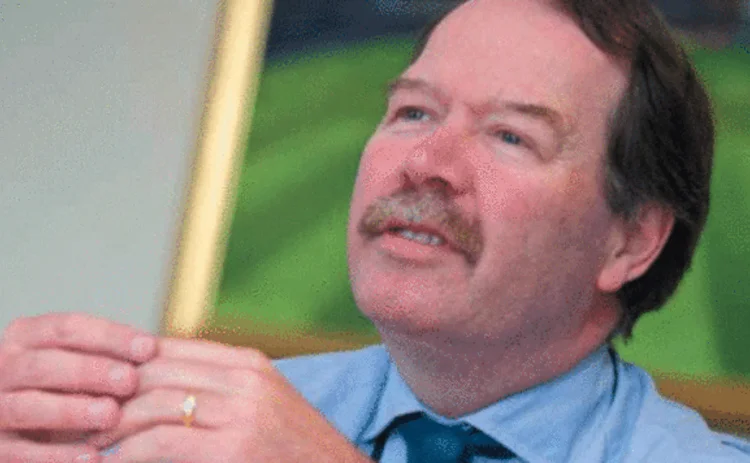

Andrew Tjaardstra speaks to Andrew Torrance, chief executive officer at Allianz and chairman of ClimateWise, about what the environmental organisation hopes to achieve and its radical proposals to last year's Copenhagen climate conference.
Tjaardstra: ClimateWise has a large membership of insurers, reinsurers and global brokers. Can smaller firms join?
Torrance: ClimateWise is happy to embrace both large and smaller organisations. For some of the smaller organisations, it's probably easier to become involved with ClimateWise through an industry association rather than off their own bats.
We are an inclusive church and ClimateWise has formed because insurers see themselves at the sharp end of climate change; it's something that benefits the whole industry. Through involvement and coming to understand more about the issues that climate change presents, it puts both insurers and potentially brokers in a better place to assist clients, which ultimately is what we're in business to do.
The core membership started off in Europe and we now have North American, African and Asian members as well.
Tjaardstra: ClimateWise put forward one of the most radical proposals to the Copenhagen conference (the global climate conference that took place in Denmark in 2009): 40% cuts in CO2 from 1990 levels by 2020 for over 90 developed countries and an 85% reduction by 2050. You take this extremely seriously: what are you basing the need for these cuts on?
Torrance: The figures are driven by climate science; it stems from a view that we should look to limit the rise in average global temperatures to 2°C relative to pre-industrial levels. The reason that we've chosen that 2°C point is that once you have change of above that point, you then run the risk of more unpredictable climatic developments, which could produce some catastrophic events such as sea-level rises.
Our view is that we want the rise in temperature limited to 2°C. If you then track back to say what cuts need to be made in greenhouse gas emissions to have about a 90% success in achieving that goal then you come to those figures that you just quoted at me.
Tjaardstra: Has ClimateWise come up with these figures collectively? Do all insurers agree with these targets?
Torrance: We're very careful about bringing our members on board; the ClimateWise membership approved that Copenhagen statement. I don't want to misrepresent this either because insurance companies are not stuffed full of climatologists. We really rely on reviewing the emerging science and the work that's done by bodies such as the Intergovernmental Panel on Climate Change: we're not in the business of looking to second-guess bodies like that, we don't have the technical competence to do so. That Copenhagen statement was based on the consensus view of the climate scientists, though.
Tjaardstra: Were you surprised that you were asking for the most radical cuts of everybody at the summit?
Torrance: They are not necessarily the most radical cuts. Some people within the environmental lobby say that 2°C is too high; they point out that, if we accept 2°C rising, you're going to lose some of the coral reefs around the world and that therefore we should be going for something that is closer to 1°C or 1.5°C.
Tjaardstra: When you say a 2°C rise from pre-industrial times, do you have a particular date in mind?
Torrance: I think temperatures have risen relative to pre-industrial times by between 0.5°C and 1°C [according to the Met Office: 0.75°C], so we're talking about a further 1.25°C relative to today.
Tjaardstra: So we are already on our way, but you want to cap that at 2°C?
Torrance: Yes. We already have continued temperature rises locked into the system from emitted carbon dioxide, so that's one reason why you now have to make stringent cuts if you're going to limit the further rise to this 2°C.
Tjaardstra: Has ClimateWise put forward specifics on how you would like to see that done?
Torrance: No. This is where government really has to provide a lead: they need to set targets and we need to have a global emissions-trading system so that you have a price for carbon. Governments need to establish a framework that enables the market to work, that provides the right economic signals and incentives for the private sector to develop the technological solutions necessary to achieve those emission reductions.
Tjaardstra: Are you encouraged by what you have seen so far from the UK?
Torrance: I think the UK has been one of the good guys in the whole climate change debate: the last government picked this up and ran quite aggressively with it. The new coalition government has some excellent policies and regards tacking climate change as a priority; if you look at the progress that the UK has made reducing its own greenhouse gas emissions, we are going to hit our Kyoto targets and we're one of the few western economies set to achieve that.
We're in a good place but, equally, the UK can't solve the problem alone and you have to look for a global solution. One of the things that has to be a concern of UK industry is that we must have a level playing field relative to the rest of the world.
Tjaardstra: Is this emissions trading what is known as the cap-and-trade system?
Torrance: At the moment, it's a European thing and you need the rest of the world to come on board with it. I think it is known as cap-and-trade in the US. The idea is to give emitters so many permits for carbon emissions and the number of permits reduces each year, with companies and people then allowed to trade those permits. We have that in Europe but it doesn't exist in the rest of the world.
Tjaardstra: Is there anything insurers can do to help clients cut carbon emissions?
Torrance: This falls outside what insurers have traditionally done. It's interesting because our engineering insurance business has an inspection service for plant that is required to have statutory inspections each year, so there's been an advisory element within that. Requirements were introduced for Energy Performance Certificates for commercial buildings at the point of sale two years ago. This is a requirement under EU legislation and part of that report gives the building owner a view as to how that energy efficiency can be improved.
Tjaardstra: Insurance has already taken a stance on flooding, flood defences and where they are built, yet what happens when buildings need to be rebuilt?
Torrance: All insurers are willing to talk to clients when buildings are being rebuilt in whatever circumstances. We are always alive to discussions with clients along the lines of how they want their buildings to be rebuilt. We're happy to research the extra costs involved in building with sustainable techniques and materials.
Again, it comes back to this notion of a level playing field: if some insurers are incurring those costs and others are not then that puts the first group at a disadvantage. The industry should try to put some data into place and then decide if it needs to engage with policymakers.
Tjaardstra: So you want that to come from government rather than have it in the insurance policy?
Torrance: It has to come from government. This notion of a level playing field for industry is very important; the industry can and should make the argument to government about what is a sensible set of regulations to put in place to improve the sustainability of the built environment over time.
It's something that government needs to act upon first, with the industry then responding to that new regulatory framework.
Tjaardstra: Have you seen improvement in newly built properties?
Torrance: New-build properties are much greener than the older equivalents. The sharper members of the commercial property industry are very alive to climate change. They realise that, looking at the buildings we are constructing today, they are investments that are going to be in place over decades, so in order to make them valuable and worthwhile, ensuring that they are green and sustainable buildings will make them more attractive in 25 years.
For more information, go to www.climatewise.org.uk.
Source: PB Green issue - August 2010
Only users who have a paid subscription or are part of a corporate subscription are able to print or copy content.
To access these options, along with all other subscription benefits, please contact info@insuranceage.co.uk or view our subscription options here: https://subscriptions.insuranceage.co.uk/subscribe
You are currently unable to print this content. Please contact info@insuranceage.co.uk to find out more.
You are currently unable to copy this content. Please contact info@insuranceage.co.uk to find out more.
Copyright Infopro Digital Limited. All rights reserved.
As outlined in our terms and conditions, https://www.infopro-digital.com/terms-and-conditions/subscriptions/ (point 2.4), printing is limited to a single copy.
If you would like to purchase additional rights please email info@insuranceage.co.uk
Copyright Infopro Digital Limited. All rights reserved.
You may share this content using our article tools. As outlined in our terms and conditions, https://www.infopro-digital.com/terms-and-conditions/subscriptions/ (clause 2.4), an Authorised User may only make one copy of the materials for their own personal use. You must also comply with the restrictions in clause 2.5.
If you would like to purchase additional rights please email info@insuranceage.co.uk
More on Broker

Broker Expo 2026: AI will kill off lazy brokers
Charlie Hicks, managing director of EIC Insurance Services Limited, has highlighted old-fashioned broking still has a “massive place” in today’s insurance market and can make a firm stand out compared to competitors. And added AI might benefit those brokers who do this.

Attis CEO insists it has not reached ‘end goal’ as it sets 2027 target
Top 100 insurance broker Attis has outlined plans to hit more than £20m in revenue in 2027, having revealed it is on track to exceed £16m by year-end.
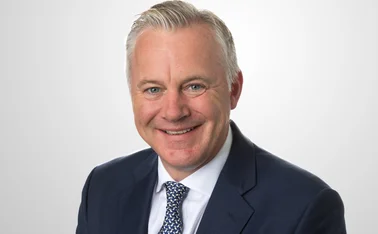
Seventeen Group recruits ex-Gallagher MD and Howden COO
Seventeen Group has appointed Stephen Smith as chief broking officer, overseeing broking and placement strategy across the group, including James Hallam and Touchstone Underwriting.
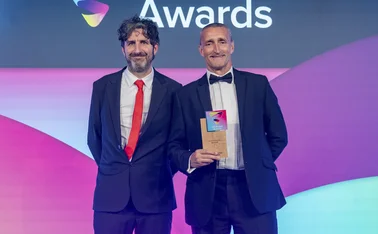
UK Broker Awards 2026: Full list of winners
Partners& was a triple winner and Everywhen’s outgoing CEO Rob Worrell was named Achievement Award winner at the UK Broker Awards last night.
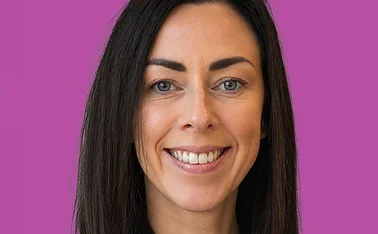
Laura Walker promoted to group chief operating officer at Markerstudy
Laura Walker has been appointed group chief operating officer at Markerstudy, a newly created role at the business.
Broker Expo 2026: Cyber uptake held back by lack of SME attack examples
Customers are using artificial intelligence to ask more challenging questions to brokers, as cyber attack education and examples are needed to tackle the lack of cyber insurance uptake.

Wholesaler launches with property and casualty binders
Wholesale broker Link2Market has launched, focusing on property and casualty, promising brokers direct and immediate access to capacity for non-standard risks that do not fit the traditional composite market.

Turnover up in Seventeen stake sale year but losses continued
Seventeen Group boosted its turnover by nearly 10% and trimmed losses in the year European mid-market private equity firm IK Partners bought a minority stake.