

A history of success
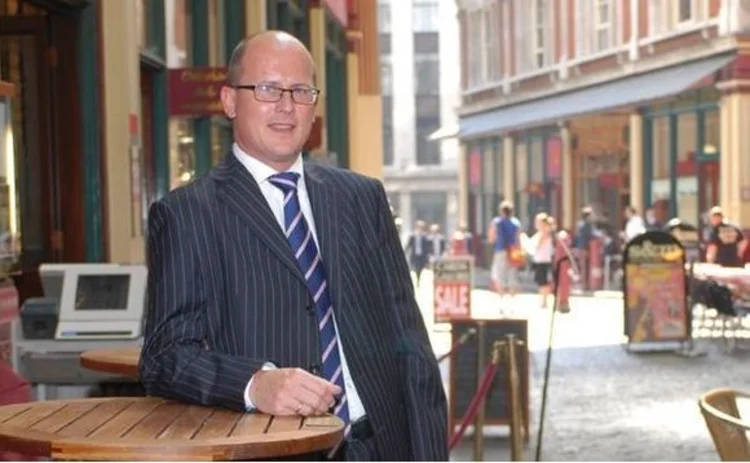

Griffiths and Armour has a rich history that has helped establish it as one of the best-regarded brokers among insurers, writes Andrew Tjaardstra.
In the 1930s, Kenneth Griffiths and George Armour saw an opportunity to set up a broker that differed from the predominantly marine-based Liverpool brokers. However, it was the financial services arm of the company that kept it afloat as the post-World War II economy demanded help in planning firms' pensions. A twist of fate transformed the business when Kenneth Griffith's cousin became chairman of the Association of Consulting Engineers in 1945; between this date and the late 1970s, business ticked over, with Griffiths and Armour sitting in the market as a scheme for the association's members' professional indemnity.
Then, a tide of litigation began to change things. Premiums went through the roof and PI went - according to Bamforth - from being a "backwater" to a "leading light". The broker subsequently reflected on what this meant for the industry and decided that it needed to spend more time analysing engineering errors and contract terms and conditions. The duo became members of the International Association of Engineers and experts in their field and, today, the firm helps to insure 3,000 construction companies, both PI and commercial combined from sole traders to firms with over £500m in revenue.
However, the result of this focus by the end of the 1980s was an imbalanced business, which would have been fine had the PI market hardened and construction boomed. Therein laid the danger of having too many eggs in the same basket and therefore, from the early 1990s, G&A began to invest in its corporate and commercial offerings. The move has proved a blessing in today's deteriorating construction market, where premiums have been too low for too long.
Director Steve Bamforth reflects: "We are going to see more claims because of the downturn. The construction PI insurance market has been a triumph of hope rather than expectation [as regards rates]. There is a timeline with the same cycles repeating; the market never seems to learn." He says that 2002 was particularly difficult because prices trebled.He is determined to be a "smoothing mechanism" between the highs and lows of insurers' pricing. He says that insurers should continue to underwrite more complicated risks individually but that a specialist broker can have a "better feel for pricing" with statistics that are "second to none". He also thinks that - as long as dual pricing for new business and renewals continues - the market will not harden and believes that only a large event will be enough to change this state of affairs.
One of the problems in broking for construction is its complexity and that, when times become tough, there is less money to lubricate the system, thus bringing increasing numbers of lawsuits. Bamforth cites mortgage fraud as a particular area in which a "cabal of conspirators" including mortgage brokers, surveyors and valuation consultants have defrauded banks and building societies by inflating the value of property and obtaining mortgages under false pretensions: seller A sells to buyer B, who then defaults on the mortgage.
Liverpool-fan Bamforth joined the broker as a graduate in 1986. An "amazing interview" with Mark Griffiths (Kenneth's son) led him to follow this "intriguing" and "different" opportunity where before he had been considering investment banking. In June 2003, he was nominated by Mark to become senior partner and chief executive officer and so, in this position, was able to begin to shape the company. He thought that G&A was over-complicated, so one of the first questions that he posed was 'what do we really do well?' The business was divided into wholesale, commercial, personal lines, a joint venture with Johannesburg and financial services. With such an expansive remit, the business did not fit with Bamforth's love of simplicity.
Having defined the company's strategic vision as "world class in insurance broking and risk management" and nothing else, he transferred G&A's personal lines book to Aviva, sold the non-PI wholesale operation to Cobra and made the company part of the London Markets operation. In addition, the financial services side was sold to London-based stockbrokers Charles Stanley just before the credit crunch began to become really serious. Bamforth now describes the leftovers as a "wonderfully simple" business.
Service over price
He says: "We are focused on excellence in client service. We aren't transactional and believe in long-term relationships. We don't have churn with portfolio transfers either. I believe the Financial Services Authority should be more alive to this; churning does meet the requirements of Treating Customers Fairly. We believe in selecting the best market for each client and producing the best policy wording; we cannot guarantee to be the cheapest." He continues: "We want to fully understand the risks and so have 10 in-house risk managers."
As for future growth, do not expect to receive a call from Bamforth anytime soon. Apart from one small office in Glasgow, all of G&A's satellite offices have been started from scratch. He says: "In the last five years, there has been an orderly queue to give us money but we thought we shouldn't follow the herd: you never buy what you think you are buying. We are not interested in borrowing and becoming a hostage to fortune. We [fewer than 20 current and former partners] own the business and there is a huge emotional investment." Instead, Bamforth wants to invest in people and is interested in recruiting those that want to join an organisation in which you are given freedom to service clients where they might otherwise feel constrained. Matt Donnelly and Richard Trotter both joined from Willis in Manchester 10 years ago and each has flourished. Bamforth also believes in giving all staff a bonus, wherever they work in the business. He highlights: "We are all in this together and wouldn't survive without administrative staff."
According to Bamforth, little has changed in G&A's pay structure despite tough times, although he reflects: "It's not great out there but, comparatively, we are not in a bad place. Next year is going to be worse than this one." He adds: "The crisis has gone from the derivatives side to banking and is flowing into the 'real world'. Most clients are on 12-month contracts and so the pain is being delayed." However, having had some recent FTSE 100 wins, he cites an ongoing flow of new business in the corporate division as a positive. In addition, the company won a tender with Liverpool City Council, which has led in turn to G&A becoming the broker for Sheffield city council as well as Birmingham's flagship NEC.
G&A also has transportation, infrastructure and property owners' business, with Aviva and RSA its first-choice insurers. With a preference for working close and deep with insurers, the broker also works with Zurich, Allianz, QBE, Markel, Amlin and Brit. Bamforth comments: "The market is not that big and you track your friends. There is a danger of us spreading ourselves too thinly."
Again showing his straightforward approach, he concludes: "Insurance broking is not that difficult and we like to do it very well."
Only users who have a paid subscription or are part of a corporate subscription are able to print or copy content.
To access these options, along with all other subscription benefits, please contact info@insuranceage.co.uk or view our subscription options here: https://subscriptions.insuranceage.co.uk/subscribe
You are currently unable to print this content. Please contact info@insuranceage.co.uk to find out more.
You are currently unable to copy this content. Please contact info@insuranceage.co.uk to find out more.
Copyright Infopro Digital Limited. All rights reserved.
As outlined in our terms and conditions, https://www.infopro-digital.com/terms-and-conditions/subscriptions/ (point 2.4), printing is limited to a single copy.
If you would like to purchase additional rights please email info@insuranceage.co.uk
Copyright Infopro Digital Limited. All rights reserved.
You may share this content using our article tools. As outlined in our terms and conditions, https://www.infopro-digital.com/terms-and-conditions/subscriptions/ (clause 2.4), an Authorised User may only make one copy of the materials for their own personal use. You must also comply with the restrictions in clause 2.5.
If you would like to purchase additional rights please email info@insuranceage.co.uk
More on Broker
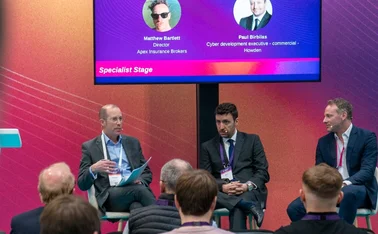
Broker Expo 2026: Don’t shy away from cyber
Experts at the Broker Expo urged delegates to keep plugging away on cyber amid the ongoing low level of uptake by SMEs.
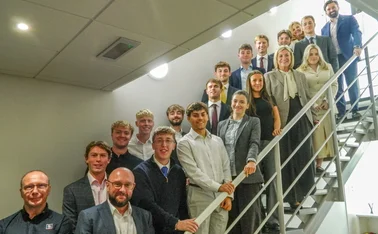
Brown & Brown UK launches retail graduate programme
Brown & Brown UK has launched a retail graduate programme starting with 16 participants.

From manual bordereaux to trading agility
Pricing can now change daily, but trading infrastructure hasn’t kept pace. Matt Wellman of Applied Systems explains why manual bordereaux must go.

Broker Expo 2026: Early and open conversations needed for brokers and underwriters to win
As the industry starts to lose its face-to-face culture, being open to early and open appetite conversations through different channels will be key to establishing good relationships between brokers and underwriters.

Howden names Richardson to new CCO role
Howden has appointed Elliot Richardson as chief commercial officer for the group, a newly created role at the broker.
Seventeen doubles down in Gibraltar with latest buy
Seventeen Group has bought Sovereign Insurance Services, striking its second deal in Gibraltar in recent months.
Broker Expo 2026: Days of Frankenstein’s Monster consolidation over
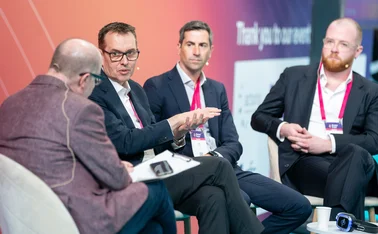
Broker consolidation is evolving from the ‘Frankenstein’s Monster’ approach of the past to one which is more focused on culture, integration and organic growth.

Ex-Ravenhall boss launches new broker Decello
Neil Grimshaw has opened commercial broker Decello in Huddersfield, labelling it a boutique ‘advice-led’ firm for businesses and private clients.