

Up close on personal
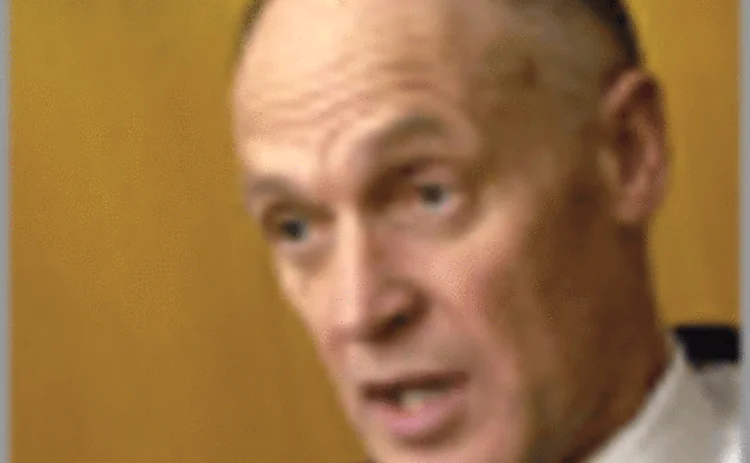
With Norwich Union's broker strategy thrust into the spotlight, Ken Wallace, head of intermediary business, talks to Richard Adams about the insurer's plans in an industry facing unprecedented change
Following the recent controversy surrounding the sale of Hill House Hammond, Norwich Union intermediary business director Ken Wallace is keen to spell out his vision of the future of the personal lines market - offering his take on the future stability of the market cycle and talking about the rapidly changing face of a people-driven industry.
Unsurprisingly, he is reluctant to comment on Swinton's bid - strongly rumoured to have been worth £70m - for HHH's personal lines book, although he concedes there was a "fair bit of interest" in it. The best-value option was to close it, according to Wallace, who cites a lack of agreement with various interested parties over its value as the main stumbling block to a sale.
"Obviously, the downside of the staffing issues was a big one," he declares, adding that NU is engaged in an "intricate process" to shepherd HHH personal lines customers into NU Direct.
He explains: "We are currently engaged in ensuring customers see there is an attractive proposition in NU Direct. It's about giving the customer what they want - not what we think they want. Customers have been mailed and as renewals or mid-term changes come up, we will be in touch by mail and phone to explain exactly what the process is and what we recommend."
Wallace says the remaining specialty divisions of HHH - such as pet, marine (pleasure craft) and high net worth - will mostly be sold to brokers or replaced through its direct arm: "We are looking to sell on a number of the speciality accounts, where they are inappropriate for NU Direct because the customer needs advice and professional help," he says.
HHH's high net worth account will not be sold, however - because the HNW book is more mid net worth, existing NU customers are expected to be retained direct.
Wrong strategy?
Nonetheless, Wallace denies that buying HHH was a mistake. "At the time, we were covering NU's options. We knew the market was moving and we knew personal lines was being bought in a different way; but it was an opportunity to develop NU's branch operation. However, since then buying habits have moved again - particularly in motor. We know through the footfall at HHH branches that the majority of people buying motor will now pick up the phone or use the internet. People don't seek face-to-face advice unless the risk is out of the ordinary or they have other business already placed with a broker. The market moved on and we took the view that an infrastructure of 240 branches to support a personal lines book had very little chance of success in the future," he explains.
Wallace is also defiant about the view held by many that the closure of HHH by NU signals its lack of belief in the future of intermediated personal lines.
"I'm a firm believer that there will always be a broker market for personal lines business - but it won't be the same as the one we have today or that we had five years ago," he says.
"I think brokers that are successful will have call centres like Budget or AA, and have well-balanced accounts with personal lines attached to a commercial book, or cover a niche market like classic cars or taxis.
"But there is a blurring of this market; what we've seen in the past as corporate partnerships like banks and building societies are now starting to use brokers for affinity business and setting up panel arrangements. Business that two years ago seemed to be leaving the market for the corporate partner or retail market is coming back in again. The personal lines broker market has a lot of life left in it, but it's a different type of customer that is buying - and the brokers that are going to be successful are the ones that understand that."
Broker regulation
Regarding NU's plans for customers of its smaller brokers, in the event that they do not become regulated, Wallace says this will be to the advantage of some larger brokers. He explains: "The FSA has made it clear that brokers that aren't authorised by 14 January 2005 cannot continue - in which case, as far as policyholders are concerned, the primary legal contract will fall to the insurers.
"If this involved a broker with a standalone personal lines book, it would be likely that these customers would be put through to NU Direct, or Home & Drivers, which is a semi-direct offering. In this case, the brokers would still 'own' the customers, but NU would take all the accountability for looking after them. A broker with more complex risks would be paired up with a larger broker."
Furthermore, Wallace has a view on the number of brokers that will survive the rigours of regulation: "I think brokers that are starting the process of becoming authorised now will be OK, but those starting after May will find it extremely difficult - because it's not just a case of filling in the form. It's hard to say how many brokers will make it through, but my gut feeling is that around 3500 to 4000 will."
Concerning NU's intentions towards transacting commercial business, Wallace says the company has no plans to add a commercial element to its direct arm. "At the moment, 82% of our commercial market is through brokers and our projection to 2006 and even 2008 is that this will still be around 80%. Our primary drive with commercial is to reinforce our commitment to the commercial broker market, which will include more investment in technology and initiatives such as imarket. Commercial is behind on technology, but imarket offers the opportunity to have an industry-led means of communication, and it is important that this is owned by the industry."
Networks
On the subject of networks, Wallace says NU currently works with some, but he is dubious about whether others will survive: "I think the market can only sustain about four or five, which will control some £600m worth of income between them, but I don't think start-ups can just replicate another's offering and expect brokers to jump on the bandwagon."
He adds: "It would also seem that some may struggle to get off the ground - and unless they have something different to offer, I would question why they stand any chance of getting any business. I would imagine networks will take a fair proportion of the remaining brokers, but, again, some networks are established while others are still talking about their plans and haven't gone into implementation mode."
Wallace considers that, given the consolidation taking place among brokers and insurers, there is a high chance of network consolidation in future. As to NU's experience in dealing with them, Wallace explains: "Networks can work well - but they rely on good alignment between the insurer with product delivery, service and cutting out duplication; there's always the danger with networks that something done nationally has to be replicated regionally - and this doesn't always give good value."
Wallace is also keen to stress NU's focus on the staff at the core of its business. "We have three main drivers," he explains. "Obviously, the financials and service are essential - but the morale and development of our people underpins everything that is done in business.
"Insurance is a people business and we have a very business-focused human resources team to maintain this emphasis. Our human resources director John Ainley goes out to meet brokers and works closely with the business to ensure HR considerations are embedded in business decisions and vice versa."
Managing the cycle
As the UK's largest insurer, NU has considerable influence over the market cycle, which Wallace believes will not swing back to soft in the near future.
"I think the cycle is different now, and there are a number of reasons for this," he explains. "There is increased pressure on companies to turn a profit through underwriting, plus there are only six insurers controlling 52% of the market - but they are polarising; they're not all competing for the same market. There is more regulation, requiring ratings strength to be kept up; also technology is much improved, so there is better management information providing in-depth overviews more easily."
He points out that capacity has dropped by 25% between 2000-2003, but that insurers now have better reserving techniques and are more transparent. He continues: "Insurers understand current-year claims ratios compared with prior years, and know exactly where their profit is coming from and what is generating it."
Another influential factor over the market cycle, he says, is increasing shareholder pressure: "They're not just interested in the bottom line now - they want to know how you got that result and how sustainable and solid it is - ie, is it based on good underwriting and pricing?"
He continues: "It is incumbent on NU to lead pricing. 2003 will produce a positive underwriting figure, but this is the first year for a long time - there's a lot of bad years to make up for, and we've got to price this year to cater for inflation. If we don't do this, it will eat into our margins and we will be on a slippery slope." Furthermore, he points out that NU is keen to lead the way to achieving sustainability and removing volatility from the market, with an emphasis on recognising ongoing inflationary pressures on pricing.
In 2004, Wallace predicts single-figure increases on motor and property, with liability increases of around 10%, adding that these realistic increases will bring stability. If rates do remain stable, as hoped, he has a plan for how NU can nevertheless increase its market share. "There are a number of considerations essential to this: efficient claims handling; giving good access to decision-makers - NU has 45 offices in the UK; and sustainable pricing. Another factor is our financial security. NU is very stable - and it's also British, which helps as well."
Need for flexibility
Wallace has no illusions about the rapidly changing general insurance market. "I don't think we'll ever see a 'business as usual' year again," he remarks. However, he has a clear idea of the issues to watch. "Technology is changing the way we live and do business. Also, there is a great need for flexibility in the markets in which we operate.
"As an industry, we have to make better use of technology and make sure it works for the end customer, as well as the broker and the insurer. In future, many policyholders will service their own accounts, which will help knock the cost of delivery down.
"People's buying habits are changing, in both commercial and personal insurance, and service demands are increasing. It's about making sure brokers have access to information and decision-makers as and when they want them, rather than when we think it is in their interest."
Although the industry is undergoing great change, Wallace considers progress is being made and is shaping up to take on future challenges. "I think we have to work harder to get insurance up there in the public's estimation. We must get closer to the customer to compete with retailers that sell commoditised insurance. That's why we're losing out - because retail has a better image than insurance. We must work hard to change that."
| CV Currently also executive director, NU Insurance; chairman, NU Risk Services. On boards of several brokerages 2000 appointed intermediary business director following merger of NU and CGU 1992 head of business development, UK personal lines, at NU; responsibility extended to all general insurance and sales operations in 1996 1985 group training manager, NU 1965 joined NU in Edinburgh; gaining experience in marketing, sales and branch management. |
Only users who have a paid subscription or are part of a corporate subscription are able to print or copy content.
To access these options, along with all other subscription benefits, please contact info@insuranceage.co.uk or view our subscription options here: https://subscriptions.insuranceage.co.uk/subscribe
You are currently unable to print this content. Please contact info@insuranceage.co.uk to find out more.
You are currently unable to copy this content. Please contact info@insuranceage.co.uk to find out more.
Copyright Infopro Digital Limited. All rights reserved.
As outlined in our terms and conditions, https://www.infopro-digital.com/terms-and-conditions/subscriptions/ (point 2.4), printing is limited to a single copy.
If you would like to purchase additional rights please email info@insuranceage.co.uk
Copyright Infopro Digital Limited. All rights reserved.
You may share this content using our article tools. As outlined in our terms and conditions, https://www.infopro-digital.com/terms-and-conditions/subscriptions/ (clause 2.4), an Authorised User may only make one copy of the materials for their own personal use. You must also comply with the restrictions in clause 2.5.
If you would like to purchase additional rights please email info@insuranceage.co.uk
More on Insurer

Allianz teams up with Superscript on SME commercial insurance
Allianz UK is set to provide capacity for digital insurance broker Superscript’s landlord and tradespeople propositions.

UK commercial softening approaching three year mark – Marsh
UK commercial market rates softened by 8% in the third quarter, maintaining the rate seen throughout the year and the eleventh quarterly drop in a row, according to Marsh.

Home insurance premiums fall again as Defaqto warns of claims pressures
Home insurance prices fell by 2.4% in the third quarter, with drops every month, according to the latest research by Defaqto.

Subscribe adds £5m Fortegra capacity
Subscribe MGA has secured a long-term capacity agreement with Fortegra Insurance UK.
Arch recruits Donald from Axa for Glasgow branch manager role
Arch Insurance’s UK regional division has appointed Karen Donald as branch manager of its Glasgow operations, effective immediately.

Allianz refreshes mid-market manufacturing offering
Allianz UK has continued to refresh its Commercial Select sector propositions by enhancing cover for manufacturing businesses with turnover between £10m and £1.5 bn.
Blog: Consistency could be the next big differentiator for insurers
John Dunn, managing director of Brokerbility, argues insurers willing to focus on relationships that deliver reliable and consistent positive experiences have a significant opportunity to become a partner that brokers actively want to do more business with.

Shape MD Hunt to set landmark in 2028 as she is named deputy CII president
Mandy Hunt, managing director of Shape Underwriting, was confirmed as deputy president of Chartered Insurance Institute this afternoon at the CII’s AGM in London.