

Convergence specialist
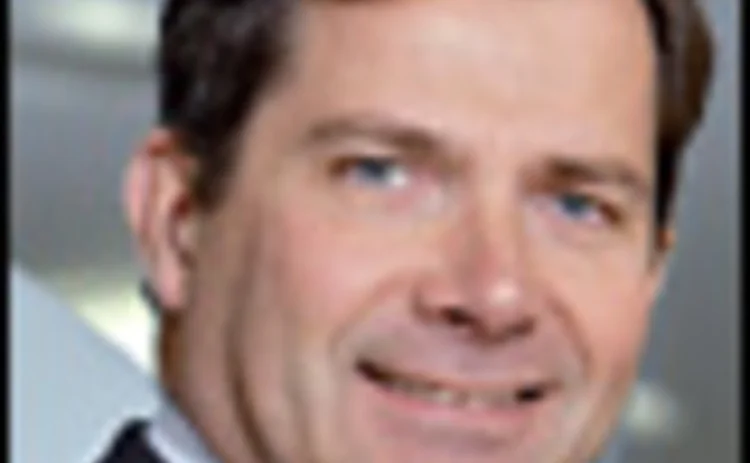
Andrew Tjaardstra meets Pierre Lefevre, former chief executive and chairman of Groupama Insurances, to find out how he intends his company's considerable investments in brokers to make a return for the French-owned insurer
It is a sign of the times that an insurer's chief executive says its largest area of growth in the last year has been through its broker acquisitions. Soft market turbulence and some extreme weather events have both shown why it could be attractive to have some brokers in an insurer's armoury.
Groupama's broking division, Gan UK, was set up in June to pull together its broker operations, which now include majority stakes in Macclesfield-based commercial brokers Bollington, City-based Lark and complete ownership of Altrincham-based Carole Nash, the motorcycle specialists. Gan UK is a sister company to Groupama Insurances, reporting to its French parent Groupama International.
Strategy
Lefevre claims Groupama was planning its broker acquisition strategy at least 18 months ago and that its move into the commercial market was not a reaction to Axa's land grab of Stuart Alexander, Layton Blackham and Smart and Cook.
Lefevre explains: "The market place is changing very rapidly, a large proportion of which over the past three years has been consolidation. Some key relationships such as Hill House Hammond have disappeared. We decided to be more involved in distribution, which is becoming more important in the value chain." Perhaps hinting at future strategy, he continues: "Other operations in other countries have their own distribution networks, whether it is a network of tied agents or direct sales forces and whether it is in France, Italy or Spain. For the group itself it is not absurd to be involved in distribution. It is natural that we are looking at distribution."
Carole Nash was the first, a broker that so many industry players were determined to buy that the price was pushed up to a reported £70m, a figure often cited as an example of the perceived over-inflation of prices in broker acquisitions.
Although rumours exist that Groupama owns 60% of Lark and of Bollington, Lefevre warns against speculation: "Don't believe everything you read in the press. Nothing I have read so far is accurate."
Although Stephen Wall, Paul Moors and Graham Lark are personality-driven companies, Lefevre believes there is enough convergence between the objectives of Groupama and the management of the brokers to make it work. He comments: "It is now about implementing the plans discussed before acquisitions so there are no surprises. That is the beauty of being in partnership because it is the interests of everyone that everything is absolutely crystal clear." Are Wall, Moors and Lark around for the long term? Lefevre replies ambiguously that they will be for at least "several years", but is not prepared to discuss the agreements negotiated between the brokers in terms of buyouts and options.
Lefevre is keen to stress that Groupama works on a highly de-centralised basis and there is room for characters such as Wall, Lark and Moors. Groupama's managing director, Francois-Xavier Boisseau told PB last year: "(Broker managers) are all different, which is nice. They have their own cultures and this makes it more enjoyable doing business." Perhaps when he said it he realised they would be working that little closer together in the future.
Following Norwich Union's purchase of a 7.5% stake in Giles Insurance Brokers and Axa's broker acquisitions, there has been much speculation about what percentage of each broker's book might be placed with their insurer investors. Despite claiming there is no specific target for its brokers, when pressed hard, Lefevre is ready to concede that 30% would be "quite a good balance" of "them remaining independent" and "us being a responsible underwriter". He adds that each broker has a conflict of interest policy and that brokers are always weighing up different products and rates from insurers for their customers: "Clearly, being part of the same group helps devise those schemes. I would not argue the opposite."
Lefevre is keen to make things sound simple: "We want them to create value and we are looking at underwriting synergies, but the key thing is that it shouldn't be detrimental to its customers. We are sitting around the table to see where we can work together."
Ironically, the brokers that Groupama has bought into have had little involvement with imarket, something in which the insurer has invested a lot of money. Lefevre dismisses this as an irrelevance: "We are an imarket sponsor and most of our SME products will be on imarket by the end of the year, but what Lark and Bollington are going to do with it, honestly I don't even know."
Market rate
Lefevre defends the way in which Groupama pays commission to its own brokers: "There is an arm's length approach. If we were paying less commission than our competitors then those brokers would suffer. We are not going to pay them less or more than market rates." By owning brokers, is he gaining market intelligence from other insurers? Again Lefevre is prepared with the answer: "We have a lot of market intelligence from sources other than those brokers and we can give them (the brokers) market intelligence they are probably not aware of because we have a footprint." He adds: "We don't discuss the relationship between the brokers and Groupama at the board meeting. That is done separately."
Altrincham-based Greystone is Bollington's latest acquisition, adding over £6m gross written premium. Asked how much money Groupama is prepared to invest in Lark and Bollington, he responds furtively: "I cannot tell you. If they were to make an acquisition it would have to make sense and create value for them. We can provide finance at commercial conditions; it is an investment that we make together."
In January's PB Stephen Wall said: "Our current strategy is based largely on organic growth that will see us through to £250m GWP", while Paul Moors commented: "All of our options revolve around us remaining masters of our own destiny, being able to make our own choices." Lefevre's reply on subscribing to the £250m strategic plan is less rigid: "We don't set ourselves targets; it has to make sense. The objective is to add sensible businesses and develop organic growth. We don't say to ourselves that we need to buy so much by a certain date."
His preferred route to buying brokers is to assess each case on its own merits, though the goal is consistent: "There is no one scenario because each situation is different. We don't need to go and knock on people's doors. The concept of having a share in the economics in the business is appealing."
We are also assured that there are no overarching plans to merge any of the businesses unless a good fit could be found, such as Carole Nash with a motorcycle intermediary.
Making changes
A Belgian fluent in French, Dutch and English, Lefevre moved from Amsterdam to the UK in 2002, having worked for Axa in Utrecht. Five years after taking on the huge challenge of turning around a failing company, he says Groupama's current shape is "what he imagined it should be" with "a focus on personal lines and SME business dealing with brokers". He is a confident, highly regarded player within the UK insurance industry and yet has kept a relatively low profile.
He comments: "The key issue was to de-risk the company by moving away from large commercial underwriting. We have improved our results each year and have achieved better than we planned." Lefevre separated the London market liabilities in 2003 and was able to sell off its exposure.
The other key aspect for Lefevre was putting across to the staff a clear message regarding the priorities of the company, to which end he introduced performance-related benefits. He comments: "I was lucky to find that the basic skills in terms of underwriting, claims and IT were already there." The commercial lines underwriting division has operated from a single underwriting location in Manchester since 2002.
Explaining his toughest decision, he says: "We lost about 500 people in a couple of years, closing some sites and having to explain the direction. Although we never had any difficulties restructuring, many staff understood the reasons behind it and we offered clear lines of communication. Many staff were in agreement."
Boisseau said that last year's results could not improve. This year he has been proved correct, but only because of the summer floods and January's storm Kyrill. No less than £12m net of reinsurance was wiped off the firm's books, impacting directly upon the bottom line; around £8m of which came in the first six months.
Lefevre reflects: "Excluding these events, we are doing better than anticipated. We restructured our bond portfolio in February and March and were able to consolidate at a higher yield. At the same time we have fewer invested assets because we financed some of the broker acquisitions we have made, though they are yielding higher returns. We have little investment in equity so our returns are quite predictable." Asked how an insurer predicts results, he replies: "We have a plan with risk factors and test the impact of events that could affect the results. It is like a sensitivity analysis."
As rates are pushed up, the floods could prove beneficial for some insurers' balances, though for Lefevre this is a matter for serious consideration: "We are not putting up rates yet. We are looking very closely at our results, databases and statistics to optimise pricing. Other people can make decisions for reasons that we don't know about, also, the market place is moving very fast and we can't possibly follow all our competitors."
One reason for diversifying Groupama's business stream could be the challenge of growing premiums in a softening, consolidating market. Lefevre announces: "We are changing our business model by having more opportunities in distribution." He comments that premium income in business lines has been flat: "The pricing is such that they don't see the opportunity to grow a specific line of business. We need to be patient and wait for the right opportunity. There is nothing spectacular in terms of a plunge or growth story. There has been one significant business loss in our creditor business with one of our large customers reorganising."
Considering the current state of insurance, Lefevre sees signs of a return to a hard market, but is realistic about the prospect: "The commercial market is in the doldrums but there are signs of gentle price increases in some classes."
Rather than continuing as a mutual, Paris-based Groupama International's future is expected to be as a listed company, although this step may not be taken unless there is a major insurer acquisition. Lefevre does not see this happening in the UK, but buying more brokers appears certain.
CV - PIERRE LEFEVRE
2006: Member, Association of British Insurers' general insurance committee
2005: Chairman, Thatcham Motor Insurance Repair Research Centre
2002: Chairman and chief executive officer, Groupama Insurances
1997: Chairman of the executive board, Axa Netherlands BV
1994: Chaiman and chief executive of Axa UK
1984: Joined Axa Belgium SA, holding a number of senior roles culminating in his appointment as general manager for property and casualty
1980: Internal auditor, Unilver.
Since this interview, Pierre Lefèvre has been appointed as chief of Groupama’s Italian subsidiary companies: Groupama Assicurazioni, Groupama Vita and the newly acquired Nuova Tirrena. Lefèvre has been succeeded as chief executive by François-Xavier Boisseau who has stepped up from his position as managing director at Groupama Insurances. Boisseau also assumes Lefèvre’s responsibilities on the board of its UK retail operations.
Only users who have a paid subscription or are part of a corporate subscription are able to print or copy content.
To access these options, along with all other subscription benefits, please contact info@insuranceage.co.uk or view our subscription options here: https://subscriptions.insuranceage.co.uk/subscribe
You are currently unable to print this content. Please contact info@insuranceage.co.uk to find out more.
You are currently unable to copy this content. Please contact info@insuranceage.co.uk to find out more.
Copyright Infopro Digital Limited. All rights reserved.
As outlined in our terms and conditions, https://www.infopro-digital.com/terms-and-conditions/subscriptions/ (point 2.4), printing is limited to a single copy.
If you would like to purchase additional rights please email info@insuranceage.co.uk
Copyright Infopro Digital Limited. All rights reserved.
You may share this content using our article tools. As outlined in our terms and conditions, https://www.infopro-digital.com/terms-and-conditions/subscriptions/ (clause 2.4), an Authorised User may only make one copy of the materials for their own personal use. You must also comply with the restrictions in clause 2.5.
If you would like to purchase additional rights please email info@insuranceage.co.uk
More on Insurer

People Moves: 19 – 23 October 2026
Stay in the loop with the latest insurance personnel moves.

Allianz teams up with Superscript on SME commercial insurance
Allianz UK is set to provide capacity for digital insurance broker Superscript’s landlord and tradespeople propositions.

UK commercial softening approaching three year mark – Marsh
UK commercial market rates softened by 8% in the third quarter, maintaining the rate seen throughout the year and the eleventh quarterly drop in a row, according to Marsh.

Home insurance premiums fall again as Defaqto warns of claims pressures
Home insurance prices fell by 2.4% in the third quarter, with drops every month, according to the latest research by Defaqto.

Subscribe adds £5m Fortegra capacity
Subscribe MGA has secured a long-term capacity agreement with Fortegra Insurance UK.
Arch recruits Donald from Axa for Glasgow branch manager role
Arch Insurance’s UK regional division has appointed Karen Donald as branch manager of its Glasgow operations, effective immediately.

Allianz refreshes mid-market manufacturing offering
Allianz UK has continued to refresh its Commercial Select sector propositions by enhancing cover for manufacturing businesses with turnover between £10m and £1.5 bn.
Blog: Consistency could be the next big differentiator for insurers
John Dunn, managing director of Brokerbility, argues insurers willing to focus on relationships that deliver reliable and consistent positive experiences have a significant opportunity to become a partner that brokers actively want to do more business with.