

Market Watch: Sporting chance
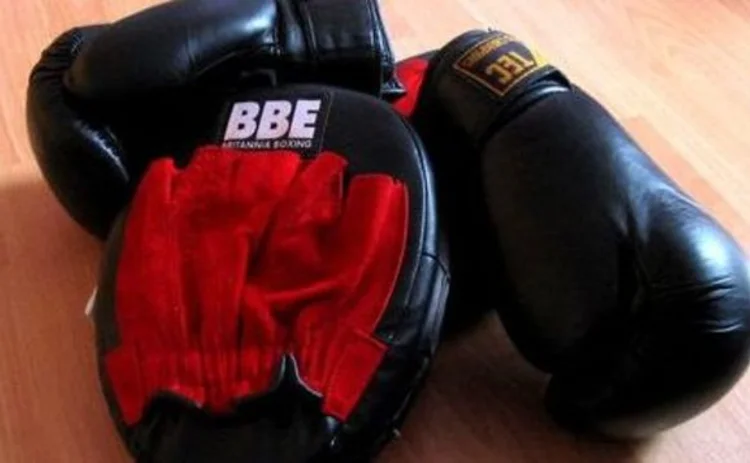

With the 2012 Olympics looming large on the horizon, Emmanuel Kenning delves into the many and varied risks surrounding the insurance of sports clubs.
When Pablo Picasso was asked 'what is art', he replied: "What isn't?" Ask anyone in insurance a similar question about cover for sports clubs and you risk a similarly philosophical response.
Phil Grace, liability risk manager at Aviva, points out the impossibility of creating any kind of spectrum: "At one end you could have parachuting and scuba diving and perhaps at the other end badminton with everything else in between. There is no single sports product because of these differences."
Grace's is a viewpoint endorsed by David Griffiths, managing director at Kerry London's sport and leisure division. He says: "No two are the same. It is very difficult to say how big the market is by size or premium. There are many clubs in key sports but where do you stop for minority ones?"
Each case has to be judged on its merits. The list of elements to consider is incredibly long. Among others, the list can include: property, business interruption, cash, legal expenses, employment and public liability, directors' and officers' and personal accident.
Official involvement
Kerry London, which has a sports team of eight, is responsible for an approved scheme with the English Cricket Board. Griffiths says that it gives the governing body the reassurance of knowing that all its members have insurance in place. For small clubs with low premiums, it is often the case that a standard scheme product is the most viable way forward.
The company has a managing general agent relationship with Fortis, which Griffiths explains allows the broker to create its own policy wording. The value-adding element for any broker, though, is its ability to think beyond a standardised approach when necessary. Griffiths uses the example of golf to show that valuations are important when dealing with a club that is different from normal. Along with machinery and plant cover, it might also have member boards and trophy cabinets to consider. He highlights: "Where it is a sports club with a great tradition, it is worthwhile getting things valued. Take photos because people forget and you cannot remake them without copies. If it has burnt down, it equals a great loss of history."
Cobra is another broker affiliated with a governing body. It began its sports offering in 1991, dealing in public liability cover for Sunday league teams playing on local authority pitches that needed insurance on a cost-effective basis. Phil Truman, managing director at Cobra Corporate Solutions, points out that there are around 40,000 such clubs in the UK and, in dealing with such vast numbers, dealing with counties is a prudent step. Cobra runs one of two approved schemes with the Football Association and works with approximately 35% of the UK's counties.
Truman identifies two elements in particular as being crucial for brokers to consider if faced with insuring any sports club that deals with contact sport: the timing and level of public liability cover.
Public liability insurance can be written on a claims-made or claims-occurring basis. Any policy written on the former basis relies on the policy being in force at the time of the claim. What is significant to bear in mind is that, with the statue of limitations being three years for adults, it is feasible that claims could come after a club has disbanded. Truman explains: "The problem is that teams and clubs come and go. If you faced a claim [years later], you'd be on your own. All our policies are on a claims-occurring basis."
For youth team players, it is an even more important consideration because the three-year limitation applies only once the person has turned 18. In effect, a nine-year old could still bring a claim a decade later. Truman comments: "After a bad break and with a reasonable recovery, it might be five years later that there are problems with a joint."
For the level of cover there are two options: member-to-member and player-to-player. In the first instance, if a centre forward at a football club accidentally clashed heads in training with a club mate defender then they would be covered, yet if the same happened during any game involving an opposition player then they would not be. Only in the latter would the player be covered.
Truman says: "Our scheme can offer both [levels] to provide the broadest cover. We feel it is very valuable but it does add to the cost. In addition, personal accident cover is becoming more and more popular."
Truman's final point is supported by Grace, who points out that, for schemes perhaps set up by a governing body to use its buying power that offer only member-to-member insurance, personal accident cover can be a good workaround.
Complete awareness
Grace also points out that clubs must be aware of the insurance needs of referees as well, not just their players. Citing examples of issues surrounding rugby scrums, he says: "Clubs should check that professional indemnity insurance is in place. An accredited person should have cover because they have professional duties in the same way as an architect, lawyer or insurance broker has." Grace notes that the complications do not stop there: "Some clubs are no different from many other non-sporting businesses; they need fire, theft, products and public liability cover. It is also common for them to have fundraising events."
The most common examples of extra events at sports clubs are fêtes, barbeques and firework displays. Grace says that the insurer "would normally expect them to hold events" and as such small gatherings would be covered. Concerning higher-risk events with greater attendance, he adds: "We might require notification and would expect them to use a contracted professional display organiser with its own insurance."
The difficulty for brokers and sports clubs is in knowing where the grey area lies. Towergate TLC works with many national governing bodies and the firm's sports executive, Paul Nicholson, points out that brokers must ensure that the small print is reviewed. He says: "The first question is over what types of sports need insurance for participation. A village might have a mixed sports club offering football, cricket and running, for instance. Then it is about property and fittings and making sure that the policy covers fundraising and volunteer activities. Bouncy castles and fireworks are the age-old exclusions."
One area that Nicholson also highlights is the growing presence of litigation in sport. His approach is to "advise sports clubs to take out personal accident cover" but he adds that a recent Court of Appeal ruling could make matters even more complicated, describing it as "one of the most contentious issues that affects sport".
In a 2005, rugby union club Redruth's second-row forward Richard Carroll punched rival team Halifax's prop Andrew Gravil, breaking his eye socket. Gravil sued both Richard Carroll and Redruth. In June 2008, the Court of Appeal ruled that it was "fair and just" to hold the club liable, overturning an earlier High Court ruling that had distinguished between employment contracts for full and semi-professional clubs.
Collective responsibility
Nicholson says: "It has been fought and won that it is the club's responsibility to ensure that its players are playing in a fair and honest way. Litigation claims are starting to come through."
Although sports clubs might not be everyone's raison d'être, Nicholson believes that the 2012 Olympics could make such clubs even more popular and raise the potential for more business and claims to land on brokers' desks: "There is a boom happening in sport in general, with more money going into grassroots, especially for Olympic sports." It is a conclusion that Grace supports: "A lot of people have been working towards the Olympics and those people watching might become inspired."
Attributing liability
Steven Aitken, senior associate at law firm Reynolds Porter Chamberlain, highlights issues surrounding liability of sports clubs for injuries on the field of play.
In the UK, there are 19 million sports injuries each year. This figure, in light of better general awareness of litigation, means an increasing number of claims.
The threshold for action is high but does exist. A claimant would need to establish an act of foul play that amounts to a reckless disregard for safety and falls well below what is expected by participants in the sport.
The person who caused the injury cannot avoid liability by virtue of their membership of a club, nor is the club automatically liable for the actions of its members. The club will not become liable simply because the individual responsible has no insurance or money to settle the claim. Consider also the referee, who has their own personal duty of care to players and can as such be liable.
Most clubs are unincorporated associations, for example, a not-for-profit or charitable collection of individual members. Such an organisation itself I not a legal entity and cannot be sued, though actions can be brought against individual committee members in certain circumstances. Liability might arise, for example, where there is knowledge of previous dangerous conduct ad failure to prevent participation, such as by allowing children of different ages of sizes to compete or otherwise failing to provide a safe environment.
If the club is not liable, this leaves the individual member exposed to a direct claim. Clubs might wish to protect their members against this by taking out insurance.
A note of caution: even dubious claims need to be defended. This requires legal representation that must be paid for even if no insurance has been taken by anyone.
Only users who have a paid subscription or are part of a corporate subscription are able to print or copy content.
To access these options, along with all other subscription benefits, please contact info@insuranceage.co.uk or view our subscription options here: https://subscriptions.insuranceage.co.uk/subscribe
You are currently unable to print this content. Please contact info@insuranceage.co.uk to find out more.
You are currently unable to copy this content. Please contact info@insuranceage.co.uk to find out more.
Copyright Infopro Digital Limited. All rights reserved.
As outlined in our terms and conditions, https://www.infopro-digital.com/terms-and-conditions/subscriptions/ (point 2.4), printing is limited to a single copy.
If you would like to purchase additional rights please email info@insuranceage.co.uk
Copyright Infopro Digital Limited. All rights reserved.
You may share this content using our article tools. As outlined in our terms and conditions, https://www.infopro-digital.com/terms-and-conditions/subscriptions/ (clause 2.4), an Authorised User may only make one copy of the materials for their own personal use. You must also comply with the restrictions in clause 2.5.
If you would like to purchase additional rights please email info@insuranceage.co.uk
More on Broker

Broker Expo 2026: Don’t shy away from cyber
Experts at the Broker Expo urged delegates to keep plugging away on cyber amid the ongoing low level of uptake by SMEs.
Brown & Brown UK launches retail graduate programme
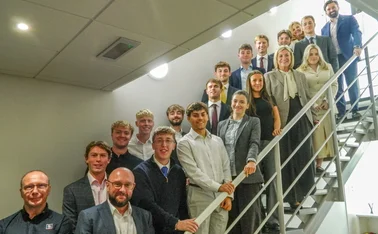
Brown & Brown UK has launched a retail graduate programme starting with 16 participants.

From manual bordereaux to trading agility
Pricing can now change daily, but trading infrastructure hasn’t kept pace. Matt Wellman of Applied Systems explains why manual bordereaux must go.

Broker Expo 2026: Early and open conversations needed for brokers and underwriters to win
As the industry starts to lose its face-to-face culture, being open to early and open appetite conversations through different channels will be key to establishing good relationships between brokers and underwriters.

Howden names Richardson to new CCO role
Howden has appointed Elliot Richardson as chief commercial officer for the group, a newly created role at the broker.
Seventeen doubles down in Gibraltar with latest buy
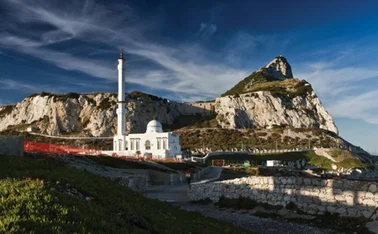
Seventeen Group has bought Sovereign Insurance Services, striking its second deal in Gibraltar in recent months.
Broker Expo 2026: Days of Frankenstein’s Monster consolidation over
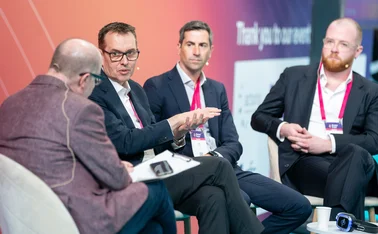
Broker consolidation is evolving from the ‘Frankenstein’s Monster’ approach of the past to one which is more focused on culture, integration and organic growth.

Ex-Ravenhall boss launches new broker Decello
Neil Grimshaw has opened commercial broker Decello in Huddersfield, labelling it a boutique ‘advice-led’ firm for businesses and private clients.